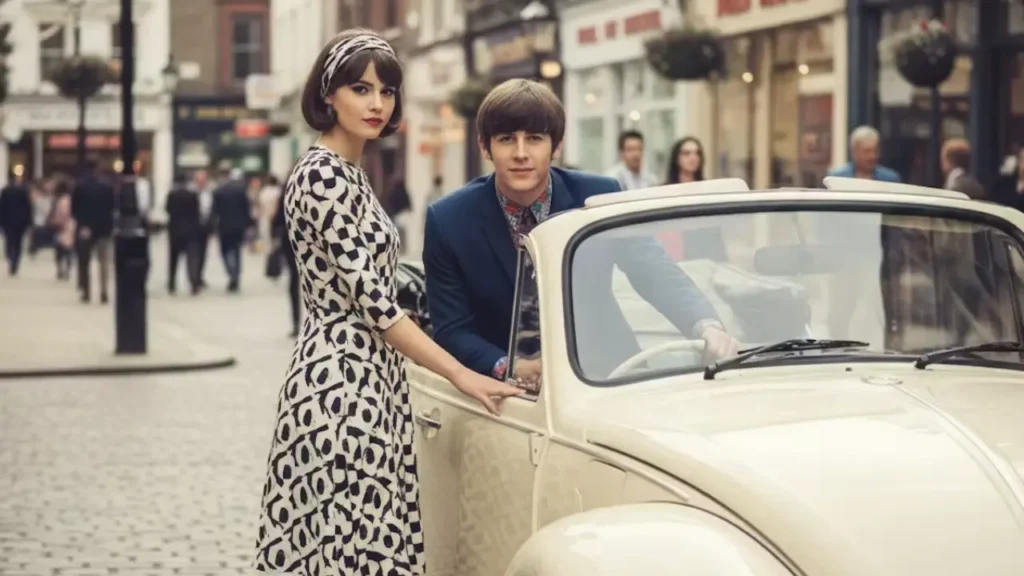
The 1960s transformed fashion from a system shaped largely by couture houses and established social rules into one driven by youth, music, experimentation, and cultural change. The fashion trends in the 1960s did not follow a single aesthetic. Instead, the decade moved through several distinct identities, beginning with polished elegance, shifting toward the sharp geometry of mod style, and ending with the freer, more eclectic spirit of hippie fashion.
Understanding the fashion trends in the 1960s means looking beyond individual garments. Clothes became a visible expression of generational independence. Shorter hemlines, brighter colors, unconventional fabrics, and increasingly relaxed silhouettes reflected a society questioning tradition. London emerged as a major source of new ideas, models became cultural celebrities, and musicians influenced wardrobes as strongly as designers. Fashion consequently changed faster, reached a wider audience, and became more closely connected to everyday life.
Key Takeaways
- 1960s fashion moved from polished early-decade elegance to mod, Space Age, psychedelic, and hippie styles.
- Youth culture became one of the fashion industry’s most powerful influences.
- Miniskirts, shift dresses, go-go boots, bell-bottoms, and bold prints defined different stages of the decade.
- London emerged as a major fashion center alongside Paris.
- Many 1960s silhouettes continue to influence contemporary runways and street style.
What Was Fashion Like in the 1960s?
To understand what was fashion like in the 1960s, it is important to recognize how dramatically styles changed from the beginning of the decade to its end. Early looks were refined and coordinated, with tailored suits, structured dresses, gloves, hats, and carefully selected accessories. By the middle of the decade, young consumers were embracing miniskirts, shift dresses, colored tights, slim trousers, and graphic prints. Toward the late 1960s, psychedelic patterns, bell-bottoms, fringe, embroidery, and flowing silhouettes entered the mainstream.
In general, 1960s fashion became:
- Shorter in hemline
- Brighter and more graphic in color
- More experimental in fabrics and construction
- Less formal in everyday settings
- More influenced by youth, music, and celebrity culture
- Increasingly open to unisex and individual styles
The fashion trends in the 1960s were defined by contrast. Conservative daywear existed alongside experimental designs made from vinyl, plastic, metallic discs, and synthetic fibers. Paris remained influential, but London became the center of a more immediate, affordable, and youth-focused fashion culture. At the same time, social movements, the Space Race, popular music, and changing gender expectations helped turn clothing into a visible form of identity.
This history of fashion in the 1960s is best understood as a sequence of cultural shifts rather than a list of isolated trends. Each stage introduced a different attitude toward the body, modernity, and personal freedom.
You might be interested in reading: Fashions of the 80s: Iconic Styles, Trends, and Lasting Influence
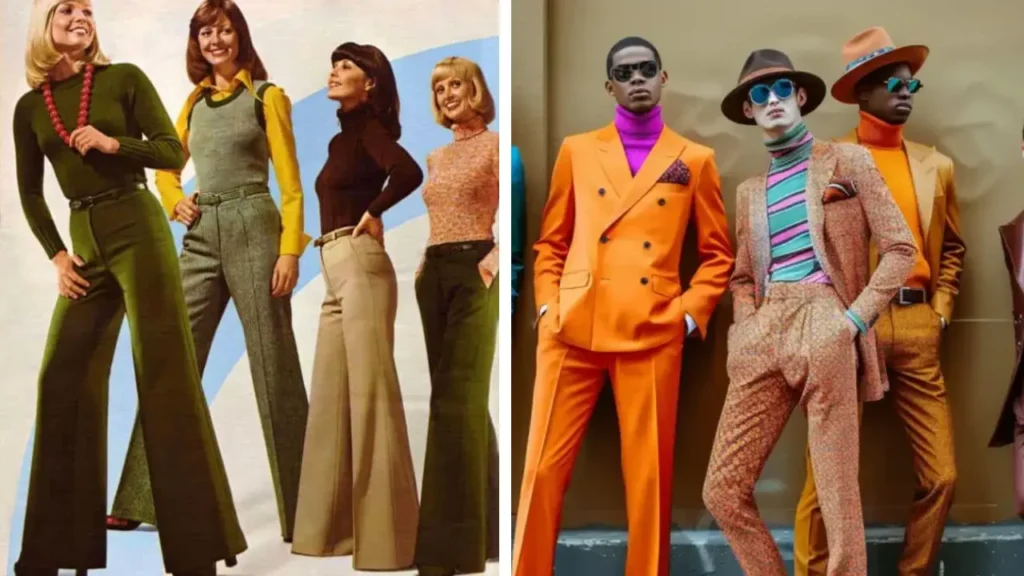
How Fashion Changed Throughout the 1960s
A useful 1960s fashion trends timeline can be divided into three broad phases: the refined early years, the mod-driven middle of the decade, and the psychedelic, bohemian turn of the late 1960s. These phases often overlapped, but together they show how quickly fashion moved away from postwar formality.
1960s Fashion Trends Timeline at a Glance
| Period | Main Style | Key Garments | Cultural Influence |
| Early 1960s | Polished and refined | Sheath dresses, skirt suits, pillbox hats | Jacqueline Kennedy, postwar elegance |
| Mid-1960s | Mod and futuristic | Miniskirts, shift dresses, go-go boots | Youthquake, Swinging London, Space Race |
| Late 1960s | Hippie and psychedelic | Bell-bottoms, maxi dresses, fringe | Counterculture, rock music, antiwar movement |
Early 1960s Fashion: Elegance and Refined Silhouettes
At the beginning of the decade, fashion still carried many of the polished conventions of the 1950s. Women often wore sheath dresses, A-line skirts, fitted coats, boxy jackets, and coordinated skirt suits. Accessories completed the look. Gloves, structured handbags, low heels, pearls, and pillbox hats created a composed appearance for work, formal appointments, and public events.
Jacqueline Kennedy became one of the most visible style references of the period. Her clean silhouettes, sleeveless dresses, cropped jackets, and carefully coordinated accessories represented a modern version of traditional elegance. Audrey Hepburn offered a slightly more understated alternative through capri pants, ballet flats, simple black dresses, and streamlined tailoring.
Menswear also remained relatively restrained. Slim, single-breasted suits, narrow lapels, crisp shirts, and conservative ties were common, while the American Ivy League look introduced button-down shirts, chinos, loafers, and cardigans into casual wardrobes. Although these early fashion trends in the 1960s appeared conventional compared with what followed, their simplified lines prepared the way for the sharper, more youthful silhouettes of the mid-decade.
You might be interested in reading: The Official Guide: How to Get Tickets to New York Fashion Week 2026
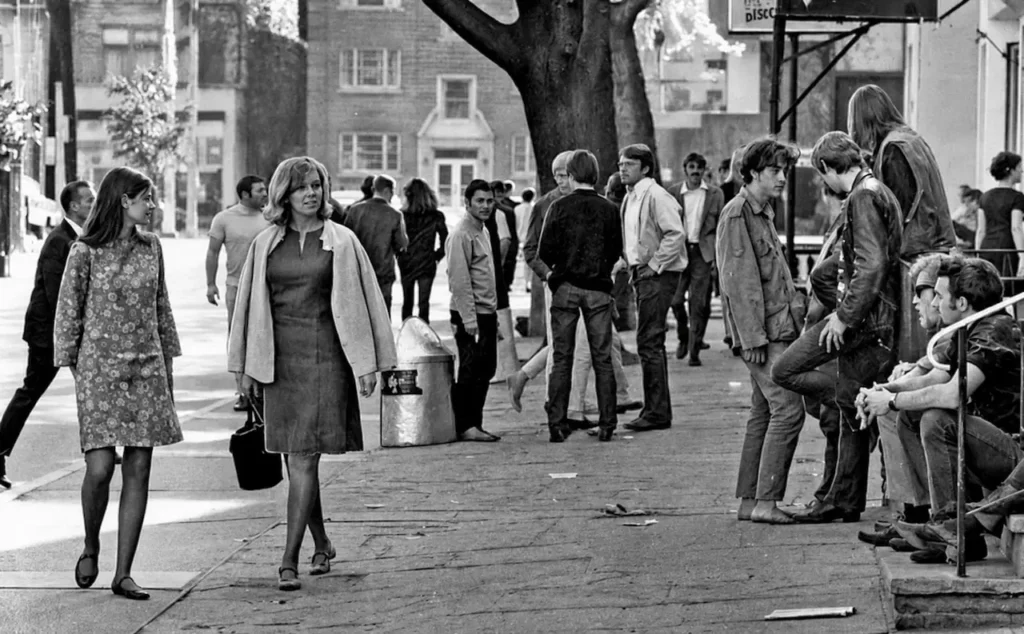
Mid-1960s Fashion: Mod Style and the Youthquake
By the middle of the decade, the fashion trends in the 1960s had become younger, shorter, brighter, and more graphic. A growing youth market no longer wanted to dress like an imitation of the previous generation. Instead, young consumers sought clothing that felt immediate, affordable, easy to move in, and connected to music, nightlife, and city life.
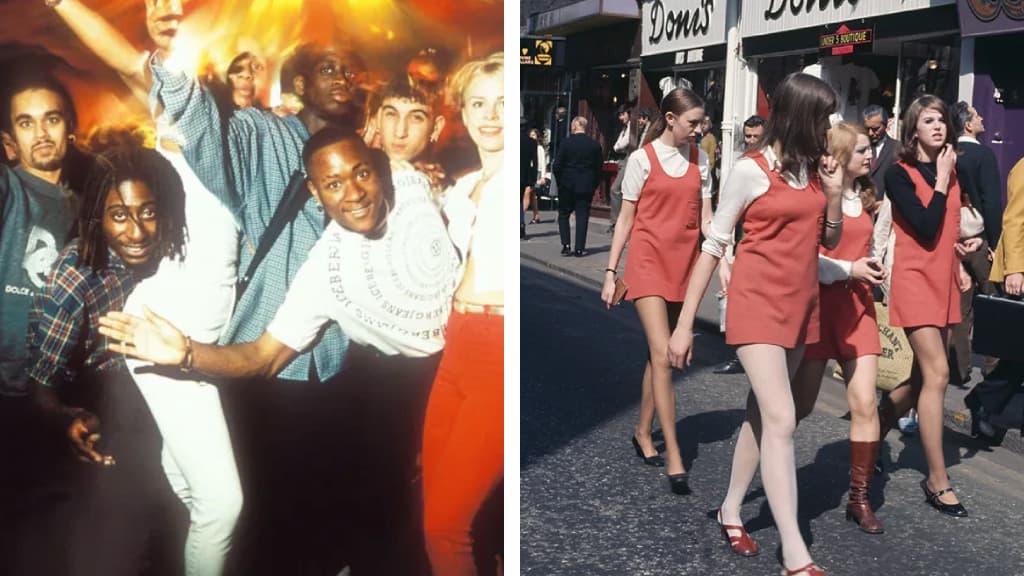
London became the symbolic center of this shift. Boutiques around King’s Road and Carnaby Street offered fast-moving styles that differed from the slower traditions of couture. Mary Quant helped popularize the miniskirt, simple shift dresses, colored tights, and playful separates designed for young women. Although the miniskirt’s precise origin remains debated, Quant was decisive in making short hemlines accessible to young consumers.
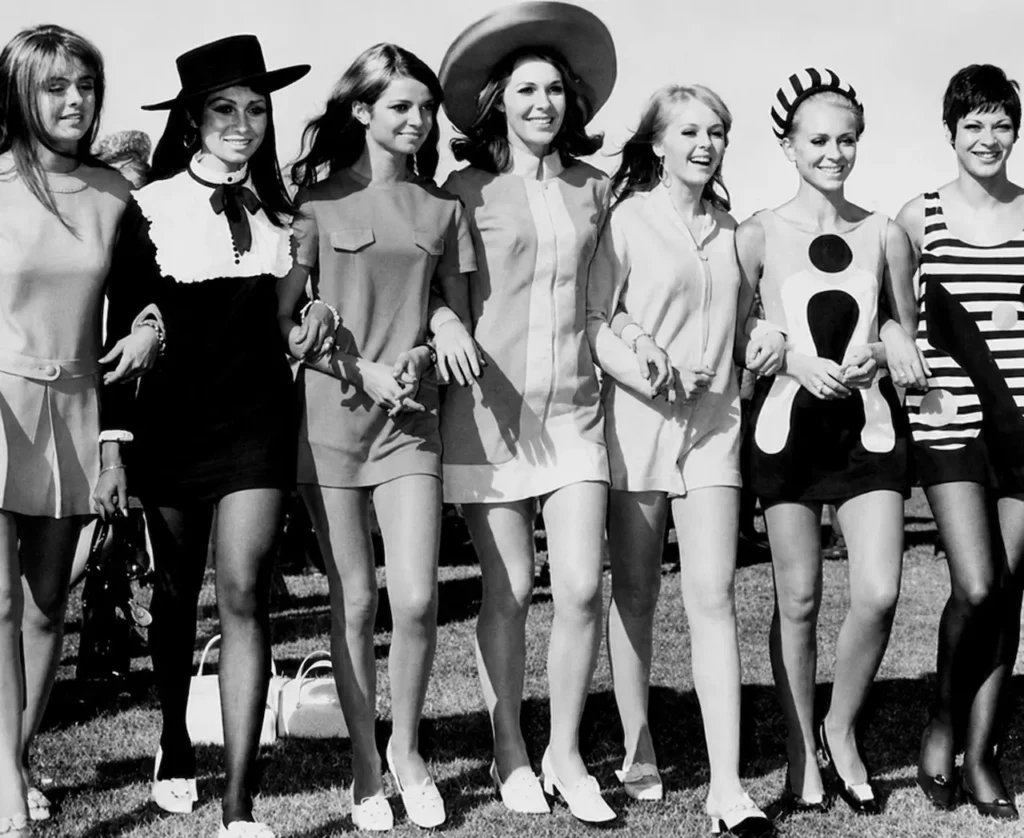
Mod fashion favored clear shapes and strong visual contrast. Sleeveless minidresses, A-line silhouettes, turtlenecks, white go-go boots, black-and-white patterns, and geometric prints became instantly recognizable. Synthetic materials supported brighter colors and cleaner finishes, while Op Art and modernist design influenced pattern and construction.
Twiggy embodied the new image of the decade with her cropped hair, slender frame, short dresses, and dramatic eye makeup. Meanwhile, groups such as the Beatles helped make slim suits, Chelsea boots, turtlenecks, and collarless jackets desirable for men. Many of the popular fashion trends in the 1960s emerged from this exchange between designers, boutiques, musicians, models, and young consumers.
Late 1960s Fashion: Psychedelia and Hippie Style
Toward the end of the decade, the fashion trends in the 1960s moved away from the clean geometry of mod and Space Age design toward a looser, layered, and more individual aesthetic. The counterculture rejected many conventional ideas about appearance, consumption, and gender. Clothing became softer, more personal, and often intentionally less polished.
Bell-bottom jeans, maxi dresses, peasant blouses, suede vests, fringe, crochet, embroidery, tie-dye, paisley, and floral prints became central to hippie and bohemian style. Natural textures and handmade details offered an alternative to the futuristic plastics and synthetics associated with earlier years. Vintage and secondhand clothing also gained appeal because it allowed wearers to create looks that felt personal rather than standardized.
Late-1960s wardrobes also incorporated South Asian textiles, Middle Eastern patterns, African-inspired prints, and folk embroidery. These references reflected a growing interest in travel, spirituality, craft, and non-Western visual traditions.
Menswear became more expressive as floral shirts, velvet jackets, military-inspired coats, scarves, jewelry, and longer hair challenged conventional standards of masculinity. Jimi Hendrix showed how military, psychedelic, and bohemian elements could form a highly individual look.
By 1969, the fashion trends in the 1960s had traveled an extraordinary distance. The decade began with matching gloves and structured handbags and ended with bell-bottoms, handcrafted details, and flowing silhouettes. That transformation explains why the period remains so influential: the 1960s established fashion as a fast-moving cultural language shaped not only by designers, but also by the people wearing it.
The Most Popular Fashion Trends in the 1960s
The most recognizable fashion trends in the 1960s emerged from several movements that changed how clothing was designed, sold, and worn. Mod fashion introduced sharp silhouettes and shorter hemlines, Space Age designers experimented with futuristic materials, and the counterculture encouraged a more personal, handcrafted approach to dress.
For readers asking what were the fashion trends in the 1960s, the answer depends on the period. A minidress with white boots captured the optimism of mid-decade London, while embroidered blouses, bell-bottoms, and fringe reflected the freer mood that followed. Together, these contrasting styles created one of fashion history’s most diverse decades.
Mod vs. Space-Age vs. Hippie Fashion
| Style | Peak Period | Main Silhouettes | Colors and Materials | Signature Pieces |
| Mod | Mid-1960s | Short, straight, geometric | Black and white, bright colors, synthetics | Miniskirts, shift dresses, colored tights |
| Space Age | Mid-1960s | Structured, sculptural, futuristic | White, silver, vinyl, PVC, metal | Go-go boots, geometric dresses, metallic accessories |
| Hippie | Late 1960s | Loose, layered, flowing | Earth tones, psychedelic prints, suede, cotton | Bell-bottoms, maxi dresses, fringe, embroidered blouses |
Mod Fashion and the Miniskirt
Mod style was graphic, youthful, and easy to recognize. It favored short hemlines, simple shapes, vivid colors, and strong black-and-white contrasts. Shift dresses and A-line minidresses became central to the look because they rejected the fitted waists and formal construction associated with earlier womenswear.
The miniskirt became one of the popular fashion trends in the 1960s, but its significance extended beyond its length. It represented a younger consumer with greater influence over fashion. Mary Quant helped bring short skirts, colored tights, playful separates, and accessible boutique clothing to this audience, although its creation cannot be credited to one designer alone.
White go-go boots, turtlenecks, geometric jewelry, and dramatic eye makeup completed the mod wardrobe. Among the fashion trends in the 1960s, mod remains especially influential because its clear shapes still feel modern rather than purely nostalgic.
Space-Age Fashion and Futuristic Design
The Space Race encouraged designers to imagine clothing for a technological future. André Courrèges, Pierre Cardin, and Paco Rabanne explored white and silver palettes, geometric cutouts, structured minidresses, and materials rarely used in conventional dressmaking.
Courrèges became associated with crisp lines and white boots, while Cardin experimented with circular forms and unisex ideas. Rabanne assembled garments from metal discs, plastic pieces, and other unconventional components. Their work made futurism one of the most distinctive fashion trends in the 1960s, even when the designs functioned more as statements than everyday clothing.
Bold Prints, Colors, and Experimental Fabrics
Color became more assertive as the decade progressed. Op Art patterns, oversized checks, circles, stripes, and contrasting blocks appeared across dresses, coats, shirts, and accessories. Bright orange, yellow, pink, blue, and green reflected the close relationship between fashion, graphic design, and popular culture.
Synthetic fibers supported sharper shapes, intense colors, and affordable mass production. Polyester, acrylic, nylon, vinyl, and PVC appeared in everyday garments and experimental designs. Paper dresses briefly captured attention as inexpensive, disposable pieces printed with bold graphics.
Key Materials of the Decade:
| Material | Common Uses | Style Association |
| Polyester and acrylic | Dresses, knitwear, coordinated separates | Affordable ready-to-wear |
| Vinyl and PVC | Boots, raincoats, bags, futuristic garments | Mod and Space Age fashion |
| Metal and plastic | Experimental dresses and jewelry | Futuristic design |
| Cotton and denim | Shirts, jeans, casual clothing | Youth and counterculture |
| Suede | Vests, jackets, boots, fringe | Hippie and bohemian fashion |
Hippie and Bohemian Fashion
By the late 1960s, bohemian clothing offered an alternative to the precision of mod and Space Age style. Loose silhouettes, layered outfits, handmade details, and secondhand garments expressed a rejection of polished consumer culture.
Maxi dresses, peasant blouses, bell-bottom jeans, suede vests, fringe, crochet, embroidery, tie-dye, and paisley became central to the look. The answer to what were popular clothing trends in the 1960s therefore includes two nearly opposite directions: futuristic minimalism and handcrafted eclecticism.
Hippie style drew from folk dress, music festivals, travel, and global textiles. Garments were mixed rather than worn as coordinated sets, making personal expression more important than a prescribed look.
Women’s Fashion Trends in the 1960s
The women’s fashion trends in the 1960s reflected changing expectations around age, work, movement, and self-expression. A wardrobe could include a formal skirt suit, a shift dress, slim trousers, a miniskirt, and later a pair of bell-bottom jeans. Traditional clothing remained, but women gained a wider range of choices.
You might be interested in reading: General Admission vs VIP Tickets at New York Fashion Week: A Complete Guide
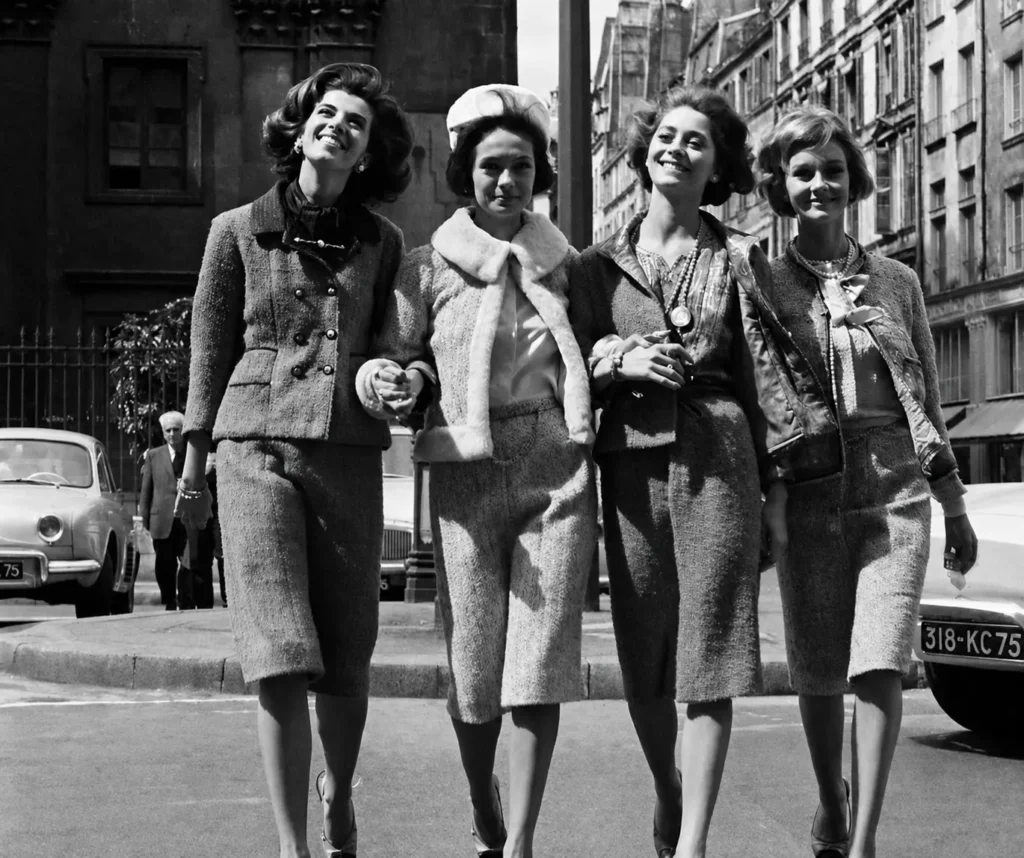
Dresses, Skirts, and Everyday Clothing
Dresses remained central to womenswear, although their construction became simpler. Sheath dresses continued into the early years, while A-line and shift styles gained popularity because they created a clean silhouette without emphasizing the waist. Hemlines rose gradually, and the minidress became closely associated with youth fashion.
Everyday wardrobes also included cardigans, fitted sweaters, blouses, matching separates, capri pants, and slim trousers. By the end of the decade, maxi skirts and flowing dresses provided a dramatic alternative to the mini. This variety allowed polished daywear and experimental street style to coexist.
The Rise of Pants for Women
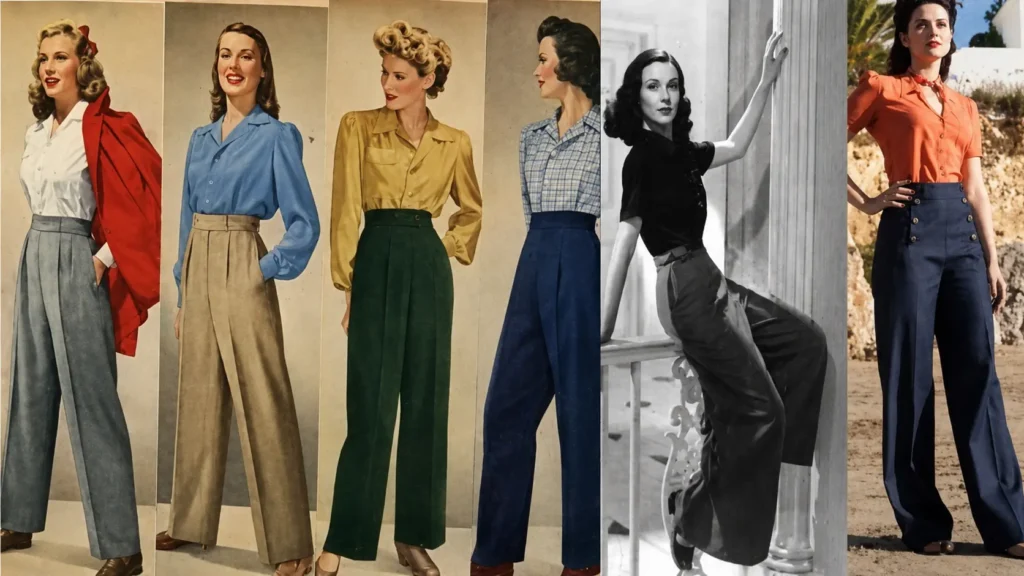
Pants became increasingly visible in women’s daily wardrobes. Capri pants and cigarette trousers were already familiar, but jeans, culottes, pantsuits, and bell-bottoms expanded the possibilities. They offered comfort and freedom of movement while challenging the idea that skirts and dresses were the only appropriate options.
The change remained gradual, particularly in conservative workplaces and formal settings. Even so, the growing acceptance of trousers helped establish the more flexible female wardrobe of later decades.
Shoes, Accessories, and Beauty Trends
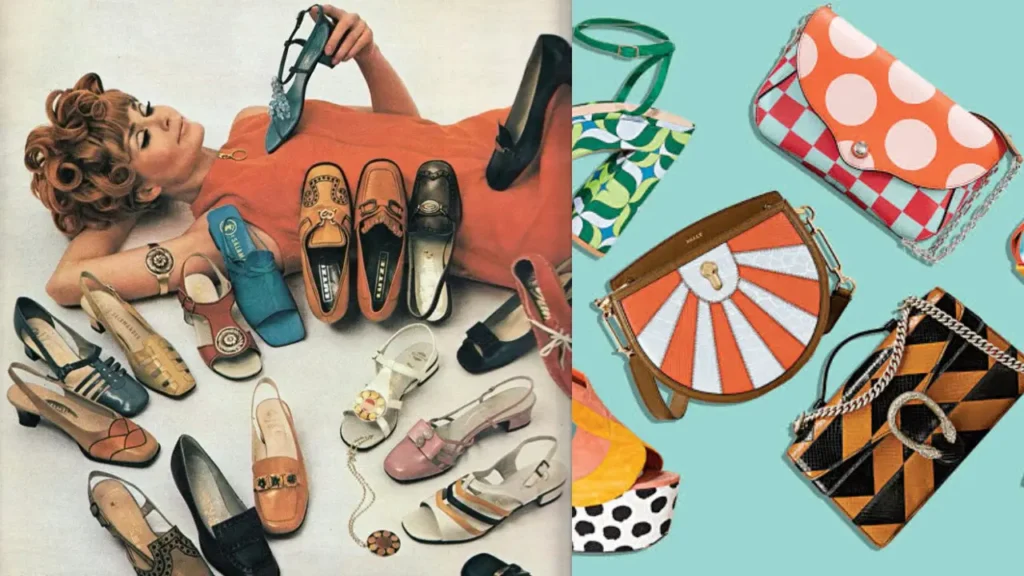
Shoes helped distinguish one 1960s look from another. Kitten heels and ballet flats suited the refined early years, while Mary Jane shoes and white go-go boots complemented mod clothing. Knee-high boots became especially effective as hemlines rose.
Beauty trends changed just as visibly. Beehives and bouffants created dramatic volume, while short geometric cuts offered a modern alternative. Heavy eyeliner, false eyelashes, pale lips, and carefully defined lower lashes placed emphasis on the eyes. Oversized sunglasses, geometric jewelry, headbands, and structured handbags completed the decade’s varied looks.
Men’s Fashion Trends in the 1960s
Men’s clothing moved from restrained tailoring toward increasingly expressive color, texture, and pattern. Slim suits and Ivy League sportswear dominated the early years, but velvet jackets, floral shirts, scarves, military coats, jewelry, and bell-bottoms became fashionable by the decade’s end.
Influential 1960s Designers at a Glance
| Designer | Main Contribution | Iconic Association |
| Mary Quant | Youth-oriented boutique fashion | Miniskirts and colored tights |
| André Courrèges | Clean futuristic design | White boots and geometric minidresses |
| Pierre Cardin | Sculptural and unisex silhouettes | Space Age forms |
| Paco Rabanne | Experimental construction | Metal and plastic dresses |
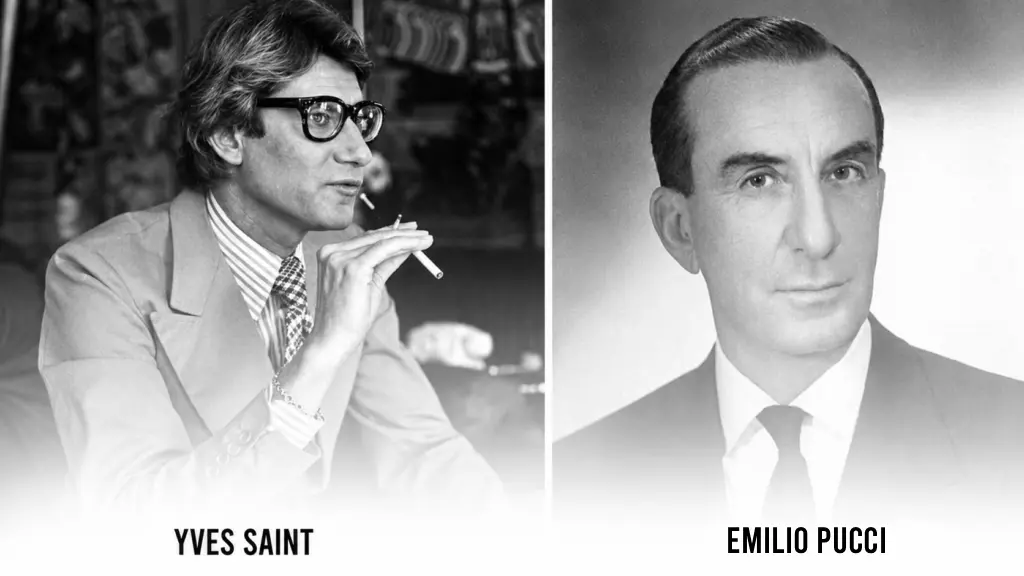
| Yves Saint Laurent | Art-inspired and modern tailoring | Mondrian dress and Le Smoking |
| Emilio Pucci | Dynamic color and print | Psychedelic patterns |
Slim Suits and Ivy League Style
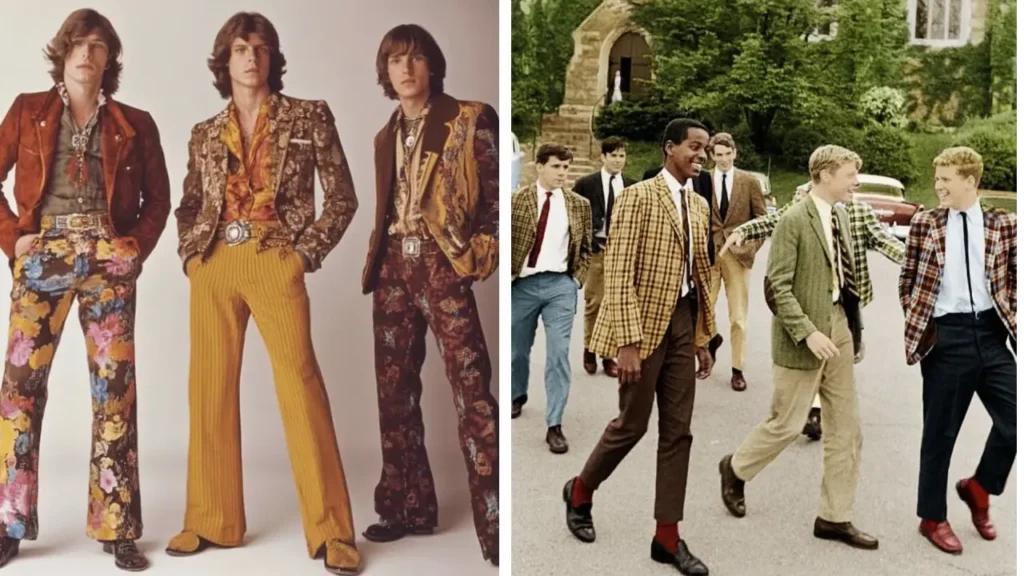
Early menswear favored narrow lapels, slim trousers, crisp shirts, and understated ties. The Ivy League look added button-down shirts, chinos, loafers, cardigans, and blazers, creating a polished but relaxed American style. Its clean proportions also influenced the sharper mod tailoring that followed.
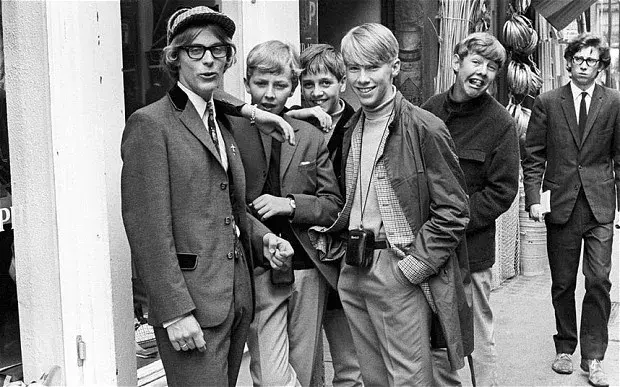
Mod Menswear and the British Invasion
British musicians and London boutiques gave young men new style references. Slim trousers, turtlenecks, Chelsea boots, fitted jackets, and collarless suits became associated with the Beatles and the wider British Invasion. Carnaby Street offered colorful alternatives to conventional department-store menswear.
Young men were increasingly encouraged to follow changing trends with the same enthusiasm as women. Music and fashion became closely connected, turning performers into international style figures.
The Peacock Revolution and Counterculture
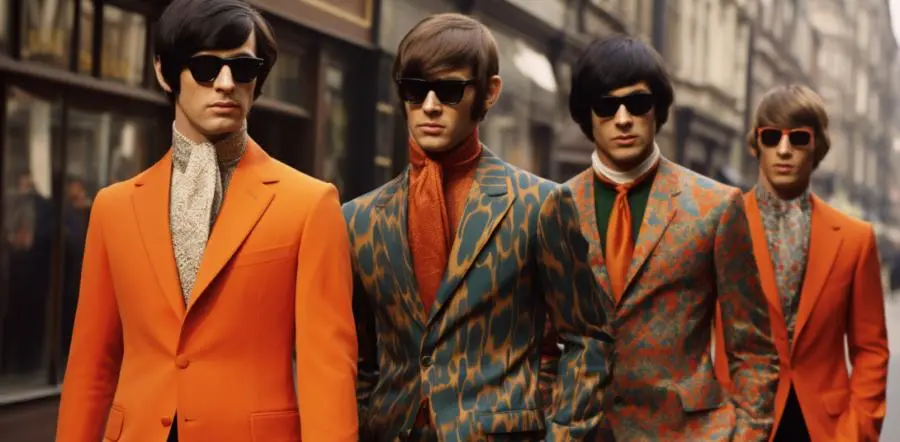
Late-decade menswear embraced color and decoration through the Peacock Revolution. Floral shirts, velvet jackets, patterned trousers, scarves, ruffled details, and military-inspired coats challenged the expectation that men should dress in dark, restrained clothing.
Jimi Hendrix, Mick Jagger, and other performers combined historical references with psychedelic prints, jewelry, longer hair, and dramatic proportions. Bell-bottoms and embroidered garments also crossed gender boundaries, making unisex dressing more visible. By the end of the decade, the fashion trends in the 1960s had expanded menswear from a narrow formal code into a far more individual and expressive field.
Designers Who Defined 1960s Fashion
The most influential fashion trends in the 1960s were shaped by designers who challenged traditional ideas about silhouette, material, gender, and ready-to-wear. Some focused on youthful accessibility, while others treated clothing as a laboratory for futuristic construction. Together, they expanded the possibilities of modern dress.
Mary Quant and the Youth Fashion Revolution
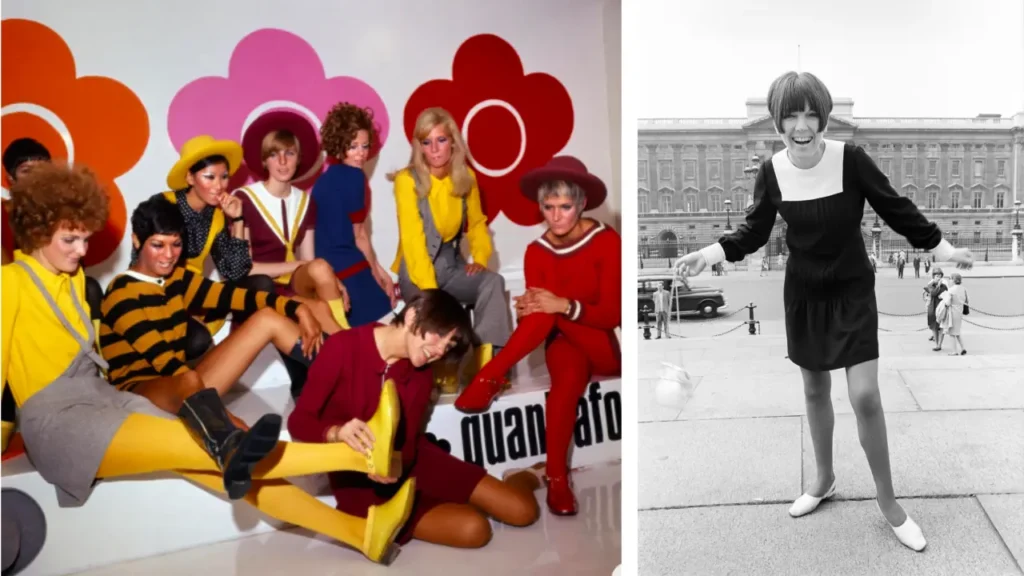
Mary Quant became closely associated with Swinging London and the rise of a young, independent consumer. Through her Bazaar boutique, she promoted short hemlines, colored tights, shift dresses, playful separates, and clothes designed for movement. Her work made fashion feel immediate rather than dictated exclusively by couture.
Although the invention of the miniskirt cannot be attributed to one person with certainty, Quant played a decisive role in turning it into an international symbol of youth culture. Her influence on the fashion trends in the 1960s came from both the garments she promoted and the idea that young people could shape the market themselves.
André Courrèges, Pierre Cardin, and Paco Rabanne
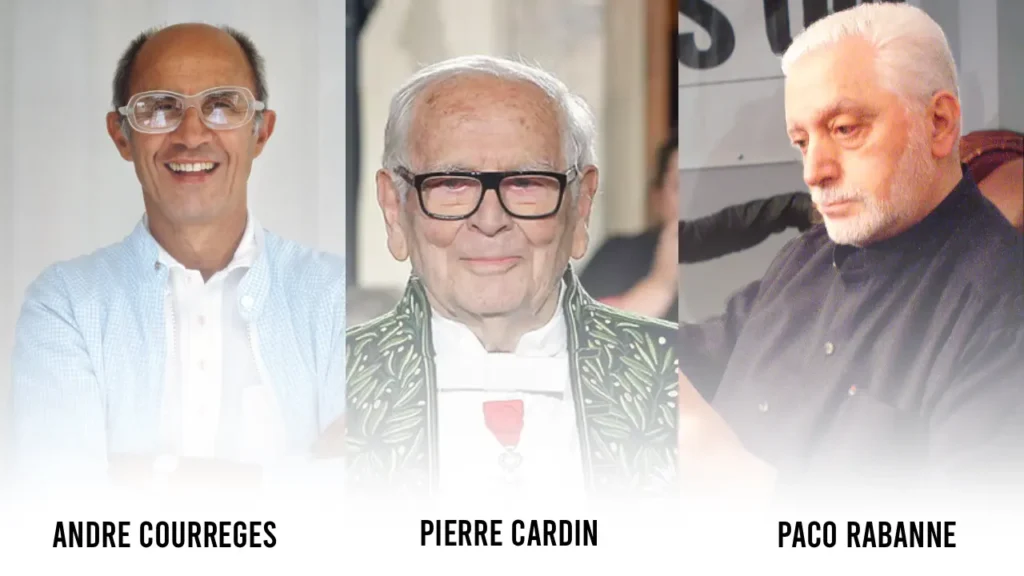
André Courrèges, Pierre Cardin, and Paco Rabanne transformed the optimism of the Space Age into some of the most experimental fashion trends in the 1960s. Each designer approached futurism differently, but all three challenged traditional ideas about silhouette, materials, and construction.
- André Courrèges: Known for crisp white fabrics, silver accents, geometric tailoring, short A-line dresses, fitted trousers, and low-heeled boots. His clean, architectural silhouettes gave futuristic fashion a polished and wearable quality.
- Pierre Cardin: Explored sculptural forms, circular cutouts, bold color blocking, curved shapes, and unisex silhouettes. His designs reflected the influence of modern art, technology, and industrial design.
- Paco Rabanne: Pushed experimentation further by replacing conventional fabrics with metal discs, plastic pieces, chains, and linked components. His garments moved like wearable sculptures and became some of the decade’s most recognizable fashion statements.
Together, these designers made Space Age fashion one of the most memorable movements of the decade. Even when their creations were too theatrical for everyday wear, their influence appeared in metallic finishes, synthetic fabrics, geometric accessories, statement boots, and modern ready-to-wear collections.
Yves Saint Laurent and Emilio Pucci
Yves Saint Laurent connected art, modern tailoring, and changing ideas of femininity. His Mondrian dress translated modern painting into a geometric garment, while Le Smoking helped establish the tuxedo as a powerful option for women.
Emilio Pucci approached modernity through color. His swirling prints, lightweight fabrics, and vivid combinations anticipated the psychedelic energy of the late 1960s. Together, Saint Laurent and Pucci showed that innovation could come through structure, movement, or print.
Fashion Icons of the 1960s
Designers created the clothes, but public figures gave them cultural meaning. Jacqueline Kennedy and Audrey Hepburn represented early-decade refinement through tailored coats, sleeveless dresses, capri pants, ballet flats, and carefully selected accessories.
Twiggy and Jean Shrimpton reflected a younger editorial ideal. Short dresses, cropped hair, and graphic eye makeup aligned them with mod fashion and the growing influence of models as celebrities. Musicians also became essential style references. The Beatles popularized slim suits, Chelsea boots, turtlenecks, and later psychedelic clothing, while Jimi Hendrix combined military jackets, velvet, scarves, jewelry, and expressive prints.
These figures transformed the fashion trends in the 1960s into recognizable cultural images. They demonstrated that fashion could spread through magazines, cinema, television, concerts, and street style as powerfully as through runway presentations.
How Culture Influenced Fashion in the 1960s
The history of fashion in the 1960s cannot be separated from the social changes of the period. Clothing became increasingly responsive to youth culture, music, technology, political protest, and changing gender expectations.
Youth Culture and Swinging London
Young consumers gained greater visibility and spending power, creating demand for clothing that felt different from their parents’ wardrobes. London boutiques responded with faster, more affordable styles connected to music and nightlife. Carnaby Street and King’s Road became symbols of a new fashion system in which street-level creativity could influence the wider industry.
Music, Technology, and the Space Race
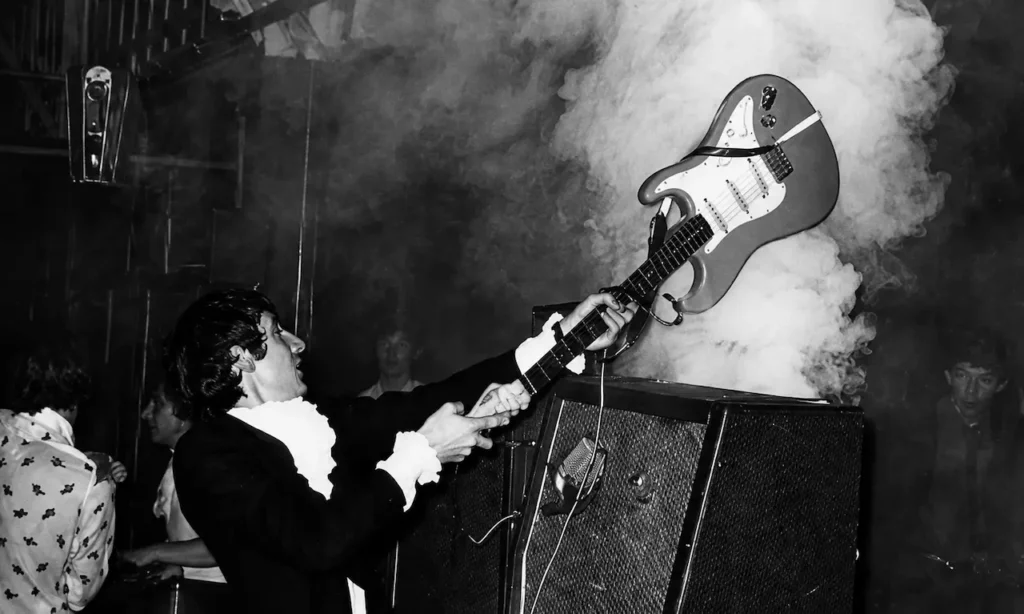
The British Invasion, rock music, and festival culture turned musicians into global fashion references. At the same time, the Space Race inspired synthetic materials, metallic finishes, white boots, and geometric clothing. This contrast made the fashion trends in the 1960s unusually varied, yet both movements shared an interest in breaking with convention.
Social Movements and the Counterculture
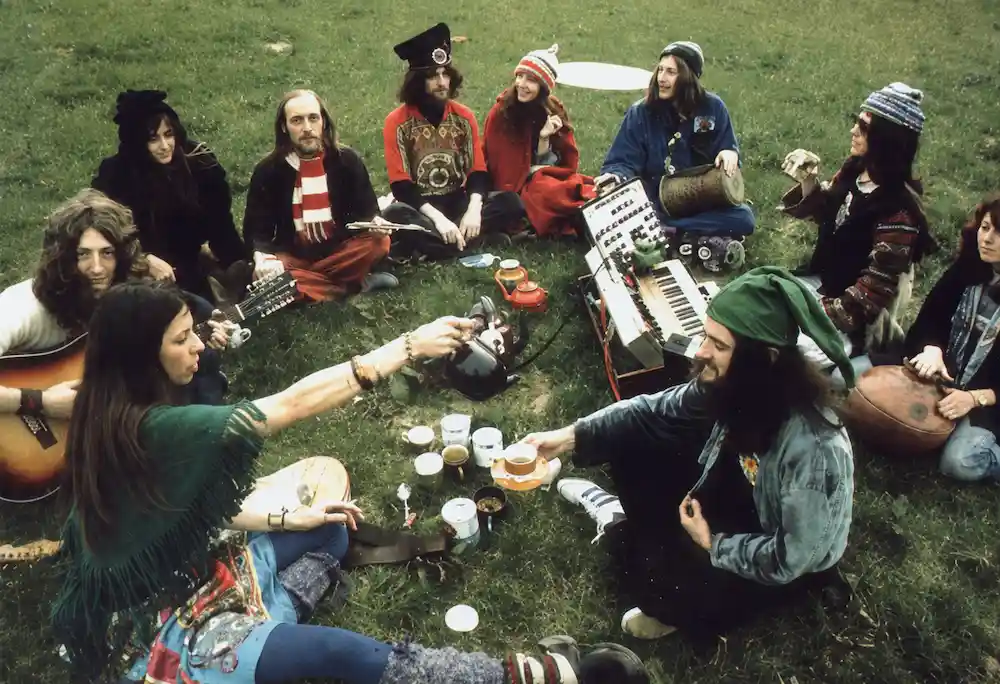
The civil rights movement, women’s liberation, antiwar activism, and the counterculture encouraged people to question established systems. Fashion responded through trousers for women, increasingly unisex clothing, secondhand garments, handmade details, and looser silhouettes. Hippie style rejected rigid coordination in favor of embroidery, fringe, natural materials, and personal combinations.
Choosing a miniskirt, long hair, a military jacket, or a handmade garment could communicate age, attitude, and cultural alignment.
How 1960s Fashion Continues to Influence Style Today
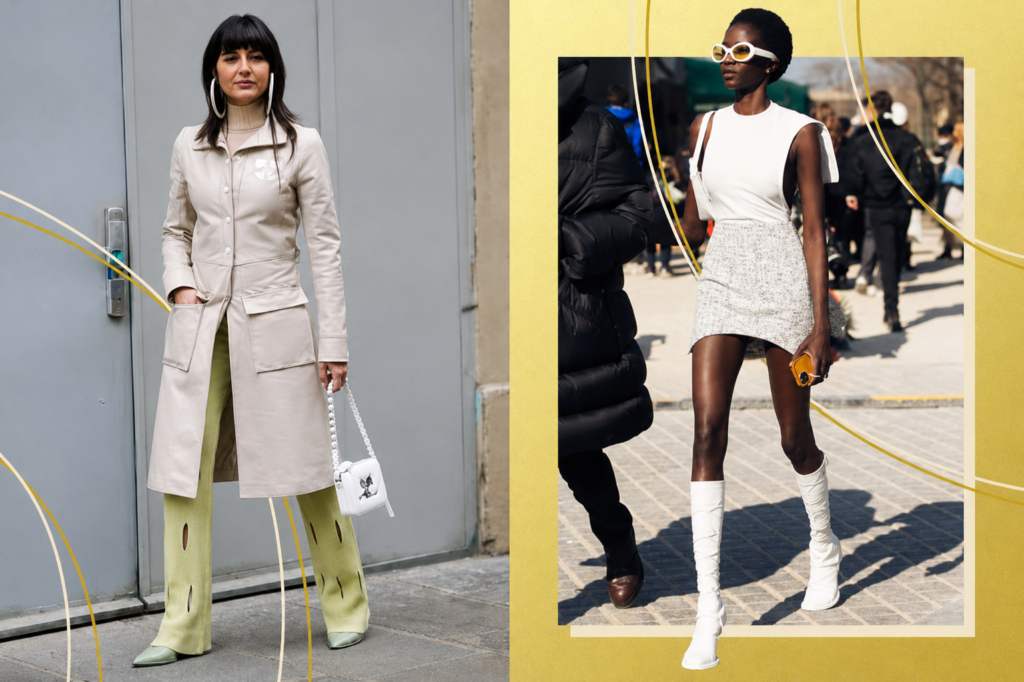
A comparison of 1960s fashion vs today reveals how many ideas from the decade remain active. Miniskirts, A-line dresses, knee-high boots, turtlenecks, geometric prints, flared trousers, crochet, and graphic eyeliner continue to return in updated forms. Designers revisit mod proportions, Space Age surfaces, and bohemian layering because each offers a distinct visual language.
1960s Trends That Have Returned
Common modern interpretations include:
- Miniskirts styled with oversized jackets or knitwear
- Knee-high boots paired with streamlined dresses
- Flared trousers updated in denim and tailoring
- Crochet and embroidery used in contemporary bohemian looks
- Graphic eyeliner inspired by mod beauty
- Metallic finishes influenced by Space Age design
Searches for 60s fashion trends today reflect continued interest in clothing that feels nostalgic but adaptable. The most successful interpretations borrow one recognizable element rather than recreating a complete period outfit.
How to Wear 1960s-Inspired Fashion Today
A 1960s reference works best when balanced with contemporary pieces. A miniskirt can be paired with a relaxed blazer, flared trousers with a simple top, or a geometric dress with understated accessories. The goal is to capture a mood rather than create a costume.
Choosing a specific direction also helps. Mod style favors clean shapes and contrast, Space Age fashion works through structure and shine, while bohemian style relies on texture, layering, and movement.
Why the 1960s Changed Fashion Forever
The fashion trends in the 1960s changed more than hemlines. They altered who could influence fashion, how quickly trends moved, and how clothing expressed identity. Youth culture challenged established houses, ready-to-wear became more important, and musicians, models, and street style gained unprecedented power.
The decade also expanded womenswear and menswear. Trousers became more accepted for women, while men gained access to brighter colors, decorative fabrics, and less restrictive silhouettes. Its legacy survives because it established fashion as a cultural conversation rather than a fixed set of rules.