At Sony Hall, ten looks unfolded through black lace, sculpted corsets, silver embellishments, red roses and a final design that changed shape before the show ended. For Veritée Hill, the most compelling moments came from what the clothes themselves could do.
The Doll in Black and White
The soundtrack was already filling Sony Hall when the first look appeared. It was a striking way to begin: a fitted black bodice that opened into a wide, bell-shaped skirt, with oversized white ruffles spilling over the shoulders and framing the neck. The black fabric was patterned and firm enough to hold an unusual curve, while the white layers looked airy by comparison. Seen together, the two halves seemed to belong to different worlds, one sharply constructed and the other almost weightless. On Diana Yurchenko, the outfit had the character of a porcelain doll, but there was nothing ordinary or delicate about its proportions. The silhouette was the first indication that this would be a show interested in the unexpected.
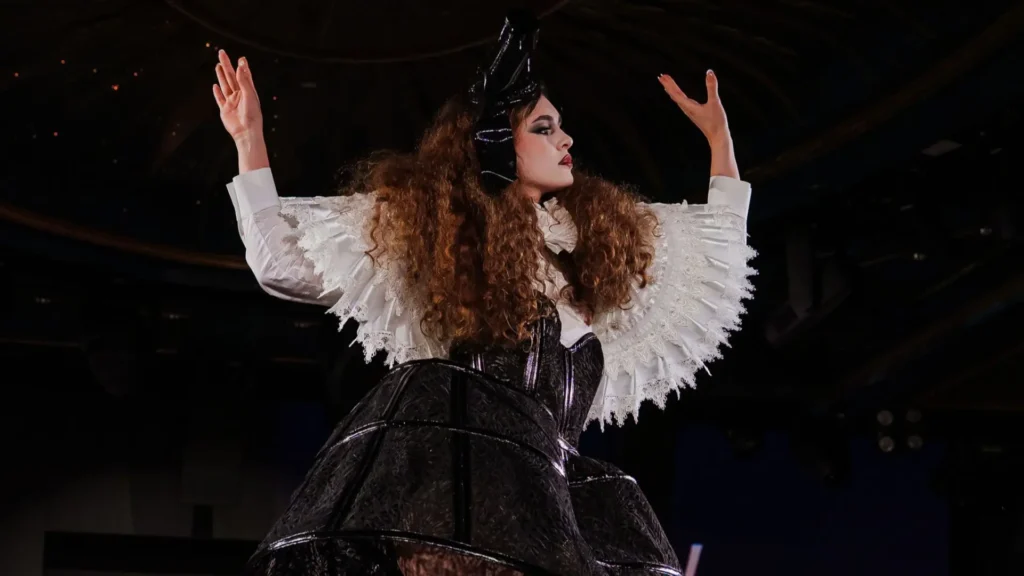
The styling carried that idea a little further. Auburn curls filled the space around Yurchenko’s face, a small black headpiece sat above them, and the pale makeup with sharply defined eyes and red lips gave the look a hint of mime-like theatricality. Her measured steps and carefully placed arms suited the outfit, especially when the white ruffles lifted slightly around her shoulders. Yet the garment kept drawing the eye back to its construction: the way the bodice held the waist, the sculpted width of the skirt and the contrast between soft folds and dark, rigid lines. It was an opening that established the collection’s character through the clothes rather than through spectacle alone.
Behind the Feathered Veil
The second look stayed with black, but the texture changed completely. Tamoy Maddix wore a glossy corset paired with a short, full skirt covered in richly patterned lace. Where the first outfit depended on the clean outline of its bell-shaped skirt, this one invited a closer look at its surface. The shine of the bodice stood out against the softer lace, and the skirt’s rounded shape gave the look a vintage feeling without making it seem old-fashioned. Above Maddix’s dark curls, tall black feathers rose from an ornate headpiece. A fine net veil crossed her face, while a close-fitting ruffled collar connected the accessories to the garment below. The details came from different textures, but they belonged together.
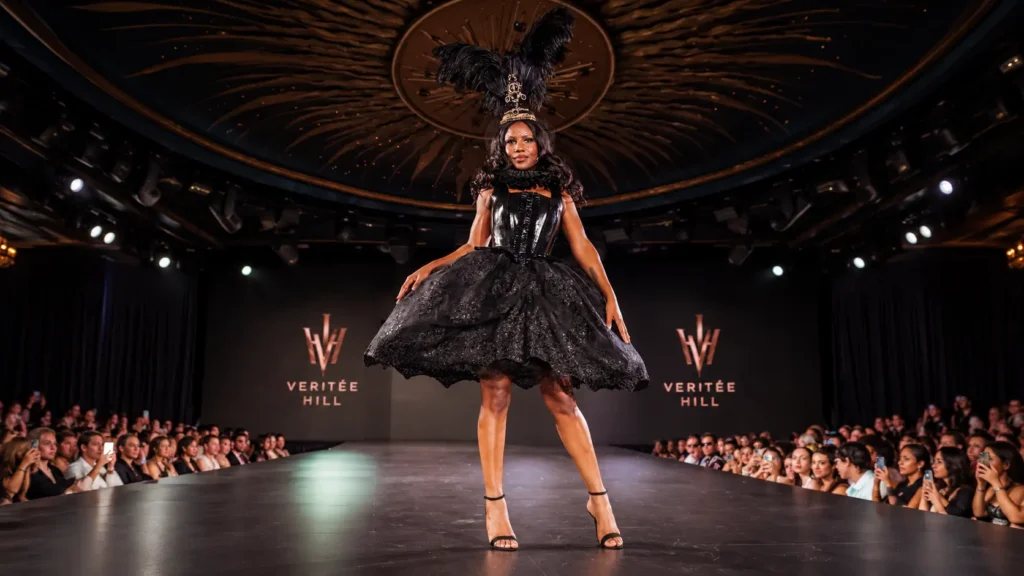
There was something particularly effective about keeping the entire outfit black. Without a change of color to separate each element, the eye followed the shift from polished corsetry to lace, from the veil to the feathers above it. Maddix walked with a composed, steady posture that allowed the headwear to keep its shape, and the netting added an intriguing layer between her expression and the audience. The mood was more restrained than the opening doll-inspired creation, even though the accessories were just as elaborate. Veritée Hill was already showing how a familiar palette could feel entirely different when the proportions and materials changed.
Violet Beneath Black Wings
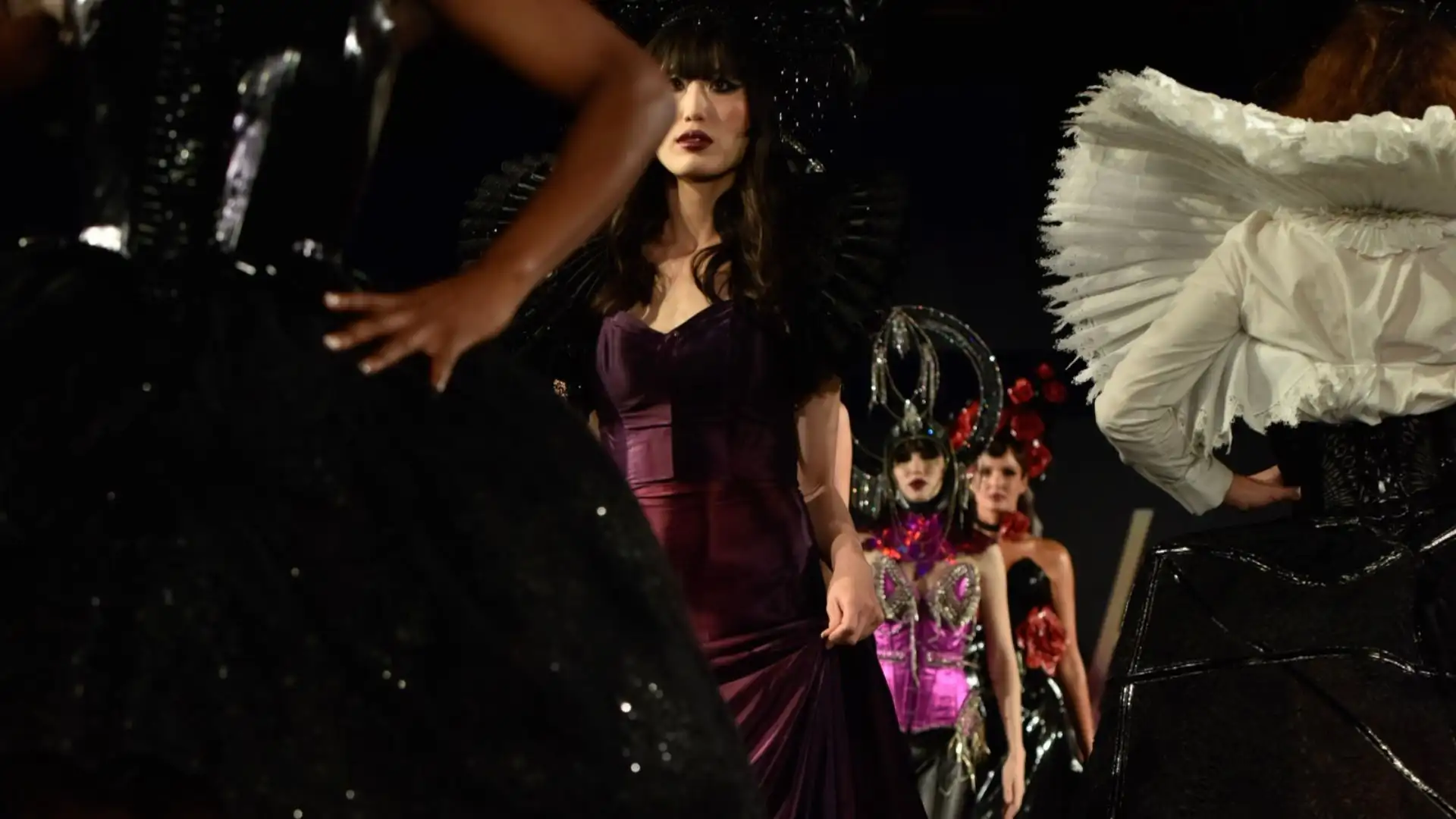
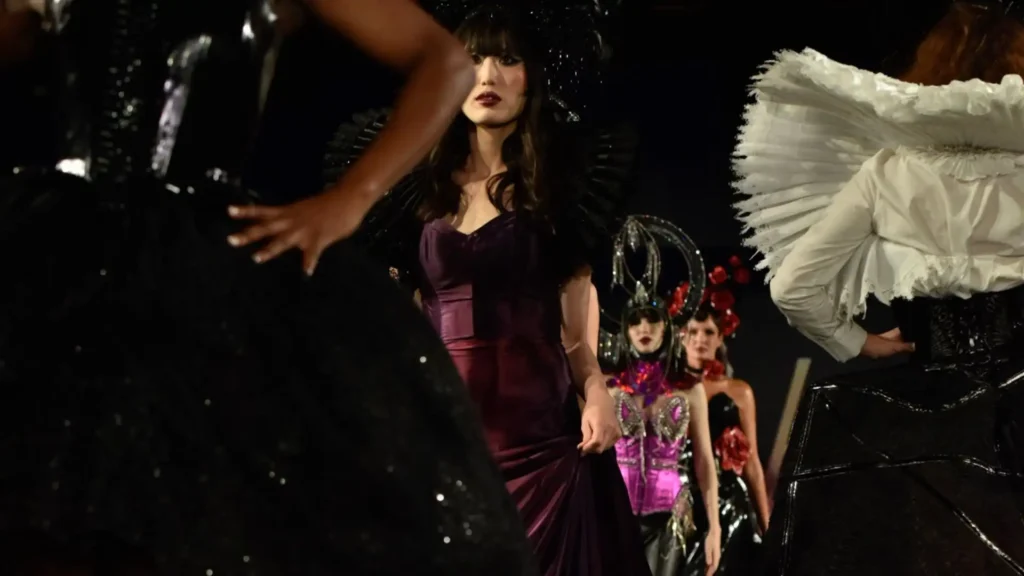
Then came violet. After the first two dark looks, the color caught the light immediately as Rina Okada stepped forward in a long gown with a fitted bodice and a flowing skirt. Its satin-like surface shifted between deep purple and brighter magenta as it moved, gathering gently near the floor. Compared with the detailed black pieces that opened the show, the gown itself had a cleaner line. That simplicity made the enormous accessories around the shoulders all the more noticeable. Black, pleated forms opened out on either side like folded wings, and a tall, embellished headpiece rose above them. The dress moved softly below while the dark structures kept their bold, sculptural shape above.
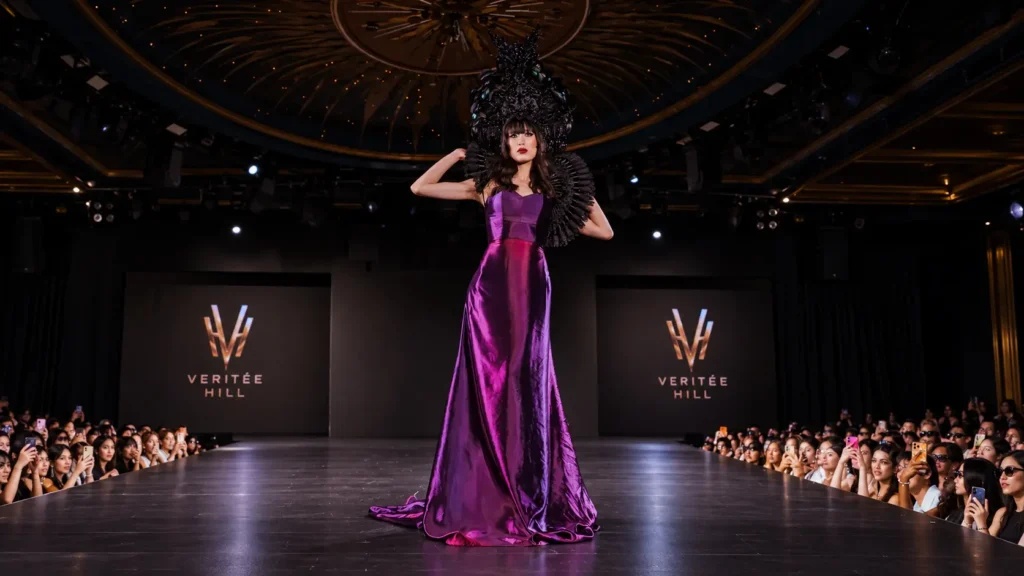
Okada raised her arms near those fan-shaped shoulder pieces, making their scale easier to appreciate from the front of the runway. The gesture felt connected to the clothes: it showed how the black forms framed her upper body without interrupting the long violet line beneath them. Her straight bangs and deep red lipstick added definition to the styling, but the richest detail was still the changing surface of the dress under the lights. In this look, fabric movement did as much work as ornamentation. The purple brought a new energy to the sequence while the dramatic headwear kept it unmistakably part of the same collection.
Silver From Bodice to Crown
With Olya Romanova, the palette returned to black, though the silver detailing made the look feel entirely different from the earlier dark ensembles. Her floor-length gown had a smooth, relatively quiet lower half and a fitted upper section covered in curling silver appliqués and beadwork. The reflective pattern drew attention across the chest before continuing, visually, into an extraordinary headdress. Curved silver shapes climbed above her head in a crown-like arrangement, while thin decorative strands fell beside her face. The effect came from the relationship between the two pieces. Rather than looking like a dress with an oversized accessory added at the last minute, the bodice and headwear seemed to have been designed to speak to one another.
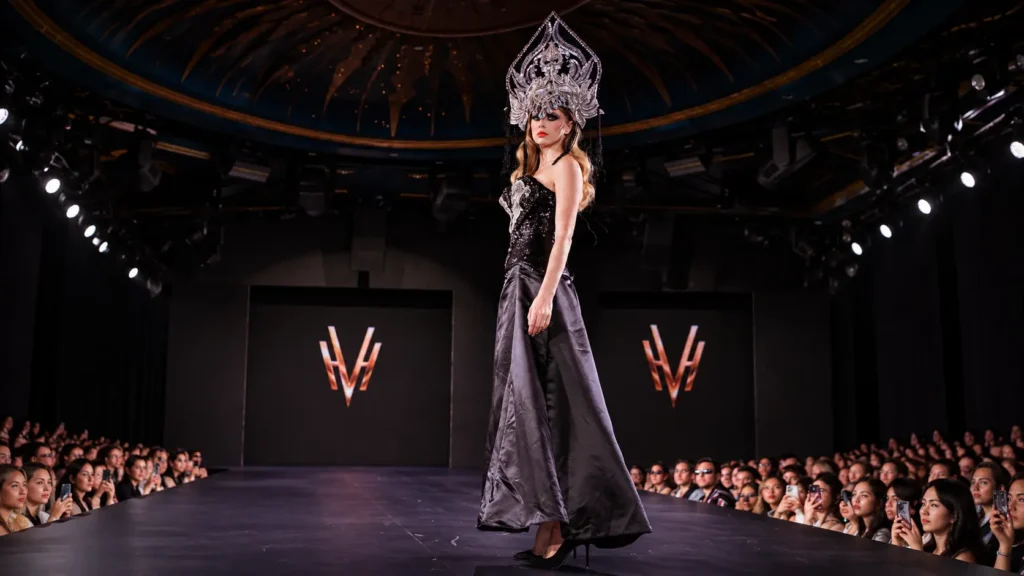
The simpler skirt was just as important as the sparkling details. It gave the eye somewhere to rest and kept the abundance of silver from overwhelming the outfit. As Romanova advanced, the decoration caught small flashes of stage light, revealing the different curves and layers of the work above the waist. Her steady posture helped maintain the height of the elaborate headdress, but the attraction was the craftsmanship on display: the repeated motifs, the delicate hanging elements and the way the ornamentation shaped the whole look. It was an example of how a striking accessory could become an integral part of the clothes.
Fuchsia With an Edge
Joelle Sasson’s look was a sharp departure from the gowns before it. Instead of a flowing skirt, there were slim black trousers beneath a vivid fuchsia corset with a metallic sheen. Silver spikes, chains and pointed details crowded the bodice and extended around the hips, turning the garment into a densely decorated focal point. The trousers, by comparison, were almost understated. Above the corset stood a large circular headpiece threaded with sparkling strands and hanging ornaments, with a bright, textured collar adding another flash of color beneath it. The combination had a harder edge than the lace, satin and roses elsewhere in the show, but it still relied on the same interest in exaggerated form and meticulous-looking detail.
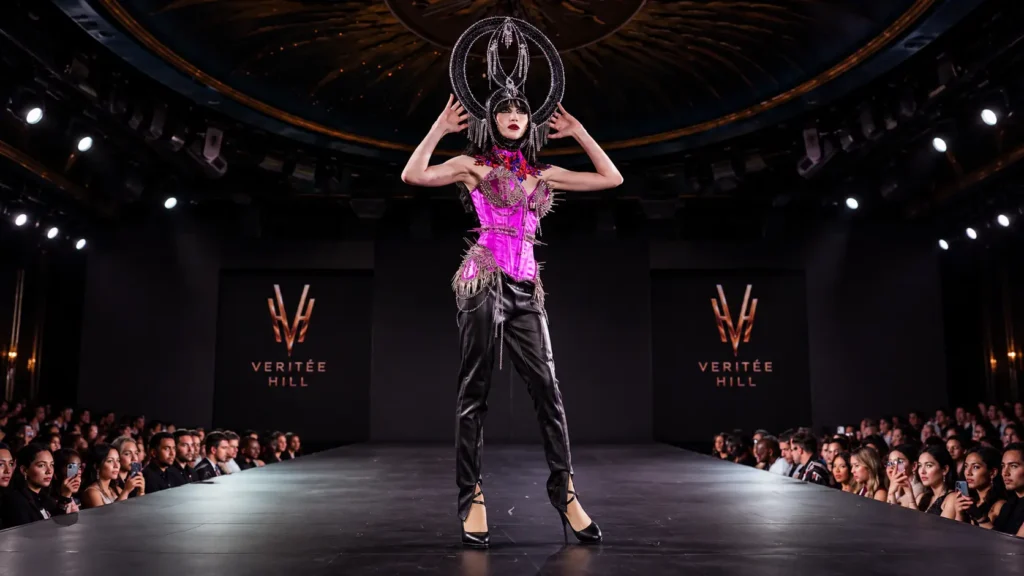
The decision to pair the corset with trousers changed how the design was seen. With no skirt competing for attention, the metallic details at the waist and chest became more pronounced, while the circular frame above Sasson’s head made the outfit appear even taller. She lifted both hands beside that frame, drawing attention to its shape and the hanging strands that followed its curves. It was one of the clearest moments in the presentation when a model’s pose helped explain a piece of design. The fuchsia corset stood on its own, but the quieter black trousers gave it the space to be fully appreciated.
Red Roses, Two Silhouettes
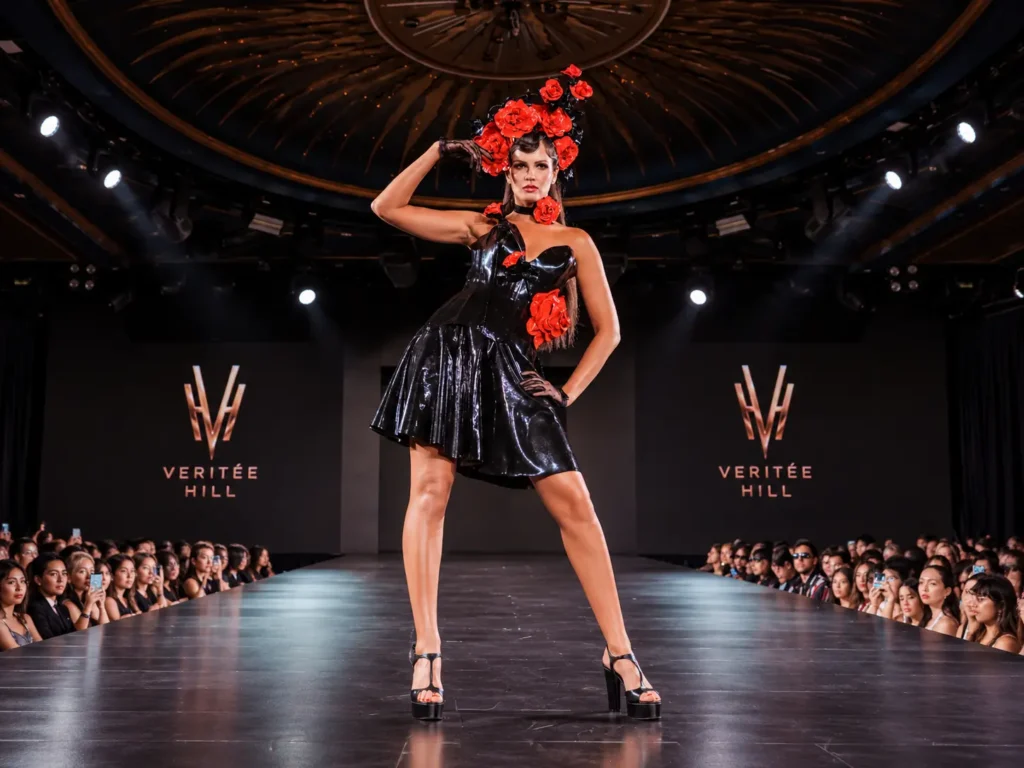
A different kind of ornament arrived with Maria Oliveri: vivid red roses against the high shine of a black dress. The fitted bodice curved into a short, flared skirt, and the glossy surface caught the lights in broad reflections. Sculpted roses appeared on the garment itself, around the neck and high in the headpiece, making the flowers feel like a continuing part of the design rather than isolated decorations. Their bright color was impossible to miss against the black material, but the playful proportions of the skirt were equally important. Oliveri presented the look with gentle hand movements, briefly bringing one hand near her face and the flowers above it. Those gestures suited the floral theme without taking attention from the striking combination of shine, shape and red petals.
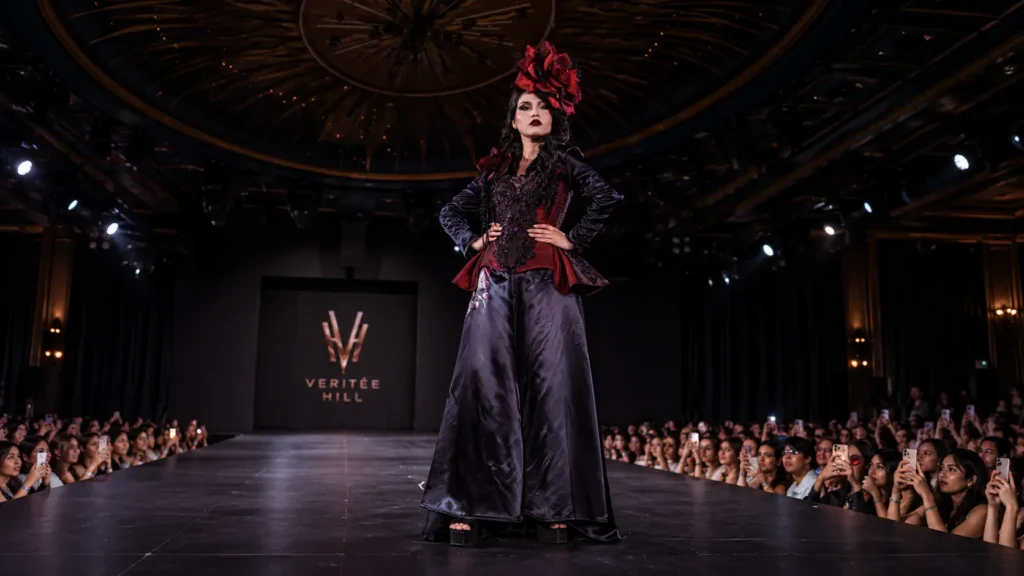
The roses continued in Victoria Tabora’s look, though almost everything else changed. A burgundy corset, decorated with dark embellishments, shaped the waist before widening into projecting panels at the hips. Below, long black satin-like fabric created a heavier, more sweeping line than Oliveri’s short skirt. The deep red flowers returned at the shoulder and in an oversized headpiece, but here they looked moodier against the darker shades of the outfit. Tabora’s direct gaze and hands-on-waist pose emphasized the strong outline of the corset. Seen consecutively, the two looks showed how one motif could travel from playful to imposing: a glossy, compact dress followed by a longer ensemble whose proportions and rich fabrics gave the roses a more formal presence.
Pink Tulle, Porcelain Poise
The change to pink felt almost like a change of scene. Vivi Rodríguez appeared in a pale, voluminous dress made from layers of tulle that spread outward in a wide bell shape. A fitted bodice kept the waist defined, while clusters of pink blossoms rested across the skirt, adding texture without weighing down the airy fabric. The flowers rose into a remarkable headpiece, gathering around her dark curls and arching high above her head in a curved frame. A pleated collar and small frilled shoulder details completed the look. After the sharp black-and-red combinations, this outfit brought a softer palette to the runway, though its scale was every bit as ambitious as the pieces that preceded it.
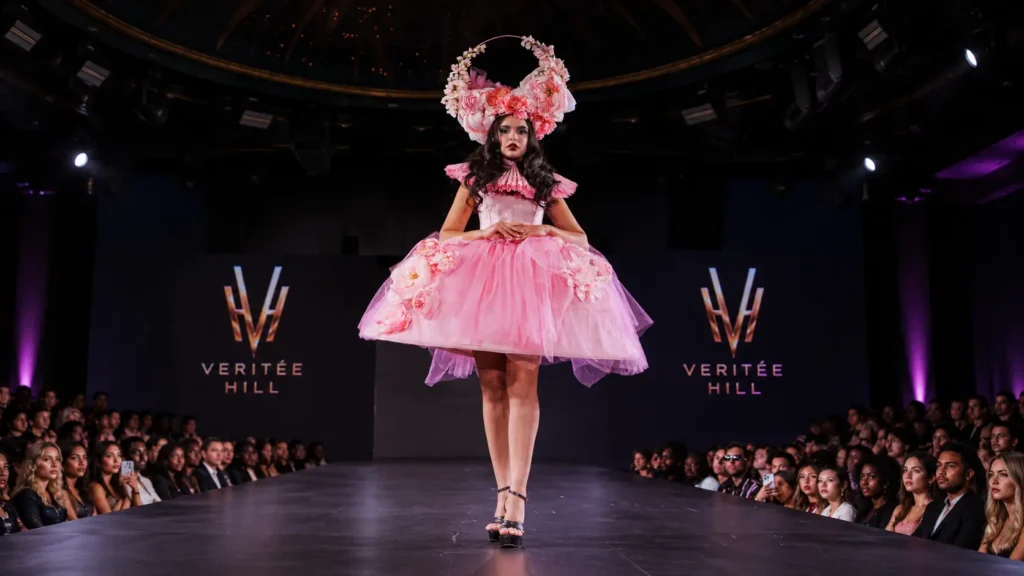
There was a connection to the first look: both dresses used an exaggerated skirt to evoke the stillness of a doll. But where Diana Yurchenko’s black-and-white ensemble was defined by rigid curves and crisp ruffles, this version seemed to float through pale tulle and flowers. Rodríguez’s composed expression and gentle movement toward her headpiece complemented the styling, allowing the height of the floral arrangement to register. The details were romantic, but the dress was not simply sweet. Its carefully controlled volume gave it a strong shape, proving that the collection could move from dark, almost gothic references to something dreamlike without losing its fascination with structure.
Red Satin, Black Volume
Yoyo Guo brought the runway back to deeper color in a gown built around broad, red satin-like panels and sweeping layers of black fabric. The red ran through the center of the dress, while the dark material opened out around it, creating depth and a sense of weight. Sculpted red elements rose near the neckline and across the bodice, giving the upper section a pronounced, almost armored appearance. A tall black headpiece added another dark shape above the gown. After the soft pink tulle, these denser fabrics felt especially forceful. The look was defined less by delicate decoration than by how large pieces of fabric were arranged together to shape the body and fill the space around it.
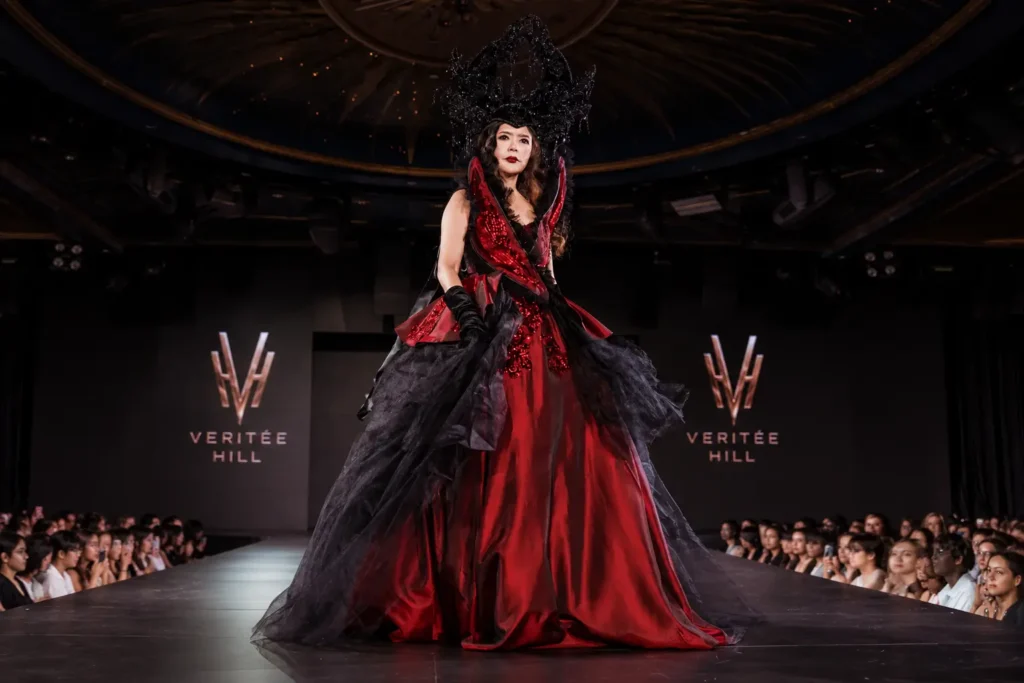
As Guo moved, the red panels reflected the runway lights while the black layers remained comparatively subdued. That difference made the folds more visible and gave the gown a shifting outline. Small turns of her head changed how the dark headdress framed her face, and her hands offered glimpses of the fabric gathered around the hips. The gestures were restrained, which worked in the outfit’s favor: its layered construction already gave the eye plenty to follow. What lingered was the bold meeting of red and black, the unusual neckline and the way the dress seemed to change weight as the fabric moved.
The Backdrop Becomes a Cape
For the final look, the stage filled with black and gold. Mackenzie Renfro wore a long, embroidered gown whose fitted upper section opened into a gently flared skirt covered with ornate gold patterns. A substantial golden headpiece echoed those details, with fine hanging ornaments framing her face. But the gown was only the center of a much larger composition. Behind her, enormous black panels opened outward like the petals of a giant flower, their curved surfaces marked with more golden decoration. The structure spread almost as wide as the runway itself, creating a striking backdrop around the figure at its center. It was the largest piece of the presentation, and the design seemed deliberately arranged to be seen in stages.
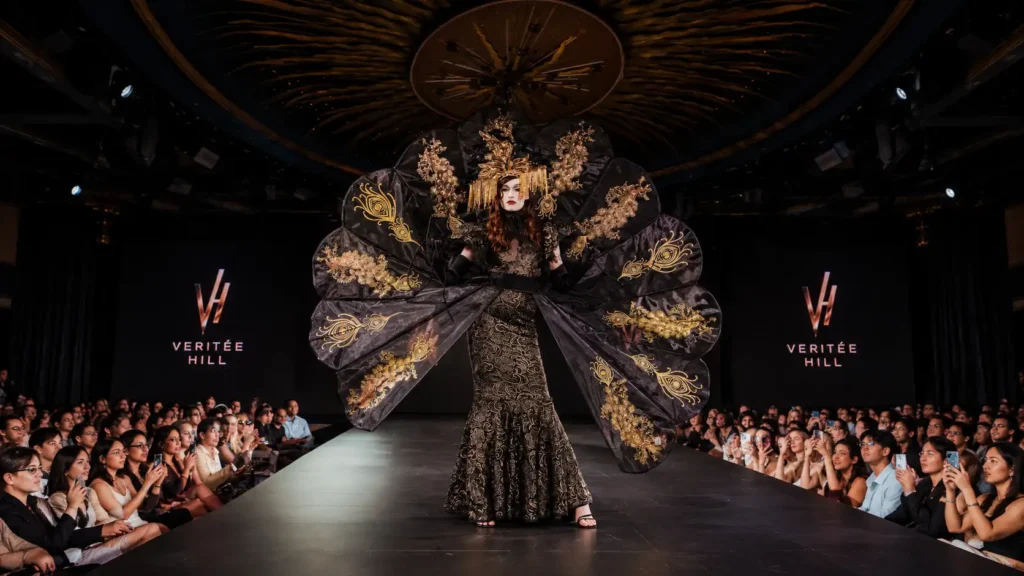
At first, those immense panels appeared to be scenery accompanying the gown. Then the relationship between the two became clear: the open structure could be gathered into a sweeping, cape-like covering around Renfro’s body. What had seemed fixed and architectural became soft and draped, revealing another way to wear the same creation. Renfro’s measured poses allowed both forms to be seen, but the surprise belonged to the garment and the engineering of its transformation. After nine looks shaped by corsets, lace, flowers and towering headpieces, the final design brought those ideas about scale and decoration to an unexpected conclusion. It was the kind of ending that made the earlier attention to shape feel purposeful: the largest silhouette of all was also the one that changed before the show was over.
The Craft Behind the Spectacle
Looking back across the ten looks, it was the variety of surfaces and proportions that made the presentation memorable. The opening black-and-white dress turned corsetry and ruffles into a doll-like shape; black lace and feathers offered a darker kind of detail; violet satin moved beneath wing-like forms; and silver beadwork linked a gown to its crown. Later, metal accents sharpened a fuchsia corset, red roses appeared on two very different silhouettes, and pink tulle brought an almost weightless quality to an oversized skirt. The designs did not all look alike, but they shared a willingness to push familiar garments into something more imaginative.
The models gave those pieces movement and individual character, from Diana Yurchenko’s careful gestures to Maria Oliveri’s softer poses and Victoria Tabora’s steady stance. Still, what remained most vivid was the clothing itself: how it caught the light, occupied the runway and, in the last look, transformed in front of the audience. The black-and-gold finale brought Veritée Hill’s interest in embellishment and scale into a single reveal, closing the show with a piece that was more than it first appeared. At Sony Hall, the ten-look collection made its point through the details, one unexpected shape at a time.