From delicate blush-pink gowns to architectural silhouettes and a dramatic golden finale, Alejandro de los Reyes revisited thirteen distinctive creations from his career in an intimate Runway 7 showcase during New York Fashion Week.
A Fashion Journey Through Time
On September 9, M Social Downtown welcomed a different kind of fashion presentation as Alejandro de los Reyes brought together thirteen of the most distinctive gowns from his career. Rather than introducing an entirely new collection, the designer chose to revisit his previous creations, presenting a visual journey through the techniques, silhouettes and intricate details that have shaped his work over the years.Before the runway presentation began, Alejandro de los Reyes and Alex Spektor addressed the guests. Spektor, Managing Director of M Social Hotel New York Downtown, represented the venue hosting the showcase in collaboration with Runway 7 during New York Fashion Week. Their opening remarks marked the beginning of an evening that brought together fashion, hospitality and creative expression in the heart of Lower Manhattan.
The intimate setting offered a closer look at the craftsmanship behind each creation. Crystals, beadwork and sheer panels became prominent with every movement, revealing different textures and finishes. Throughout the showcase, the presentation unfolded as a retrospective of eveningwear, moving from romantic silhouettes to geometric constructions, elaborate necklines and increasingly dramatic designs that reflected different expressions of Alejandro de los Reyes’ creative journey.
A Romantic Opening in Pink
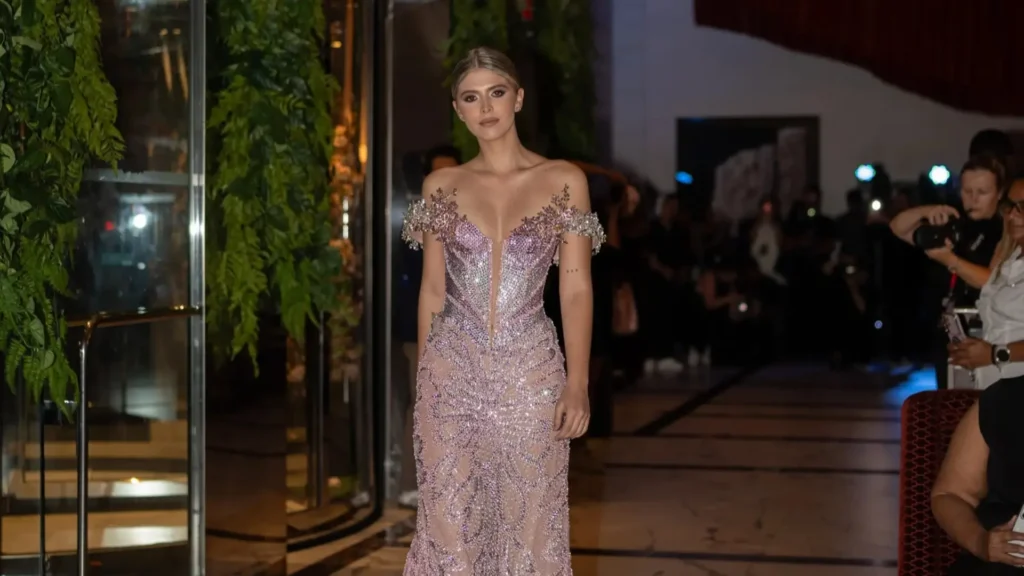
The presentation began with a floor-length blush-pink gown that immediately introduced the intricate decorative work associated with Alejandro de los Reyes’ designs. The dress followed the model’s figure with a fitted silhouette, while delicate floral embellishments extended from the off-the-shoulder neckline, appearing almost like small blossoms resting along her arms. A narrow illusion detail descended through the center of the chest, surrounded by shimmering patterns that continued down the length of the gown. As the model approached, the pale pink fabric revealed an elaborate arrangement of reflective beadwork, creating flowing shapes across the dress without interrupting its soft, elongated silhouette.
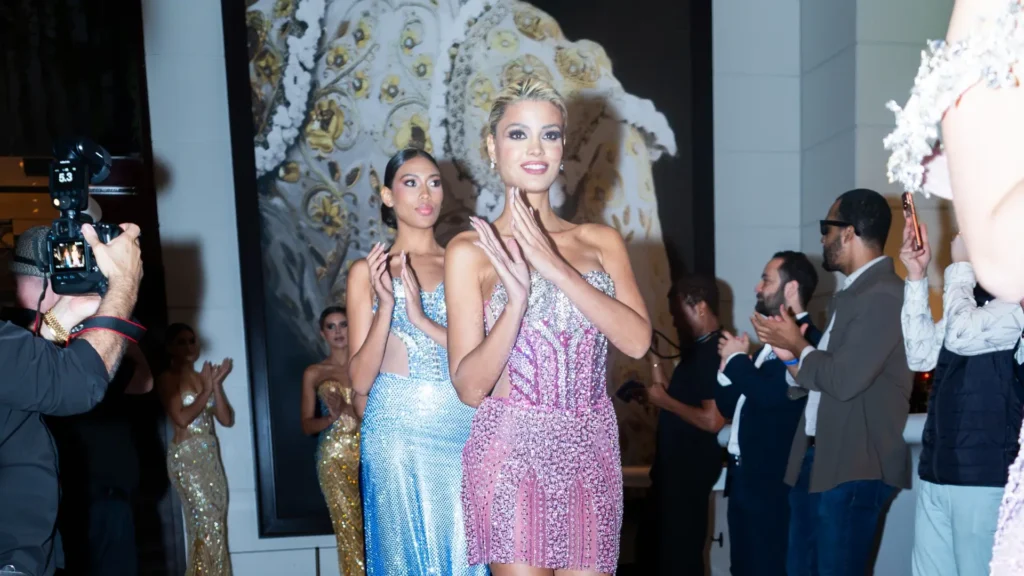
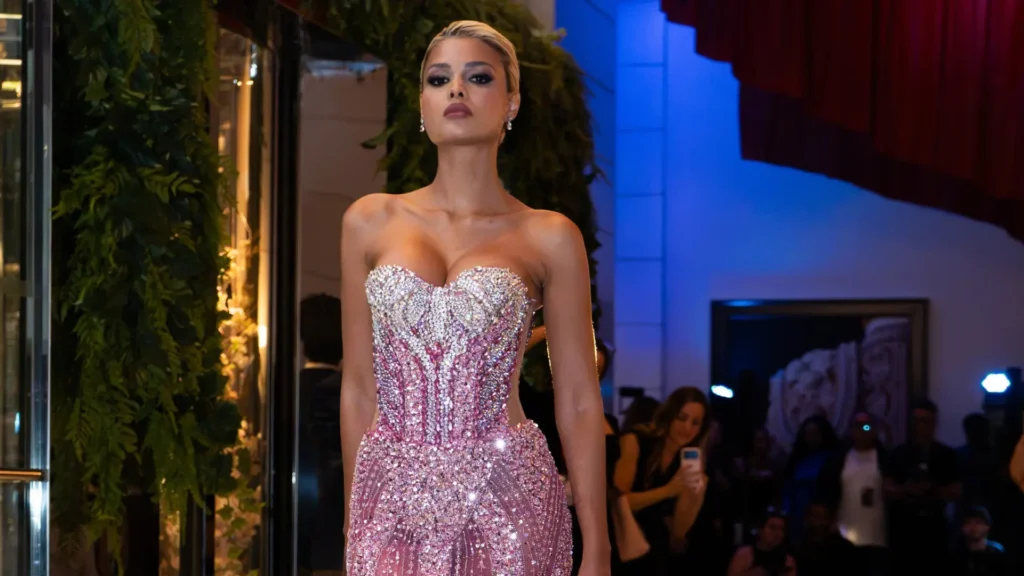
The mood shifted with the second appearance, which replaced the romantic length of the opening gown with a short, strapless pink minidress. Its sweetheart neckline was densely covered in crystals, while the sculpted sections around the hips gave the garment a more pronounced silhouette. The reflective embellishments moved between shades of pink and silver, creating flashes of light across the fitted skirt. Placed immediately after the opening design, the shorter dress introduced a different interpretation of evening glamour, demonstrating how similar decorative techniques could produce entirely different results through changes in proportion and construction.
Silver and Blue Take the Runway
The third model introduced a cooler palette through a shimmering silver-blue gown with a strapless sweetheart neckline. Curved arrangements of reflective stones outlined the bust and traveled down the fitted upper portion, while sheer panels along the sides created the impression of a sculpted waist. Below the hips, the dress continued into a long, narrow skirt covered in closely arranged embellishments that reflected icy-blue and silver tones under the lights. The overall silhouette remained relatively simple, allowing the intricate placement of crystals to become the most prominent feature.
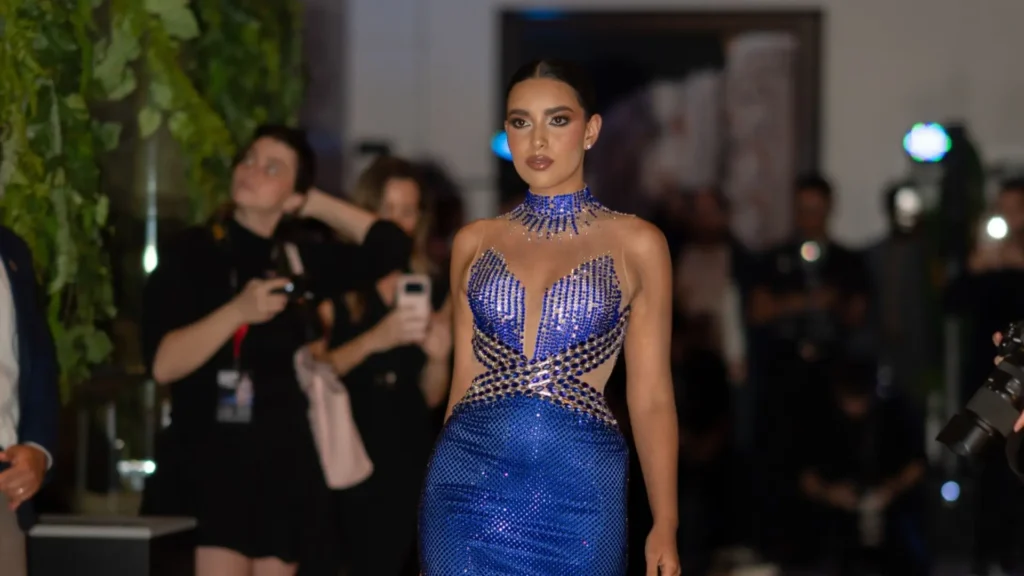
A deeper shade of blue followed, bringing a noticeably different character to the presentation. The fourth gown was covered in royal-blue embellishments, with a structured neckline decorated in vertical arrangements of stones and curved bands crossing the waist. A striking jeweled collar framed the model’s neck, with delicate strands extending downward across the chest and creating a visual connection with the decoration below. The long skirt maintained a fitted shape, allowing the blue surface to shimmer as she moved through the venue. Together, these two appearances revealed contrasting interpretations of blue eveningwear, one relying on cool reflections and fluid decorative patterns, the other emphasizing stronger geometry and an elaborate neckline.
A Gradual Transition from Gold to Ice Blue
One of the most distinctive color combinations appeared in the fifth look, when a floor-length gown introduced a gradual transition from luminous champagne gold to icy blue. The upper portion was densely covered in golden embellishments that followed the contours of the body, while the lower half slowly shifted into cooler silver and pale-blue tones. What made the gown particularly interesting was its elevated halter neckline, which extended upward into an embellished collar and framed a narrow transparent section at the center of the chest. From the waist downward, the decorative patterns spread across the hips before becoming longer and more fluid toward the hem. As the model walked, the gradual change in color became increasingly visible, making the dress stand apart from the more uniform tones of the preceding designs.
The sixth appearance returned to a predominantly golden palette but explored a different approach to the neckline. A strapless gown featured a sweetheart shape with a sheer triangular opening extending below the bust toward the waist, framed by slender lines of gold embellishment arranged like an open fan. Small blue stones appeared along the sides, interrupting the champagne and gold tones, while symmetrical V-shaped patterns traveled across the hips and continued down the fitted skirt. The transparency of the central opening contrasted with the surrounding density of crystals, giving the dress a more daring appearance without losing the refined proportions that characterized the previous gowns.
Intricate Gold Embellishments and the Art of Illusion
The seventh look introduced another interpretation of golden eveningwear through a champagne-colored gown covered in ornate, symmetrical embellishments. A sweetheart neckline framed a deep illusion opening, while the fitted upper portion flowed into an elaborately decorated waist and hip area. The arrangement of crystals created curved and almost ornamental patterns across the body, becoming particularly dense around the upper skirt. Below that section, the decoration transitioned into long vertical strands that extended toward the hem, giving the dress a lighter appearance as the model moved forward. Compared with the preceding golden design, this gown relied less on sharp geometric lines and more on elaborate surface patterns.
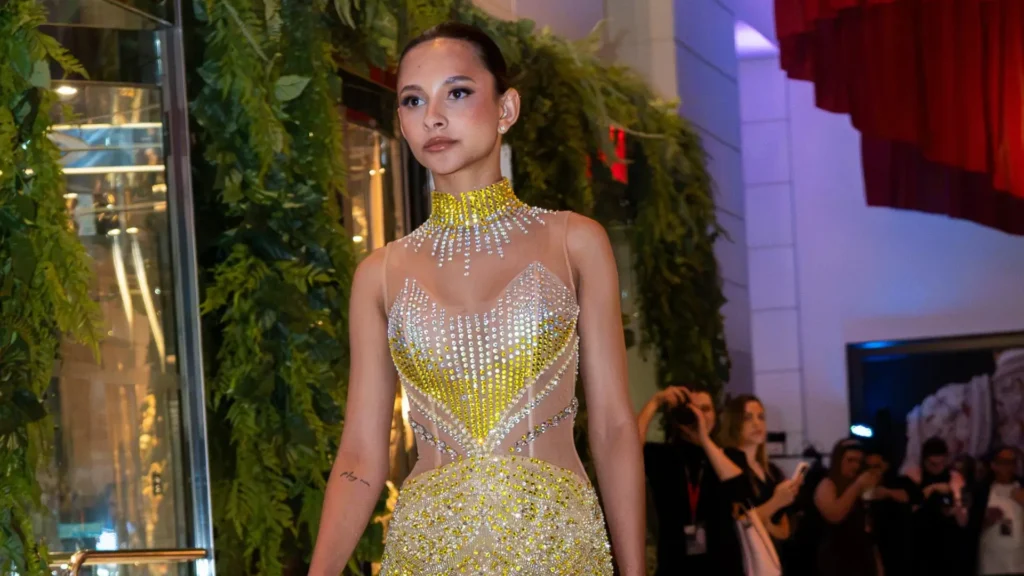
The eighth appearance offered one of the most intriguing details of the showcase. From a distance, the pale-golden gown looked as though it incorporated several independent elements, particularly a jeweled choker that seemed to sit above a separate dress. As the model approached, however, it became apparent that the collar was integrated into the garment itself, with its delicate strands of crystals arranged over a nearly invisible nude-toned foundation. The transparent sections connected the neckline, chest and waist into one continuous design, while curved bands of stones created the illusion of separate pieces joined together. Below the waist, shimmering patterns extended along the fitted skirt, making the entire dress appear almost like jewelry assembled directly onto the body.
An Architectural Silhouette
The ninth look introduced one of the strongest changes in proportion seen throughout the presentation. A floor-length golden gown featured sharply defined shoulders that extended outward into elevated, angular points, creating a broader upper silhouette above a narrow waist. The high neckline was connected to sheer long sleeves, where delicate strands of gold embellishment followed the arms, while sweeping metallic patterns spread across the chest in symmetrical, wing-like shapes. These decorative lines converged toward the waist before extending down the fitted skirt, emphasizing the dramatic contrast between the structured shoulders and the elongated lower half. Long beaded strands hung along the sides, introducing movement into the otherwise architectural design, while subtle reddish reflections appeared among the gold embellishments toward the hem.
The next gown brought the focus back to the neckline, but with a distinctly more revealing approach. Its deep V-shaped opening extended toward the waist, framed by long bands of gold and silver crystals that followed the contours of the model’s figure. Transparent nude-toned sections appeared between the densely embellished areas, creating an uninterrupted series of vertical lines across the dress. The plunging neckline gave the design a more daring character, yet the fitted silhouette and carefully arranged decorative details maintained its formal elegance. After the pronounced shoulders of the previous appearance, this look demonstrated how the same sense of visual drama could be achieved through transparency and the placement of embellishments rather than exaggerated proportions.
The Final Expressions of Evening Glamour
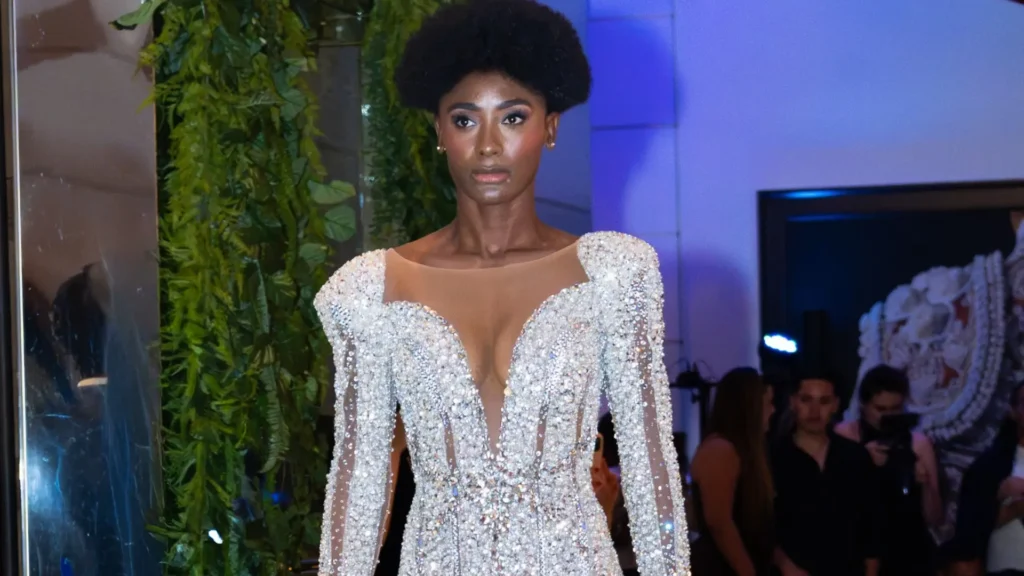
The eleventh appearance returned to silver through a long-sleeved evening gown covered almost entirely in reflective embellishments. Its structured shoulders framed a deep illusion neckline, while the close-fitting silhouette continued into a straight, floor-length skirt decorated with narrow vertical patterns. The long sleeves created a more covered upper silhouette, contrasting with the opening at the center of the chest. As the model walked, the dense silver embellishments caught the light across the entire garment, giving it a continuous reflective finish that differed from the earlier silver-blue dress.
Gold returned in the twelfth look, this time through an off-the-shoulder gown with elaborate ornamental detailing and long strands of beaded fringe extending from the arms. The neckline was framed by delicate, floral-like embellishments surrounding a central illusion opening, while rich golden patterns decorated the fitted upper portion. The hanging strands were especially noticeable as the model moved, falling alongside her arms and introducing a fluid quality that contrasted with the structured dress beneath. Across the skirt, vertical rows of reflective stones continued toward the floor, visually connecting the moving fringe with the rest of the design.
For the final individual look, Alejandro de los Reyes introduced a golden gown that immediately distinguished itself through its proportions. The strapless design featured a fitted upper section covered in elaborate crystal patterns, with ornate embellishments emphasizing the waist and hips. Yet the most striking detail appeared below, where the silhouette expanded into a dramatic, extended train. Unlike the twelve preceding dresses, this was the only gown in the presentation to feature such a pronounced trailing element, giving the final appearance a more ceremonial presence. The volume spread outward across the floor, creating a broad golden shape that contrasted with the narrow silhouettes seen earlier in the showcase. After a succession of fitted gowns, illusion details and elaborate necklines, the extended train introduced a new sense of scale that made the closing look visibly different from the rest.
One Final Walk
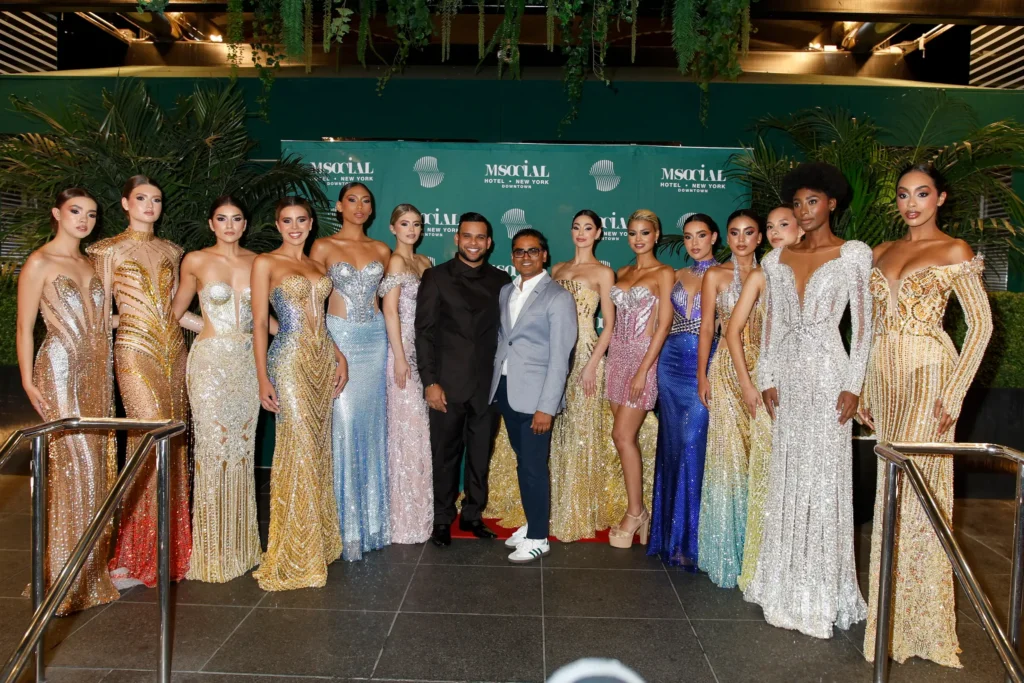
The showcase did not end with the golden gown. As the presentation reached its closing moments, the models returned for a final procession, bringing all thirteen dresses back into view. The blush-pink opening gown appeared once again alongside the silver, blue and gold creations, allowing the audience to appreciate the variety of silhouettes and decorative techniques together rather than as individual appearances. The models delivered confident, striking walks throughout the final sequence, each bringing a distinctive presence to the runway while allowing the embellishments, fringe and different shapes of the gowns to be seen in motion.
Guests applauded as the models made their way through the venue, with several attendees raising their phones to record the closing moments. The return of the full lineup offered a different perspective on the presentation, revealing how the romantic floral details of the earlier designs contrasted with the more geometric, architectural and ornamented gowns that followed. The models’ performances became part of the visual experience, complementing the garments through their posture, pace and movement.