An all-red runway, daring cutouts, and theatrical designs brought a fearless perspective to contemporary fashion.
At New York Fashion Week in September 2026, Tutel transformed the runway into a striking study of red, revealing silhouettes, and experimental design. From sharply cut menswear to intricately laced dresses and dramatic statement pieces, the collection explored the possibilities of clothing that challenges familiar proportions and places the body at the center of its aesthetic.
Vivid red dominated every appearance, unifying an assortment of textures and materials. Sheer mesh, glossy fabrics, metallic embellishments, and exaggerated platform footwear gave the presentation a distinctive character, while unexpected openings and sculptural details introduced an element of rebellion.
Beyond its provocative styling, Tutel’s showcase revealed a consistent approach to contemporary fashion. The garments moved between elaborate construction and minimalist forms, demonstrating how a single color could accommodate contrasting expressions of confidence, sensuality, and individuality.
A Runway Defined by Red
The opening look immediately established the collection’s daring direction. A male model appeared in a vivid red ensemble that challenged conventional menswear through exposed skin, angular cuts, and unusual proportions.
A cropped, high-neck upper garment framed the shoulders while leaving much of the chest and abdomen uncovered. Narrow straps crossed the torso and extended toward the waist, connecting the upper piece to an unconventional pair of trousers.
The pants were particularly distinctive. Their textured surface featured raised embellishments distributed across the legs, while dramatic openings around the hips and upper thighs interrupted the familiar shape of tailored trousers. A coordinating red underlayer added another dimension to the design, and chunky platform boots reinforced its commanding presence.
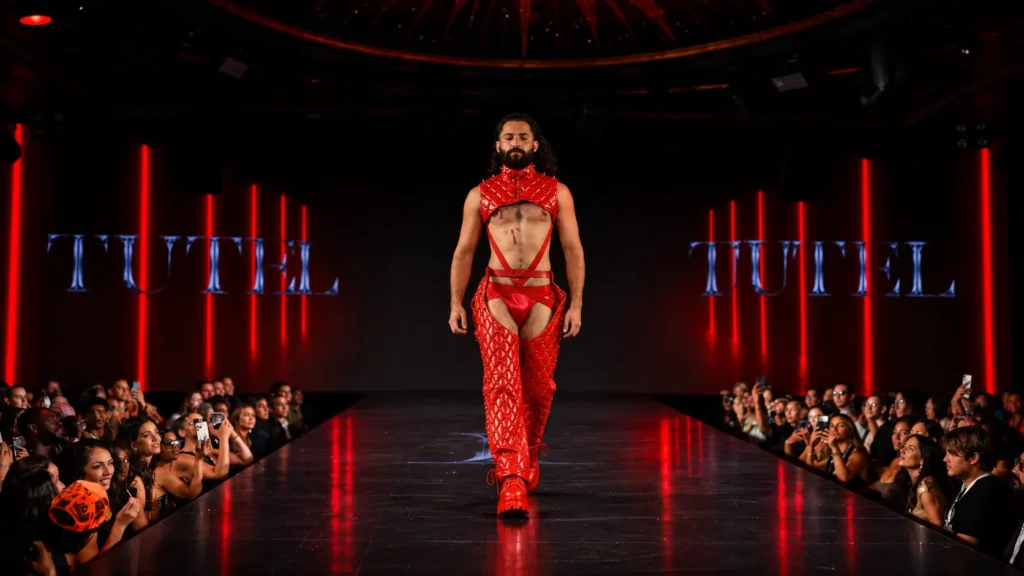
At the center of the exposed chest, a red letter T served as a recognizable reference to the brand. Its placement directly on the body transformed a simple graphic element into part of the overall styling.
This first appearance established the collection’s defining characteristics: saturated color, experimental proportions, and an emphasis on the interplay between garments and exposed skin.
As the presentation unfolded, these elements returned in different forms, creating continuity between fitted dresses, sheer ensembles, and increasingly elaborate statement pieces.
Lacing, Mesh, and the Art of Exposure
One of Tutel’s most distinctive techniques was the use of lacing to construct garments around the body. Rather than functioning solely as a fastening method, intersecting cords became an essential part of the designs, creating patterns through the contrast between material and open space.
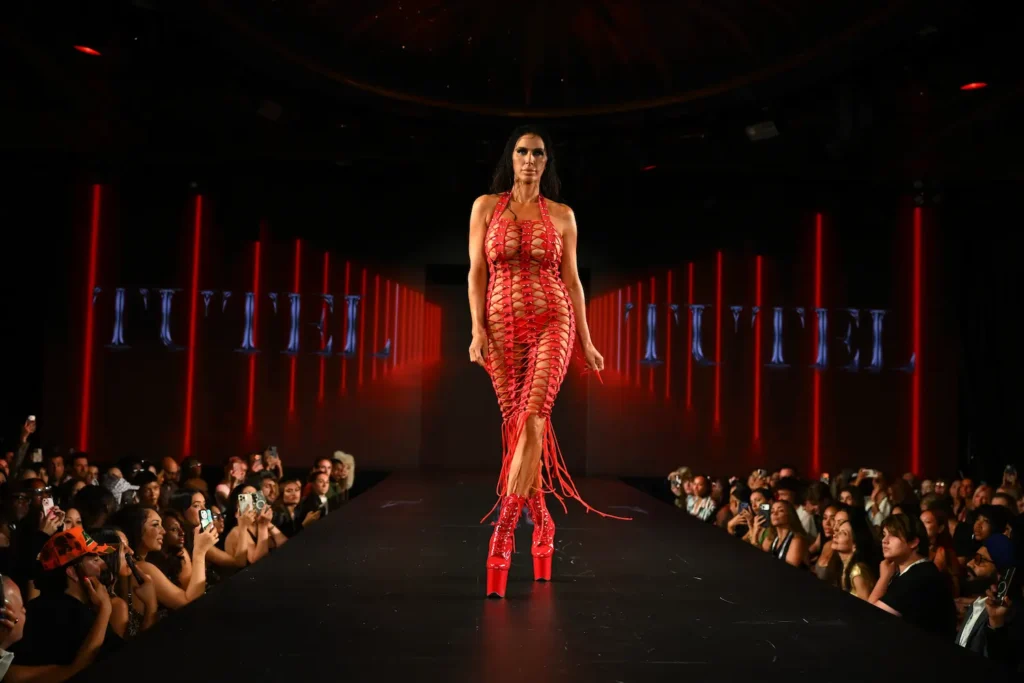
A red halter dress offered one of the clearest examples. An intricate network of crisscrossing straps extended from the neckline toward the knees, following the model’s figure while leaving sections of skin visible beneath the lattice. Small metallic accents punctuated the intersections, introducing subtle texture against the monochromatic surface.
Below the fitted portion, long red cords fell freely toward the floor, adding movement to the otherwise controlled design. Towering platform boots completed the appearance, extending the dramatic proportions from the upper body to the footwear.
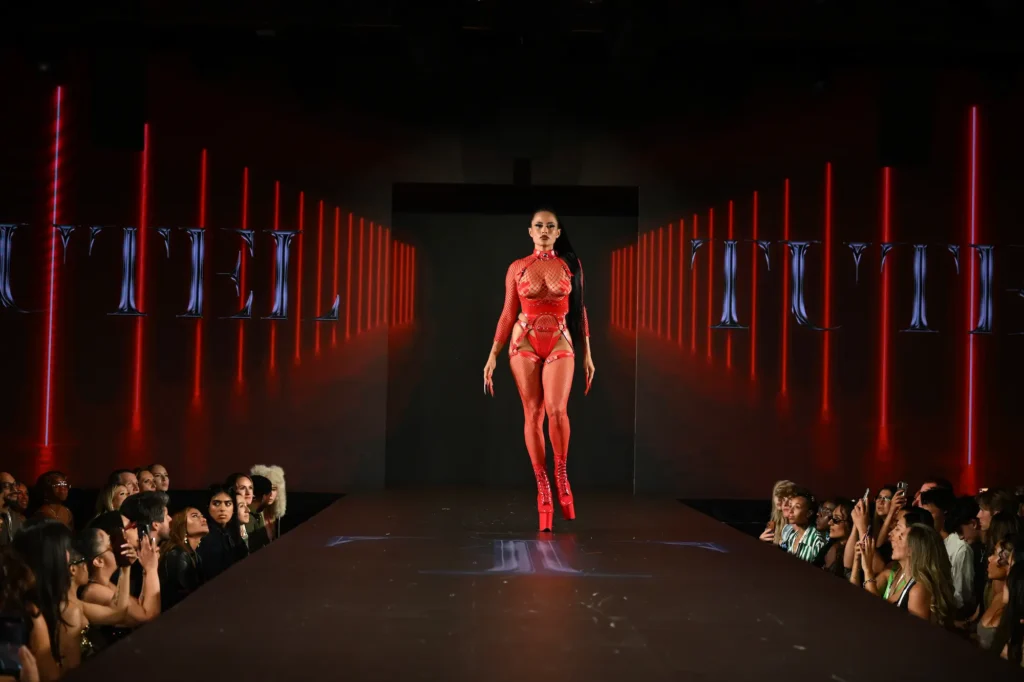
Transparency introduced another dimension to the collection. A sheer red mesh ensemble combined a fitted, high-neck upper section with long sleeves, coordinated straps, and fishnet elements. The open texture revealed the body beneath, while strategically positioned details framed the waist and hips.
As the model turned, the garment’s construction became more apparent, offering different perspectives on the relationship between its transparent surfaces and structured components.
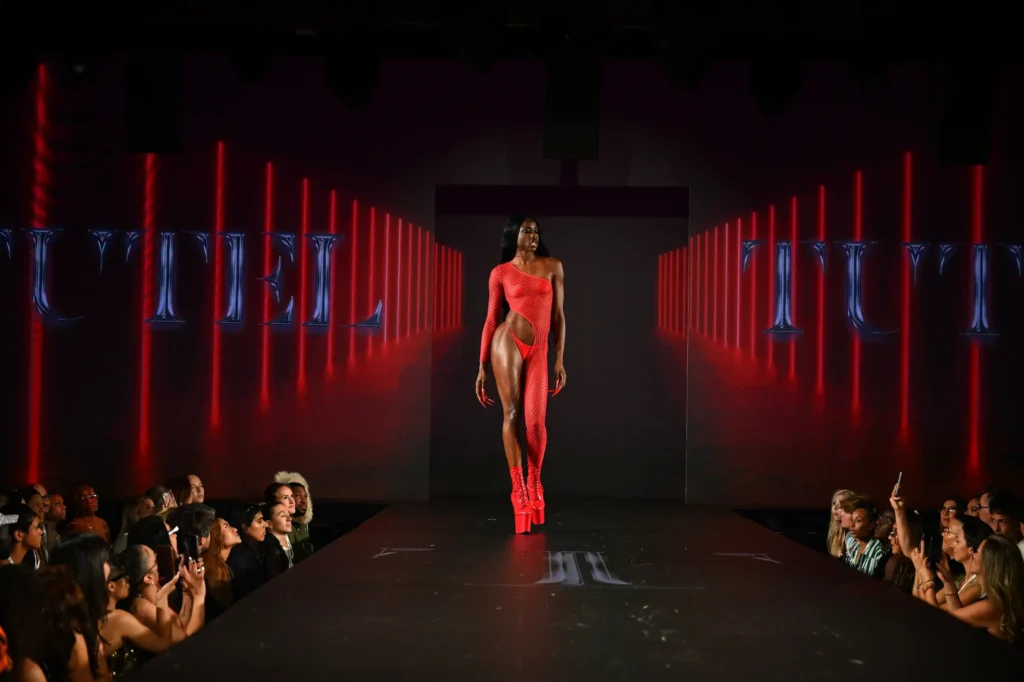
Another memorable appearance explored asymmetry through a one-shoulder mesh design. A diagonal neckline framed the upper body, while a single sleeve extended along one arm. The material continued across the torso and down one leg, leaving the opposite side largely exposed.
The contrast between the covered and uncovered areas created an arresting effect without relying on elaborate embellishments. Here, the placement of fabric provided the drama, demonstrating how Tutel could transform a relatively simple material into an expressive runway statement.
Together, these designs highlighted the importance of negative space within the collection. Openings, transparent textures, and intersecting straps became essential elements of the garments, allowing the body itself to contribute to their overall appearance.
Corsetry, Hardware, and High-Shine Fashion
While mesh and lacing emphasized transparency, other ensembles introduced a more structured interpretation of Tutel’s daring aesthetic.
One particularly elaborate look featured a glossy red corset with sculpted cups, pointed embellishments, and a lace-up central panel. Exposed zipper details added an industrial influence, while the sharply defined lower edge framed the waist.
The corset was paired with coordinating high-cut bottoms and fishnet stockings. Silver-toned chains draped across the hips, creating delicate curves that contrasted with the garment’s rigid structure.
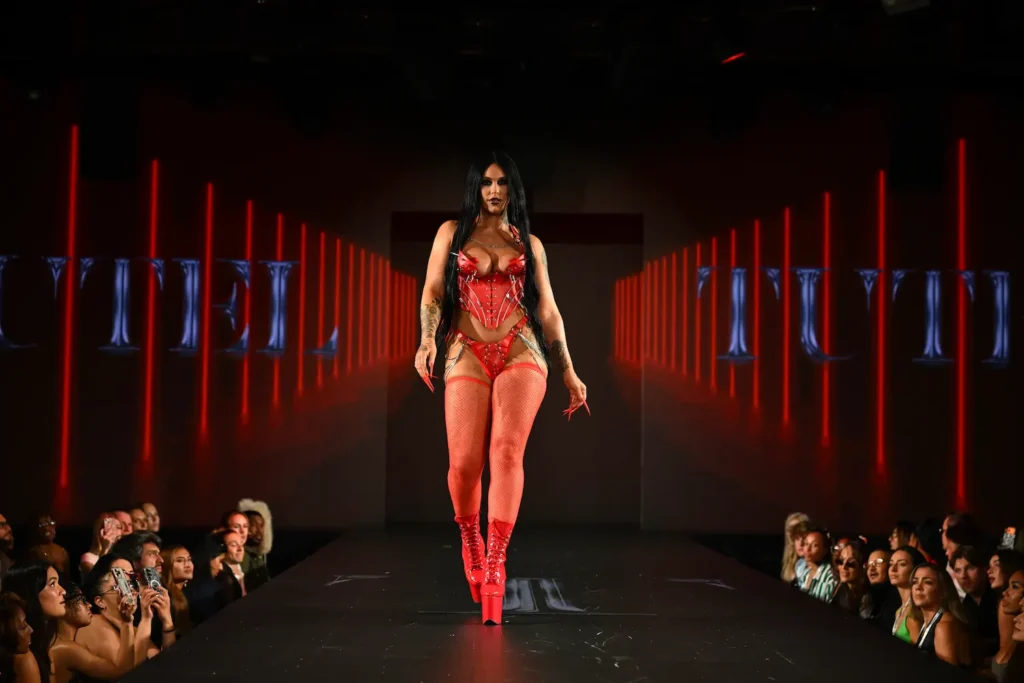
The model’s dark hair, dramatic makeup, and elongated red nails complemented the ensemble, reinforcing its assertive character. The combination of traditional corsetry and hardware-inspired details created a striking interpretation of contemporary glamour.
A separate two-piece look explored similar elements through a more streamlined design. A glossy bandeau top featured a circular metallic ring at the center of the chest, while a fitted mini skirt incorporated asymmetrical lacing along one side.
Gathered fabric and loose cords introduced movement, balancing the simplicity of the upper garment with the more intricate detailing below. The polished material reflected the runway lighting, emphasizing its folds and fitted shape.
Another ensemble placed metallic hardware at the forefront through a harness-inspired arrangement of red straps and silver-toned chains. A structured collar framed the neckline, while delicate chains extended across the exposed torso and curved around the hips.
A studded high-cut bottom and dramatic thigh-high platform boots completed the appearance. Buckles, lacing, and reflective details contributed to one of the collection’s most elaborate combinations of accessories and clothing.
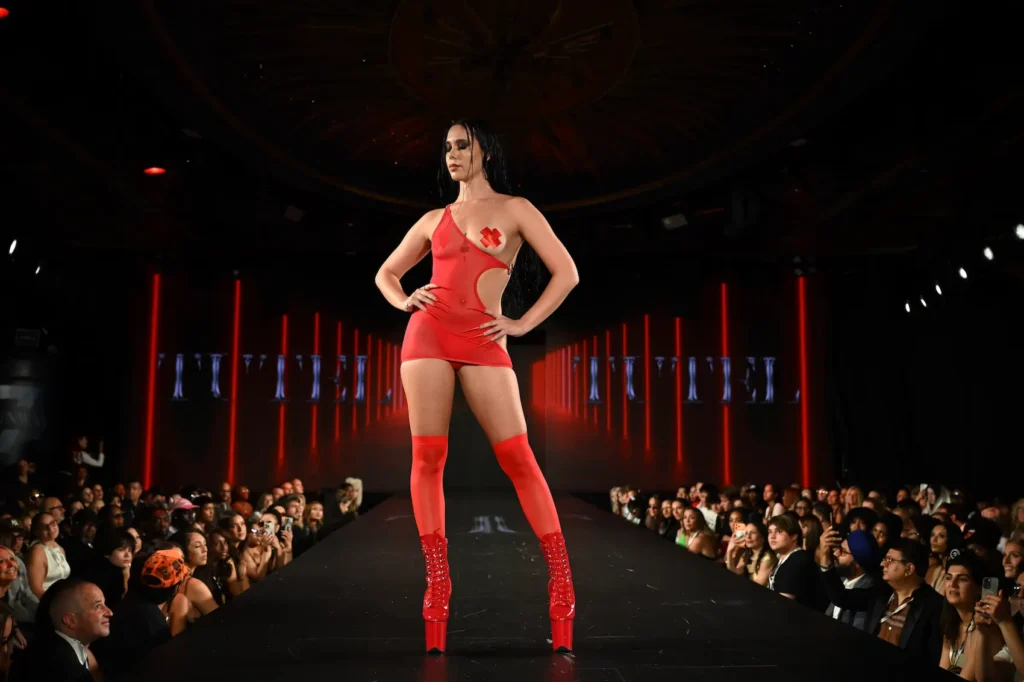
Elsewhere, a fitted red mini dress introduced a different approach to construction. Its asymmetrical neckline and curved waist opening created a sleek profile, while cross-shaped coverings and metallic rings added distinctive graphic details.
These contrasting designs demonstrated Tutel’s versatility within a limited palette. Some relied on intricate hardware and layered components, while others achieved their impact through cleaner shapes and carefully positioned openings.
Breaking the Rules of Menswear
Tutel extended its experimental approach into menswear, replacing familiar proportions with cropped garments, exposed torsos, and unexpected combinations of materials.
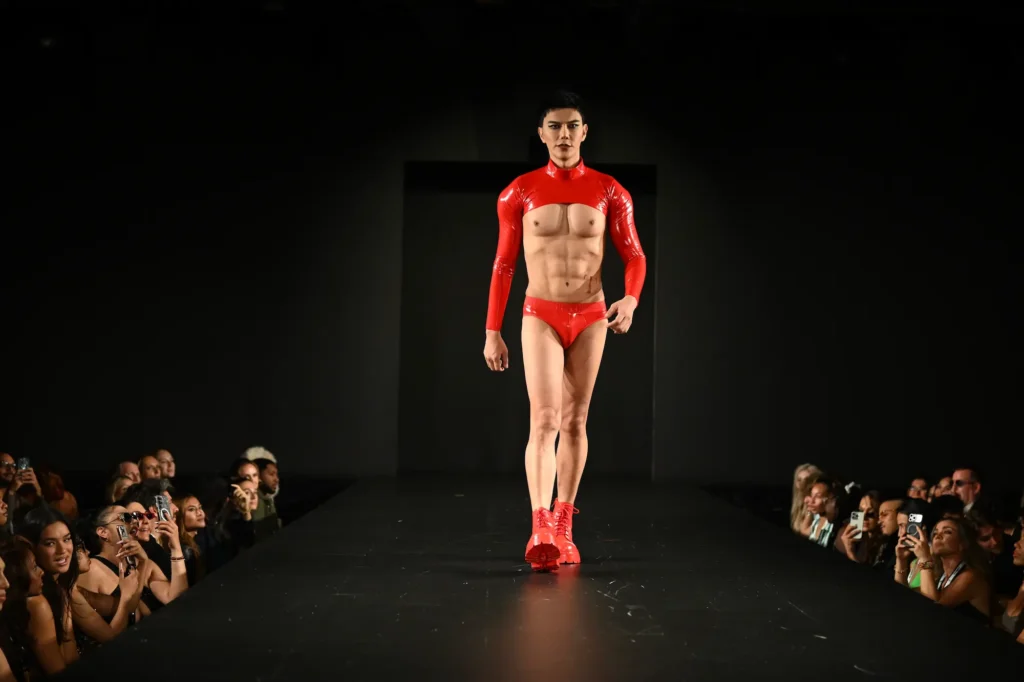
One appearance featured a glossy red, long-sleeved top with a high neckline and an abbreviated cut. The garment covered the shoulders and arms while leaving the chest and midsection exposed, creating a sharp contrast between its fitted sleeves and the uncovered torso.
Coordinating red briefs continued the minimal design, while chunky lace-up boots introduced a heavier element to the ensemble. Without elaborate decoration, the look depended on its reflective material, precise proportions, and saturated color.
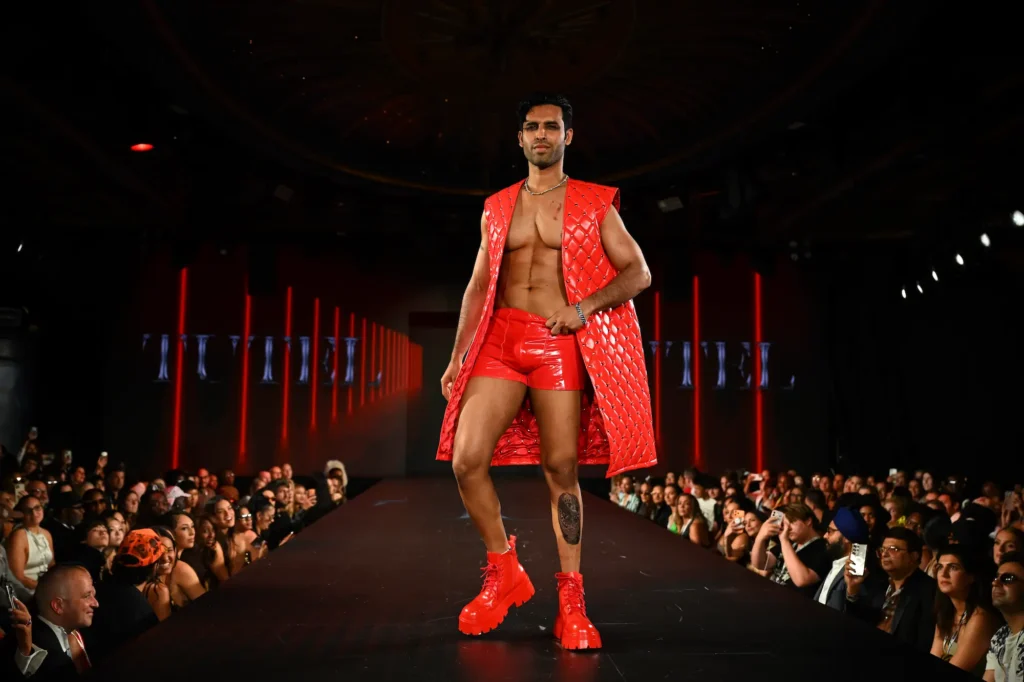
Another menswear design offered a contrasting interpretation through a sleeveless, elongated vest with structured shoulders and an open front.
The outer layer featured a diamond-like textured surface punctuated by small metallic embellishments. Its extended length introduced a sense of formality, while fitted red shorts beneath it disrupted the conventional proportions associated with tailored outerwear.
The combination of decorative texture and smooth, glossy fabric created visual interest without departing from the collection’s monochromatic direction.
Across these appearances, Tutel applied similar design principles to both men’s and women’s clothing. Exposed sections, unusual cuts, and dramatic footwear appeared throughout, suggesting a shared approach to fashion that prioritized expression over traditional categories.
Rather than presenting menswear as a separate aesthetic, the designer incorporated it naturally into the collection’s broader exploration of shape, material, and the human figure.
A Dramatic Red Finale
For the final individual appearance, Tutel introduced an unexpected sense of volume, bringing the presentation to a theatrical conclusion.
After a series of fitted garments and sharply defined openings, a model stepped onto the runway wearing a short red dress accompanied by an expansive, feather-trimmed train.
The dress featured delicate shoulder straps and a semi-sheer floral-patterned surface that added texture to its compact shape. Coordinated red hosiery and towering platform boots maintained the styling established throughout the showcase.
The sweeping train, however, transformed the appearance into something far more dramatic.
Lightweight red fabric extended behind the model, framed by generous feather-like trim. As she moved, the material spread outward, creating flowing shapes that contrasted with the fitted dress beneath.
When the model turned and lifted the train, its layered construction became more visible. The fabric opened into an expansive arrangement of red, introducing a sense of movement that had been less prominent in the collection’s earlier, more controlled designs.
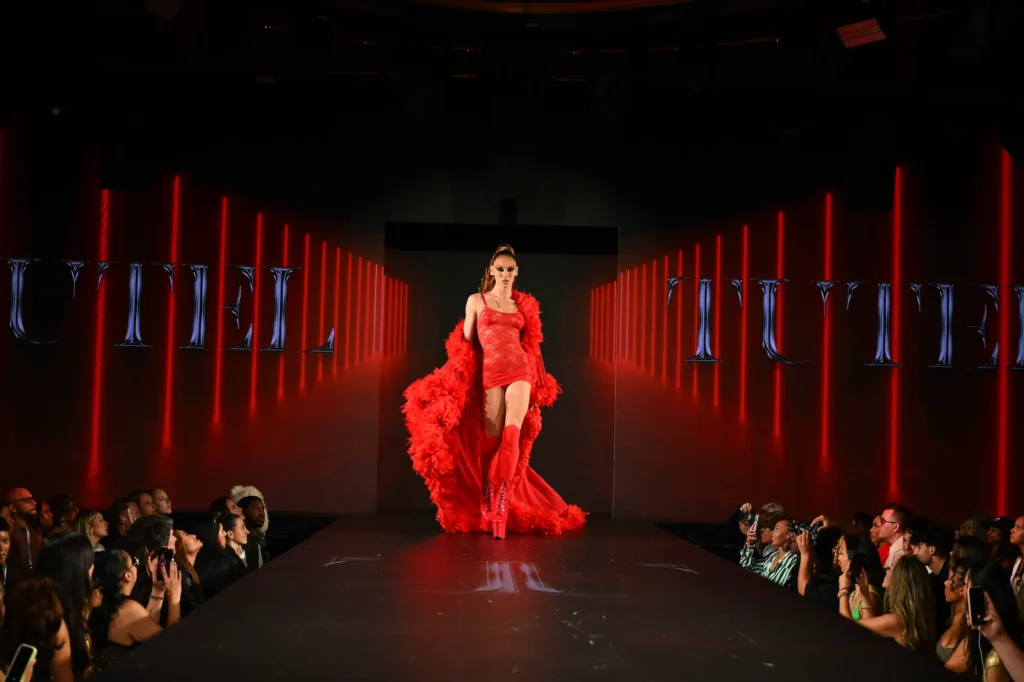
From behind, the dress revealed open lacing that echoed the cords and exposed structures seen throughout the presentation. This detail connected the finale to the preceding looks, even as its dramatic volume introduced a different visual experience.
The closing appearance brought together several of Tutel’s defining elements—revealing proportions, decorative texture, and exaggerated styling—while demonstrating how they could be translated into a more theatrical silhouette.
Tutel’s Final Walk at New York Fashion Week
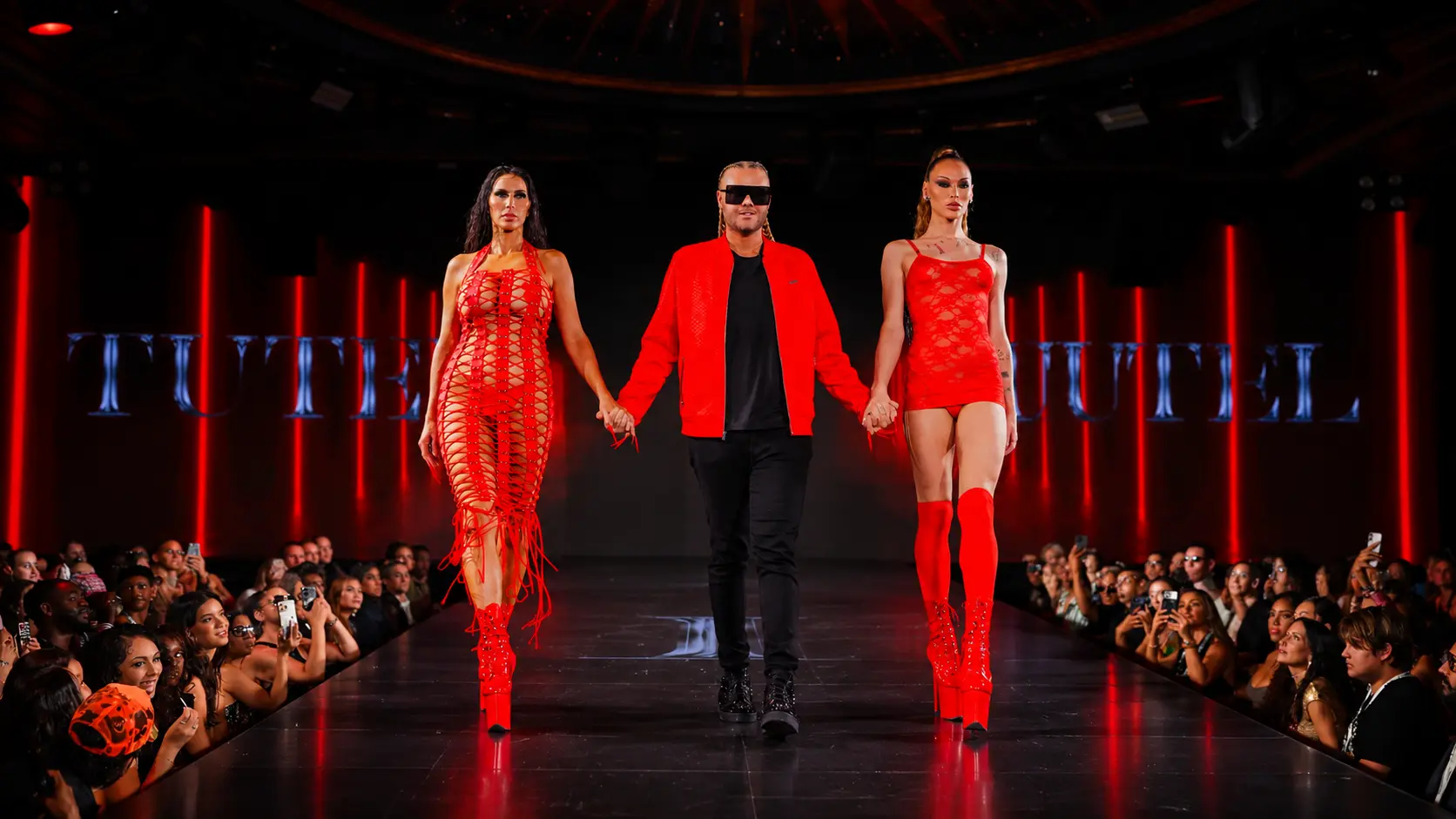
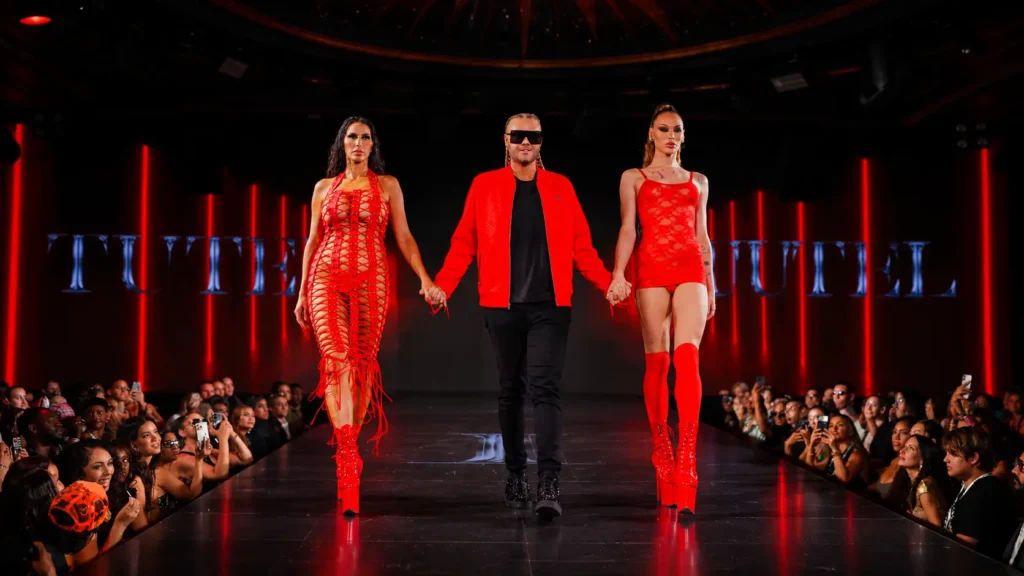
The presentation concluded with the designer joining two models for a celebratory walk down the runway.
Dressed in a bright red jacket over a black ensemble and wearing oversized dark sunglasses, he appeared between the models, holding their hands as they returned to the stage.
On one side, the intricate red halter dress recalled the collection’s exploration of lacing and open construction. On the other, the final model’s short red dress represented the dramatic volume and movement that had brought the show to its conclusion.
Their coordinated appearances created a memorable closing image, bringing the designer and two contrasting interpretations of his work together on the runway.
Tutel’s September 2026 showcase at New York Fashion Week demonstrated how a singular color palette could support a diverse range of ideas. From the angular openings of its menswear to the intricate cords, metallic accents, and sweeping fabric of its final looks, the collection approached familiar garments with an experimental perspective.
Its most compelling quality was the balance between deliberate construction and fearless presentation. By treating exposed space, unusual proportions, and theatrical styling as essential components of the designs, Tutel delivered a distinctive runway experience that celebrated fashion without conventional boundaries.