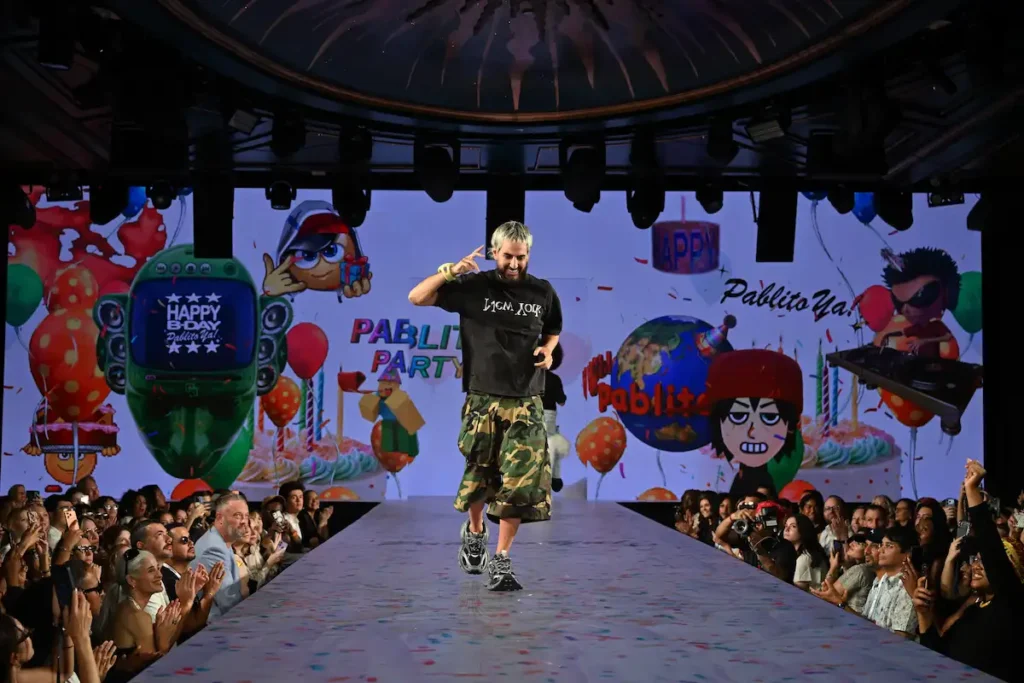
On September 11, 2026, Argentine designer Pablo Cerezo, the creative mind behind Pablito Ya!, celebrated his birthday by presenting a 10-look collection at New York Fashion Week 2026, produced by Runway 7 at Sony Hall. Inspired by his childhood birthday celebrations in Argentina, the collection combined imaginative silhouettes, vibrant colors, and nostalgic details, transforming the runway into a personal celebration of creativity, self-expression, and childhood memories.
Birthday cakes, balloons, animated characters, and colorful party graphics filled the backdrop, setting the scene for a presentation that approached fashion with humor and imagination. Yet Cerezo’s vision extended far beyond festive decorations. Through exaggerated proportions, unusual accessories, and references to Argentine culture, he transformed familiar objects and experiences into garments that encouraged the audience to look more closely. Each appearance introduced a different element of his creative world, from the recognizable traditions of birthday parties to the games, toys, and cultural references associated with growing up.
Childhood Memories Through Surrealist Fashion
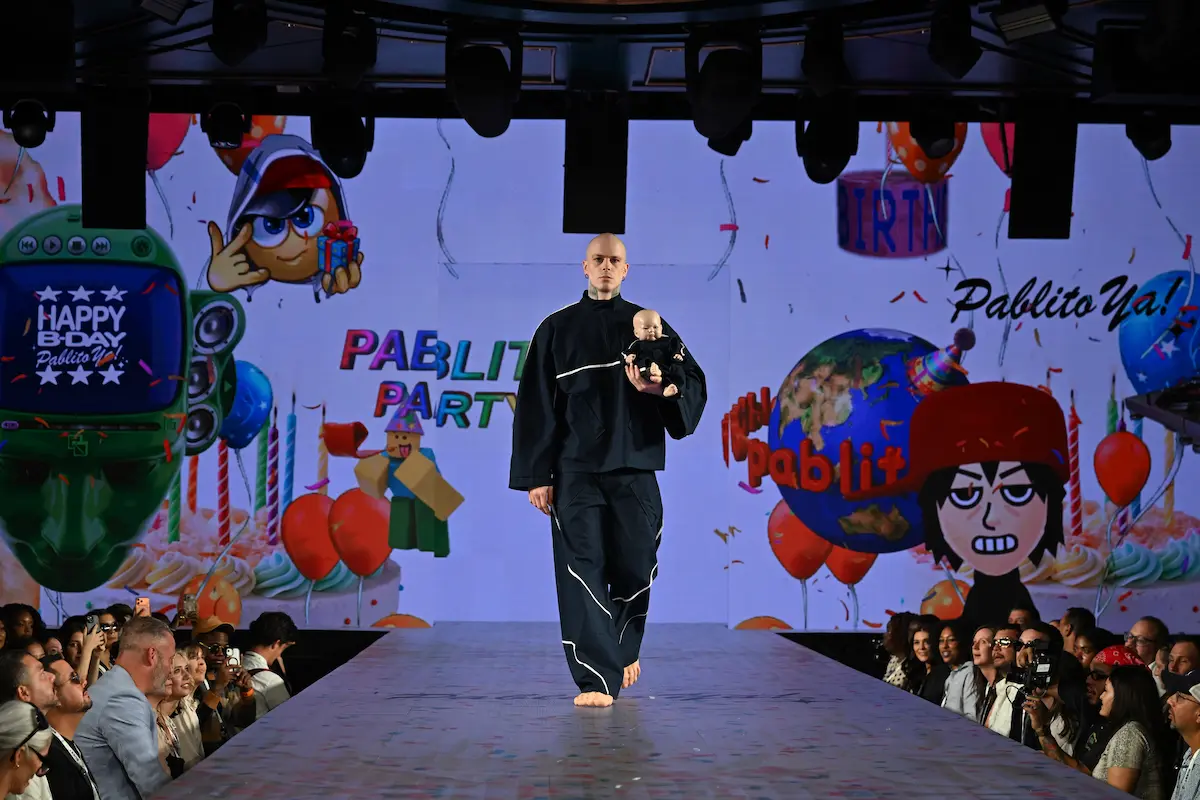
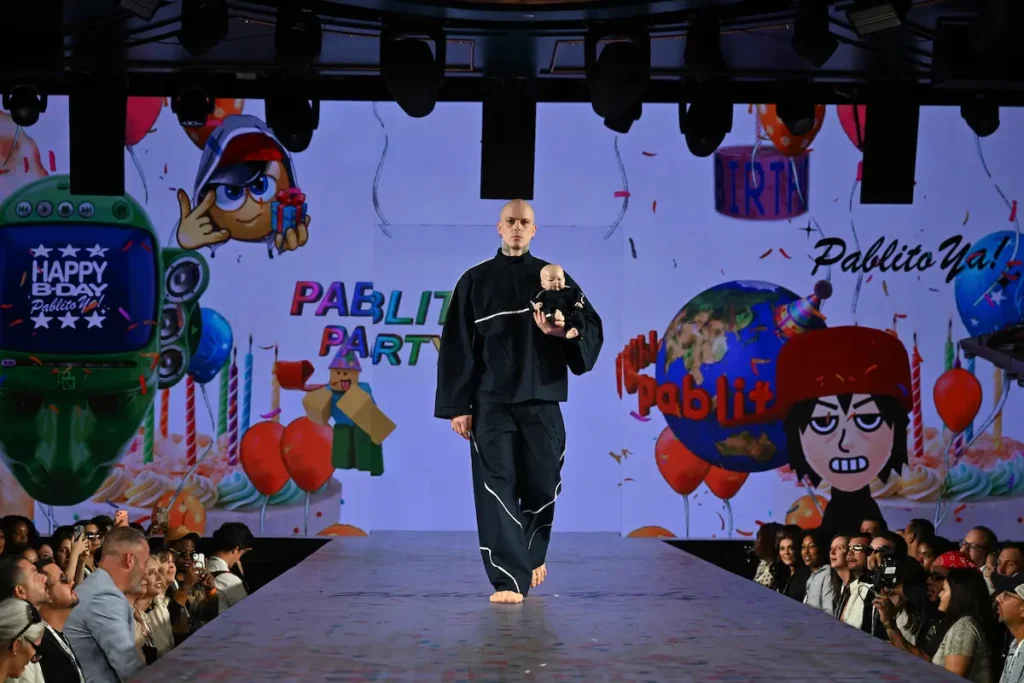
The show opened with a model wearing an oversized black jacket and matching pants decorated with curved white lines. In his arms, he carried a baby doll dressed in a miniature version of the same ensemble, creating the impression that the model was portraying an older version of the child. The resemblance established an unusual relationship between the two figures, while the footwear added another layer of visual illusion. Although the model initially appeared to be barefoot, his shoes were sculpted to resemble human feet, complete with individual toes. As he turned to leave the runway, an oversized white “+1” became visible across the back of his jacket, suggesting the idea of growing another year older. Against the colorful birthday-themed backdrop, his serious expression contrasted with the unexpected styling, establishing the collection’s surrealist direction from its opening moments.
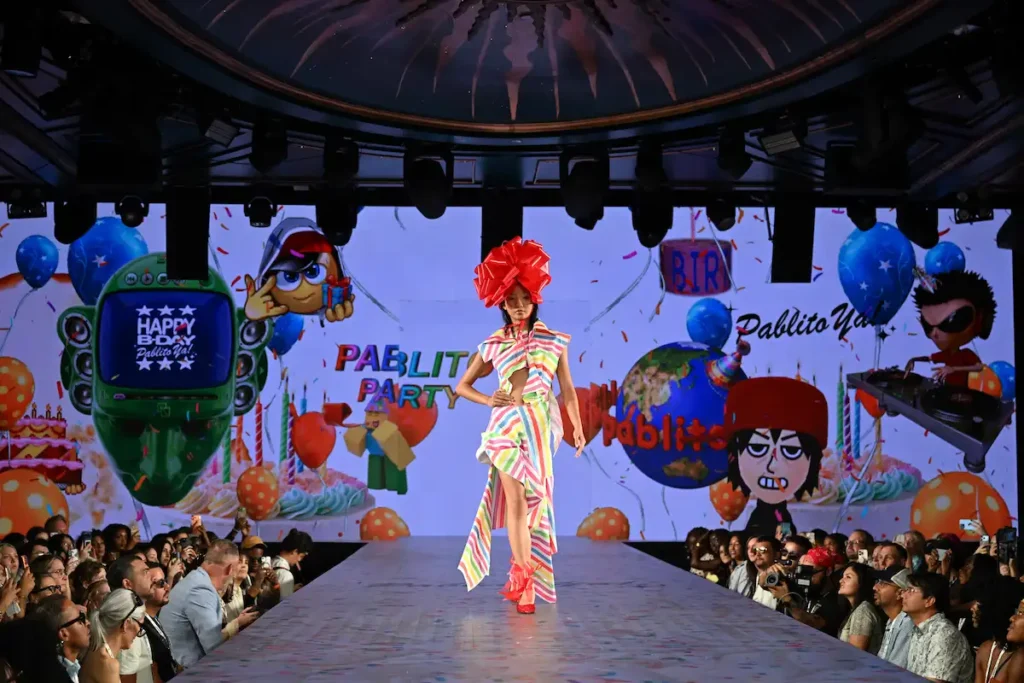
The second appearance continued the birthday theme through another familiar object: the wrapped present. A model stepped onto the runway wearing an asymmetrical dress covered in diagonal stripes of pink, green, yellow, blue, and white, resembling colorful gift-wrapping paper. Overlapping fabric panels created an irregular silhouette, while an enormous red bow positioned above her head became the centerpiece of the design. Smaller red bows decorated her shoes, completing the visual connection between the garment and its inspiration. With one hand resting on her hip, the model presented the outfit with confidence, allowing the exaggerated accessories and vibrant pattern to stand out. Rather than recreating a literal gift box, Cerezo translated its recognizable colors, textures, and decorations into a fashion design that balanced humor with unconventional construction.
Birthday Guests, Childhood Games, and Argentine Humor
The third look introduced what could be interpreted as another recognizable character from a birthday celebration: the guest who seems ready to leave with everything. A model walked the runway in an oversized gray blazer, matching knee-length shorts, and tall gray boots, carrying a small gift bag decorated with a silver ornament. A miniature party hat completed the styling, while colorful artwork originally created by Bernardo Henning appeared across the shirt and fabric accents beneath the gray tailoring. Expressive lines and abstract illustrations in shades of pink, blue, green, yellow, and orange contrasted with the muted outer layers, and the garment’s overlapping panels revealed different sections of the artwork as the model moved. The combination of structured tailoring, unconventional proportions, and humorous accessories gave the ensemble a distinctive personality while introducing an artistic collaboration into the collection.
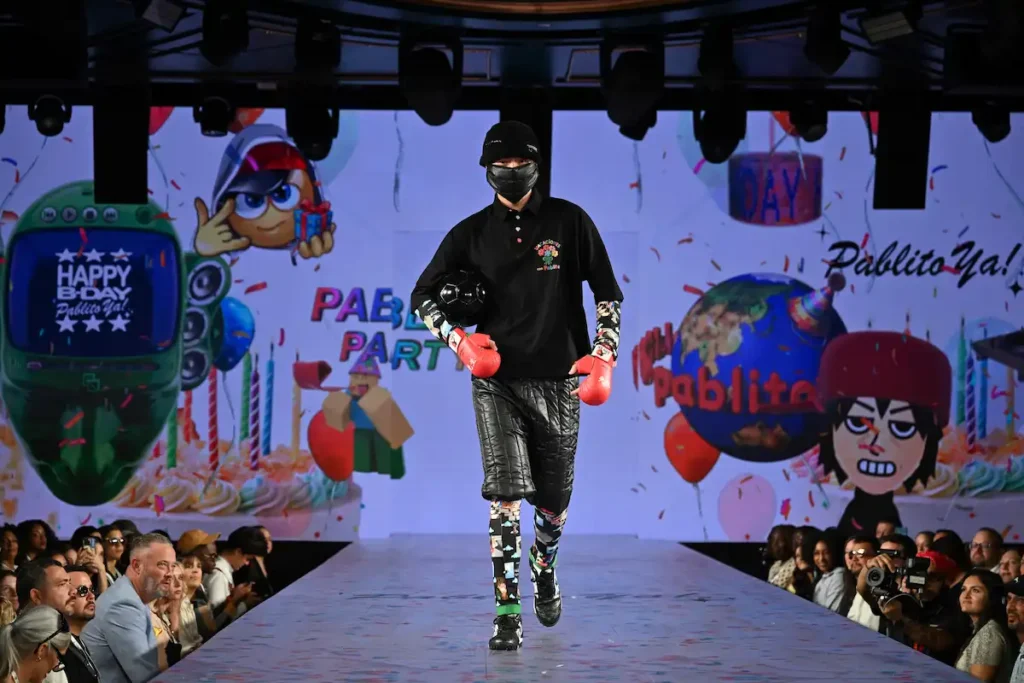
The fourth appearance explored another familiar aspect of growing up: the invitation to play. A model wore a black sportswear-inspired ensemble featuring a polo shirt, shiny knee-length shorts, and a matching cap, accompanied by bright red boxing gloves and a black soccer ball. Colorful printed layers covered the arms and legs, incorporating Argentine internet memes, cartoon imagery, and references to popular culture, including an image of Lionel Messi alongside the phrase “Messirve.” On the back of the polo, a bouquet of colorful flowers appeared beneath the words “Vacaciones con Pablito,” adding another reference to leisure and childhood experiences. The combination of sporting accessories and humorous graphics suggested the familiar invitation “Vamos a jugar,” while connecting the collection’s nostalgic inspiration with contemporary Argentine culture. Rather than focusing exclusively on traditional birthday decorations, this ensemble explored the games, expressions, and cultural imagery that can become part of personal memories.
From a Deflated Balloon to Retro-Futuristic Sportswear
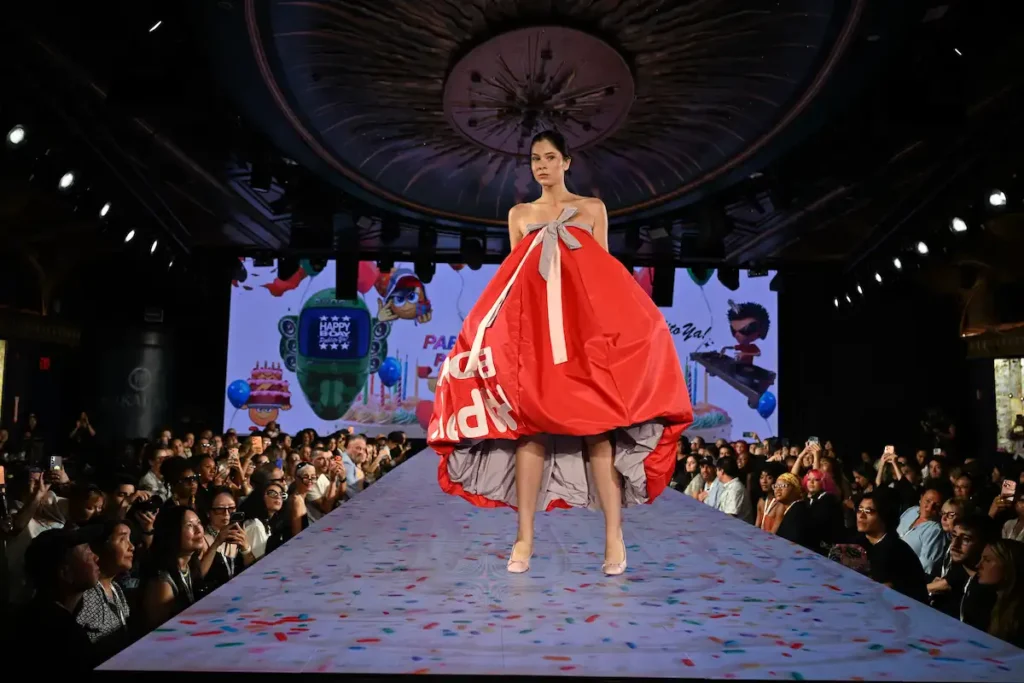
For the fifth look, Cerezo reinterpreted one of the most recognizable birthday decorations through the construction of a voluminous red strapless dress. Its rounded silhouette was interrupted by irregular folds and gathered fabric, creating the appearance of a partially deflated balloon. The slightly glossy material emphasized the crumpled texture, while a large gray bow decorated the neckline and long ribbon-like strips extended down the front. Gray fabric emerged beneath the uneven hem, revealing the model’s legs and pale pink heels, while partially visible white lettering introduced another graphic element. Unlike the previous ensembles, which relied heavily on accessories and printed references, this design communicated its concept through shape and volume. The result was an unusual interpretation of a familiar party decoration, transforming the appearance of a balloon losing air into an exaggerated runway silhouette.
The sixth look introduced a noticeable change in color, material, and construction through a glossy turquoise two-piece ensemble consisting of a cropped jacket and matching pants. The jacket featured a high collar, structured shoulders, and oversized sleeves, while black panels and bold white geometric lines extended across the outfit, emphasizing its retro-futuristic sportswear aesthetic. The reflective turquoise material contrasted with the soft, irregular volume of the preceding red dress, offering a more structured interpretation of Cerezo’s experimental approach. One of its most distinctive accessories was a small blue-and-gray handbag resembling a portable radio or music player, continuing the collection’s interest in transforming recognizable objects into elements of fashion. With its coordinated color palette, exaggerated proportions, and athletic influences, the ensemble demonstrated how the designer could explore a different visual direction while maintaining the unconventional character of the presentation.
Piñatas, Wordplay, and a Modern Birthday Princess
The seventh look returned to the traditions of birthday celebrations through a colorful combination of textures, accessories, and familiar Spanish wordplay. A model appeared wearing a coral-red jacket with a high collar, voluminous sleeves, and a gathered waist, paired with an asymmetrical blue-and-white plaid skirt featuring layered ruffles and an extended section of fabric that fell unevenly toward the runway. Across the front of the jacket appeared the phrase “Pablito clavó un clavito,” a well-known Spanish tongue twister whose wording created a particularly fitting connection to the designer’s name. A vivid blue handbag covered in textured fringe resembled the paper decorations of a traditional piñata, while matching blue shoes echoed its color and texture. These details connected the outfit to familiar celebrations and expressions from Latin American culture, giving the design a personal identity through both its construction and cultural references.
The eighth appearance shifted toward an oversized streetwear aesthetic, combining a white graphic polo with exaggerated dark denim pants. Contrasting yellow stitching emphasized the garment’s construction, while overlapping fabric panels created an almost skirt-like silhouette and a red-and-black plaid layer added color at the waist. The styling included reflective silver sunglasses, a black cap, chunky footwear, and an intricate white lace-up accessory extending along one arm, while the model carried a structured red bag. Although this ensemble was less directly connected to traditional birthday imagery, its proportions and unexpected combinations reflected the same freedom of experimentation present throughout the collection. The layering of familiar garments and contrasting accessories demonstrated another aspect of Cerezo’s design approach, balancing contemporary streetwear influences with unconventional silhouettes.
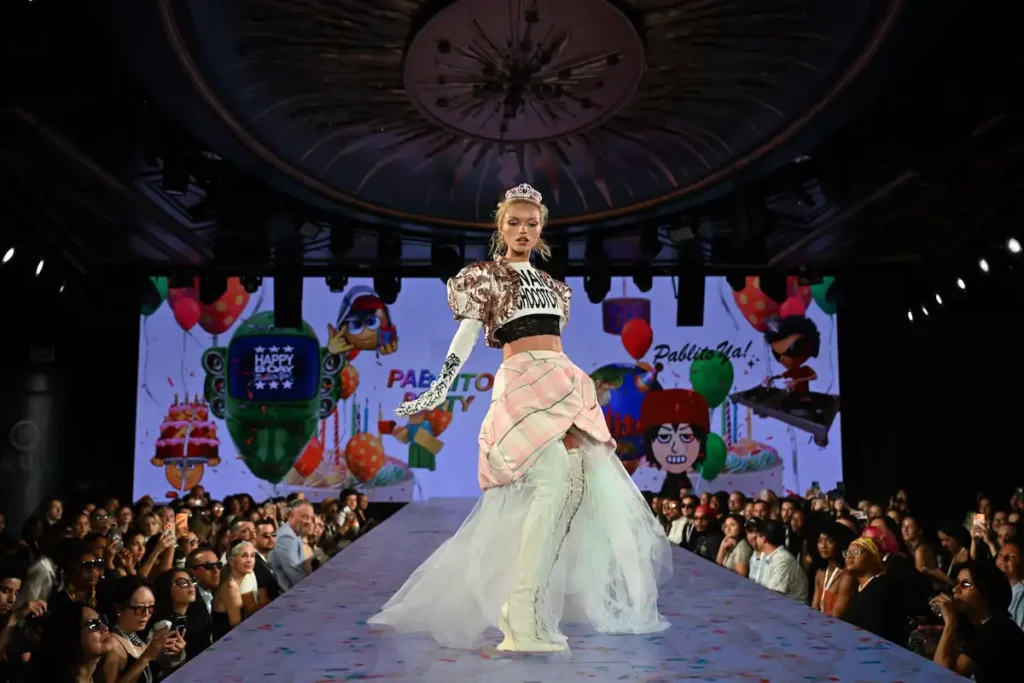
The ninth look introduced a different interpretation of childhood imagination through an ensemble that recalled the familiar image of a birthday princess. A model stepped onto the runway wearing a small silver tiara, a cropped white top with bold black lettering, and metallic puff sleeves. Beneath the top, a structured pastel plaid layer wrapped around the hips, while a long, translucent tulle skirt extended outward and flowed toward the runway floor. The combination of fabrics created a distinctive contrast between the softness of the airy tulle and the more defined structure of the plaid panels, giving the silhouette both volume and movement. Tall white lace-up boots and long white gloves completed the styling, introducing unexpected elements into an otherwise romantic design. Rather than presenting a conventional fairytale gown, Cerezo combined recognizable symbols of childhood fantasy with contemporary fashion, allowing the layering, contrasting textures, and unusual proportions to shape the overall appearance.
A Giant White Rabbit for the Final Look
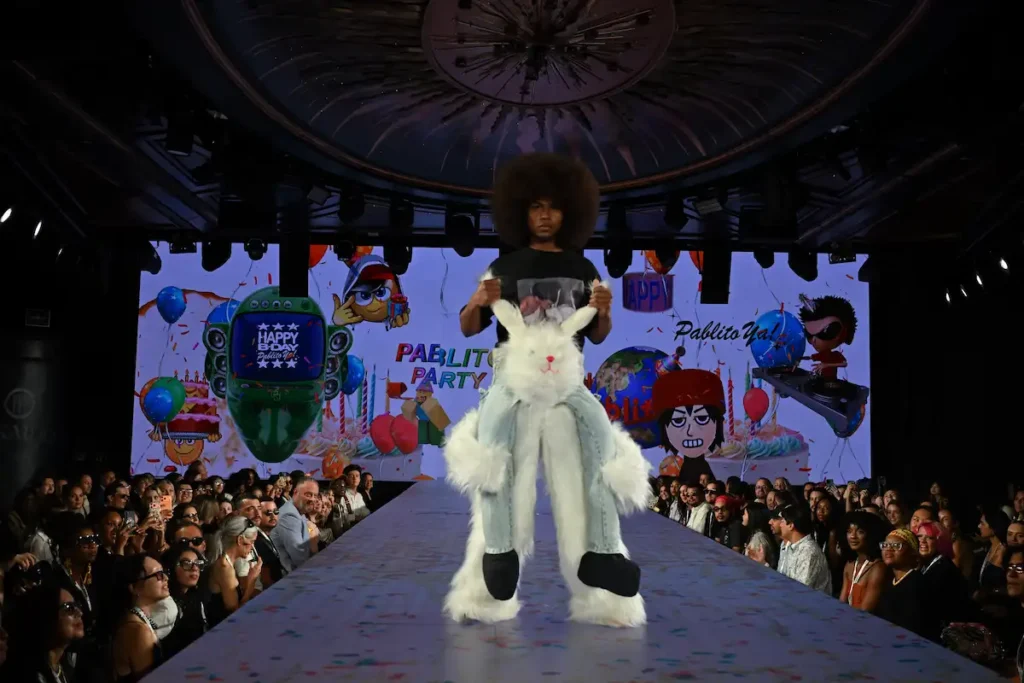
For the tenth and final appearance, Pablito Ya! returned to the world of childhood toys with one of the collection’s most unusual designs. A model wearing a black graphic T-shirt walked the runway holding what initially appeared to be an enormous white stuffed rabbit. Its long ears extended upward, while the fluffy head, small eyes, and pink nose gave the character the recognizable appearance of a childhood plush toy. As the model held the rabbit’s ears against his torso, the relationship between the accessory and the clothing became increasingly interesting. The animal was not simply being carried; it appeared to form part of the outfit itself, creating another example of the visual illusions that had defined the presentation from the beginning.
A closer look revealed how the rabbit was integrated into the model’s pants. Light-wash denim formed the upper portion of the garment, while oversized sections of white faux fur extended down the legs and large black paw-shaped details reinforced the illusion of an enormous stuffed animal. From behind, the denim waistband and back pockets remained visible, but long sections of white fur continued downward, making the rabbit appear inseparable from the clothing. The model’s serious expression contrasted with the unusual design, allowing the exaggerated silhouette to remain the focus. As the final look, the rabbit also established a visual connection with the show’s opening, which featured a baby doll dressed like its model. Both appearances explored the relationship between childhood toys and the human body, using changes in scale and unexpected construction to transform familiar objects into fashion.
A Birthday Celebration Told Through Fashion
Across ten looks, Pablo Cerezo transformed memories of his childhood birthdays in Argentina into a collection defined by imagination, humor, and cultural identity. The presentation moved between sculptural dresses, oversized streetwear, colorful illustrations, and accessories inspired by familiar objects, while maintaining a recognizable connection to the designer’s personal experiences. References to Argentine internet culture, Lionel Messi, and the Spanish tongue twister “Pablito clavó un clavito” added a sense of place to the collection, complementing the more universal imagery of birthday presents, balloons, games, and childhood toys. These elements gave the presentation a personality that extended beyond its unconventional silhouettes, allowing viewers to recognize both the humor and the memories behind the designs.
What distinguished Pablito Ya!’s presentation was the way these references became part of the clothing rather than remaining simple decorative additions. A wrapped present inspired an asymmetrical dress, a deflated balloon influenced the construction of a voluminous silhouette, a piñata appeared through the texture of a handbag, and a giant stuffed rabbit became integrated into a pair of denim pants. By opening and closing the collection with designs inspired by childhood toys, Cerezo created a visual connection that reinforced the show’s central concept. Presenting these ten looks on his own birthday at Runway 7’s New York Fashion Week gave the collection an additional personal dimension, transforming the runway into a celebration of the experiences and cultural influences that continue to shape his creative identity.