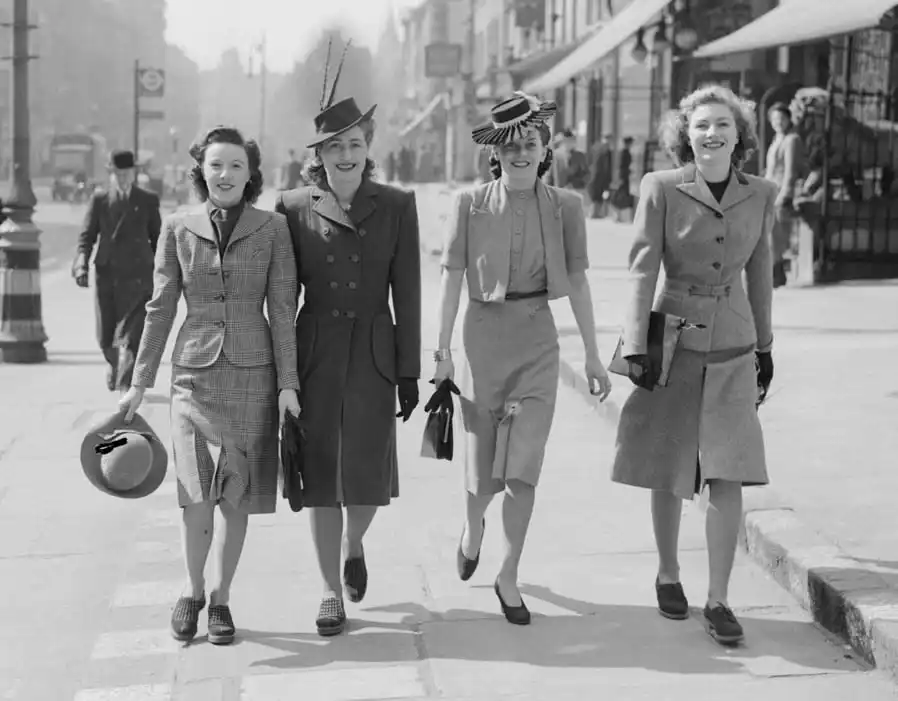
40s Fashion Trends were shaped by war, social change, Hollywood glamour, and the return of luxury after years of restriction. The decade balanced practicality and elegance through tailored suits, utility dresses, military inspired outerwear, polished accessories, and fuller postwar silhouettes. These styles reflected how people lived, worked, and expressed identity during a period of uncertainty and renewal.
What Shaped 40s Fashion Trends?
The fashion of the 1940s did not develop from aesthetics alone. Government regulations, material shortages, changing work environments, and film all changed how clothing was designed and worn. 40s Fashion Trends became a record of adaptation, showing how style could remain expressive when resources were limited.
15 Iconic 40s Fashion Trends That Defined the Decade
- Padded Shoulders: Structured shoulders created the strong, tailored silhouette associated with women’s fashion during the decade.
- Defined Waists: Belts, fitted jackets, and carefully shaped seams emphasized the waist and balanced broader shoulders.
- Utility Dresses: Practical dresses with simple construction, modest necklines, and minimal decoration became everyday essentials.
- Shirtwaist Dresses: Button front dresses offered versatility, comfort, and an elegant shape suitable for work and social occasions.
- Skirt Suits: Coordinated jackets and skirts created polished outfits that could be mixed with other wardrobe pieces.
- Wide Leg Trousers: High waisted trousers with wider legs became increasingly popular for both practical and casual dressing.
- Double Breasted Suits: Broad lapels and structured jackets defined much of men’s formal fashion during the 1940s.
- Military Inspired Outerwear: Trench coats, bomber jackets, belted coats, and utility details influenced civilian clothing.
- Hollywood Evening Gowns: Draped fabrics, elegant necklines, and floor length silhouettes brought glamour to formal fashion.
- Platform and Wedge Shoes: Stable soles and alternative materials made platforms and wedges fashionable and practical.
- Statement Hats and Turbans: Berets, tilted hats, turbans, and decorative headpieces personalized otherwise simple outfits.
- Structured Handbags: Compact handbags with defined shapes became essential accessories for polished daytime looks.
- Victory Rolls: This sculpted hairstyle kept hair away from the face while maintaining an elegant and recognizable appearance.
- Bold Red Lipstick: Red lips became a symbol of confidence, femininity, and resilience during the wartime years.
- Dior’s New Look: Rounded shoulders, narrow waists, and full skirts transformed late 1940s fashion and introduced a new postwar silhouette.
Wartime Rationing and Practical Style
During World War II, wool, silk, leather, and other materials were redirected toward military production. Civilian garments used less fabric, decorative details were reduced, and skirts became narrower. Designers relied on clean construction, shorter hemlines, and practical separates that could be worn repeatedly.
Repairing, altering, and reusing clothing became common. Consumers looked for durable pieces that could move between work, travel, and social occasions. This focus on efficiency encouraged thoughtful wardrobes built around fewer garments and helped establish the disciplined silhouettes associated with 40s Fashion Trends.
Women’s Changing Roles
As women entered factories, offices, transportation jobs, and other essential industries, their wardrobes had to support movement. Trousers, coveralls, low heeled shoes, and structured jackets became more visible in everyday life, challenging earlier expectations about women’s clothing.
Function did not eliminate personal style. Many women paired practical garments with lipstick, styled hair, a scarf, or a carefully chosen handbag. The contrast between utility and polish became one of the decade’s strongest visual signatures.
You might be interested in reading: Early 2000s Fashion Trends: Iconic Y2K Styles That Defined the Era
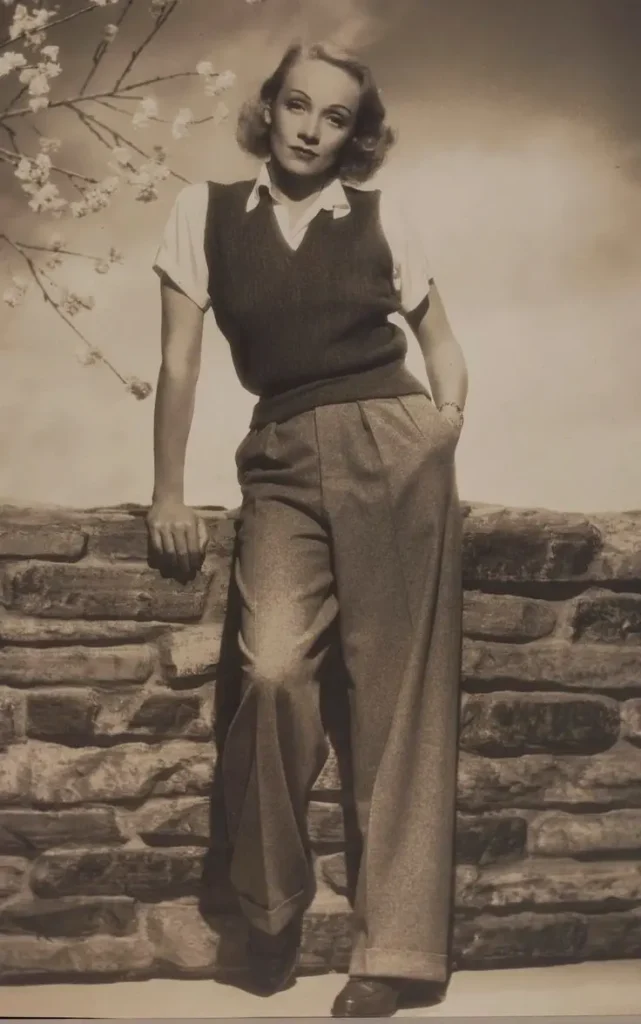
Women’s Fashion in the 1940s
Women’s clothing changed significantly between the early and late years of the decade. Wartime looks were restrained and tailored, while postwar fashion introduced softer shoulders, fuller skirts, and renewed luxury. Together, these shifts made the decade visually diverse.
Structured Silhouettes and Defined Waists
Broad shoulders, fitted waists, and straight or gently flared skirts defined many daytime looks. Padded shoulders borrowed authority from military uniforms, while belts, peplums, and shaped seams created a polished feminine line suitable for work and formal occasions.
These details created visual impact without excessive fabric. Jackets were often cut close to the body, and skirts typically fell below the knee. The result was a confident silhouette that became one of the most recognizable elements of 40s Fashion Trends.
Utility Dresses and Skirt Suits
Utility dresses often featured modest necklines, short sleeves, front buttons, and simple skirts. Shirtwaist dresses were especially popular because they were flattering, practical, and easy to style. Florals, checks, and small geometric prints added personality.
Skirt suits offered another versatile option. A tailored jacket and coordinating skirt could be worn together or mixed with other pieces, helping women extend a limited wardrobe. This adaptable approach remains relevant for modern consumers interested in quality and long term wear
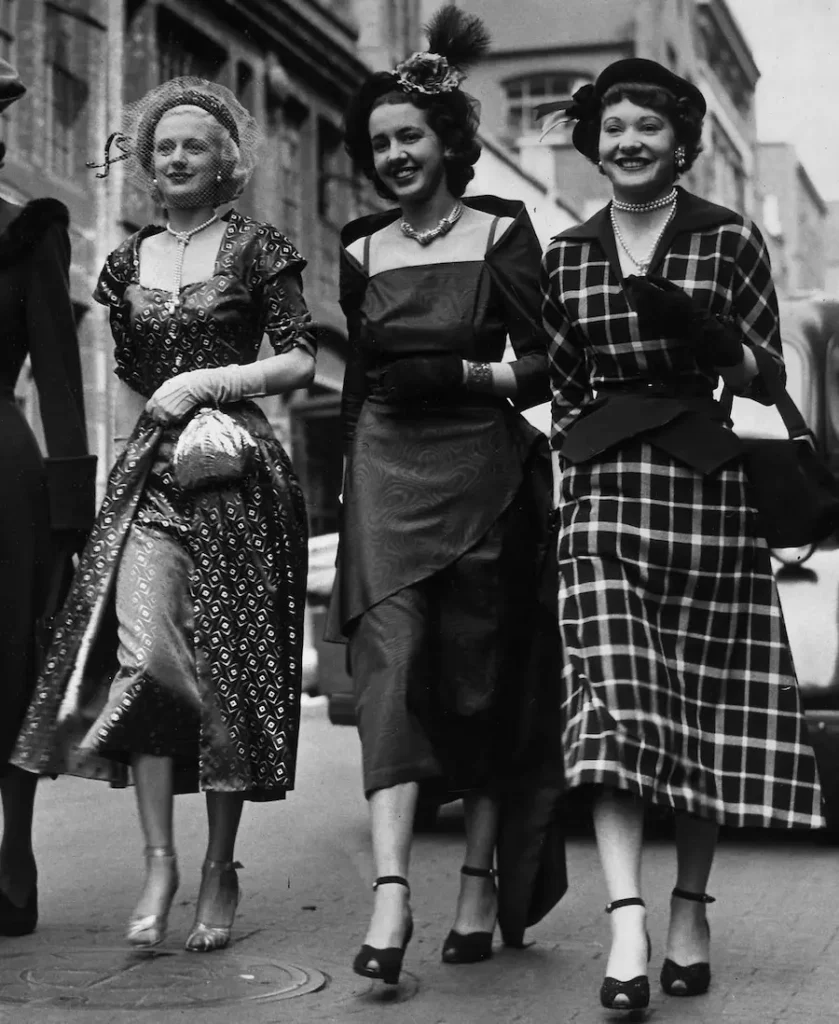
Eveningwear and Hollywood Glamour
Evening fashion provided an escape from everyday restraint. Draped fabrics, elegant necklines, decorative sleeves, and floor length gowns created a sense of occasion. Film stars popularized these looks and turned cinema into an important source of fashion inspiration.
As restrictions eased, eveningwear became softer and more expressive. Sequins, embroidery, satin finishes, and fluid silhouettes returned gradually. This renewed interest in glamour prepared fashion for the dramatic postwar changes.
Men’s Fashion in the 1940s
Men’s clothing also reflected wartime discipline and postwar optimism. In menswear, 40s Fashion Trends favored strong tailoring, practical outerwear, and adaptable pieces. Civilian styles became simpler during the war and broader once restrictions eased.
Military Influence on Menswear
Trench coats, bomber jackets, structured shoulders, belted outerwear, and practical boots moved from military uniforms into civilian wardrobes. Olive, navy, brown, and khaki became widely accepted because they were functional and easy to coordinate.
These garments reinforced the durable quality of 40s Fashion Trends. Their influence remains visible in modern menswear, especially in field jackets, aviator jackets, utility details, and structured coats.
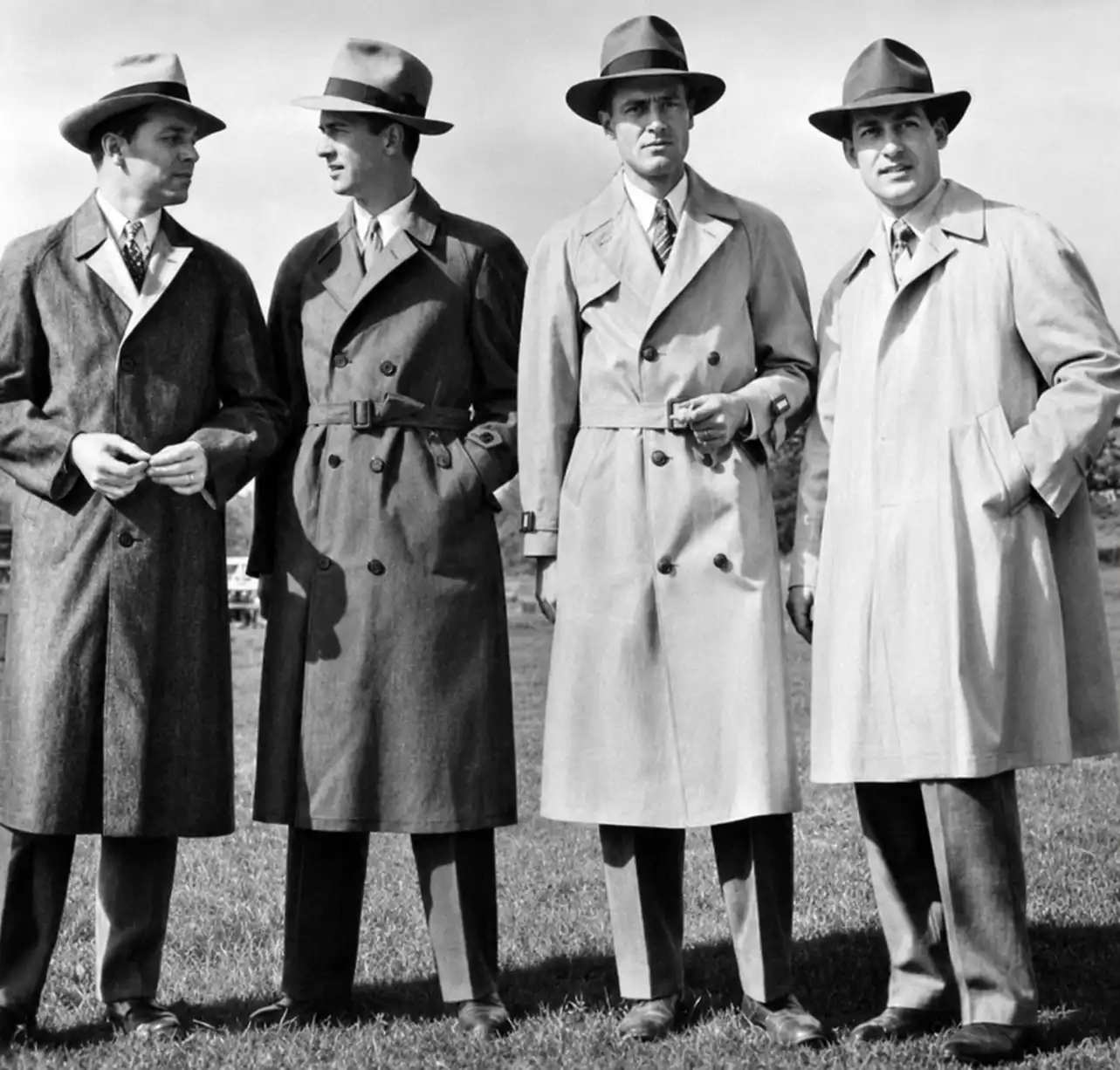
Suits, Wide Trousers, and Casual Clothing
Double breasted jackets, high waisted trousers, and wide lapels created a strong silhouette. By the late 1940s, suits became fuller as fabric restrictions loosened. Trousers featured generous legs, while jackets regained broader proportions.
Casual wardrobes also expanded. Knit shirts, sweaters, open collar shirts, and relaxed trousers reflected the growing importance of leisure and anticipated the casual clothing that would become increasingly influential in the following decade.
Iconic 1940s Accessories and Beauty Trends
Accessories allowed people to personalize simple clothing. Hats, gloves, handbags, shoes, hairstyles, and cosmetics completed the polished appearance associated with the decade. Small details often made a significant impact when wardrobes were limited.
Hats, Handbags, and Footwear
Small tilted hats, turbans, berets, and decorative headpieces added character without using much material. Structured handbags, scarves, brooches, costume jewelry, and gloves offered affordable ways to refresh familiar outfits.
Footwear favored practicality. Wedges, lace up shoes, low heels, and platforms provided stability while maintaining style. When traditional materials were scarce, cork and wood were sometimes used as alternatives.
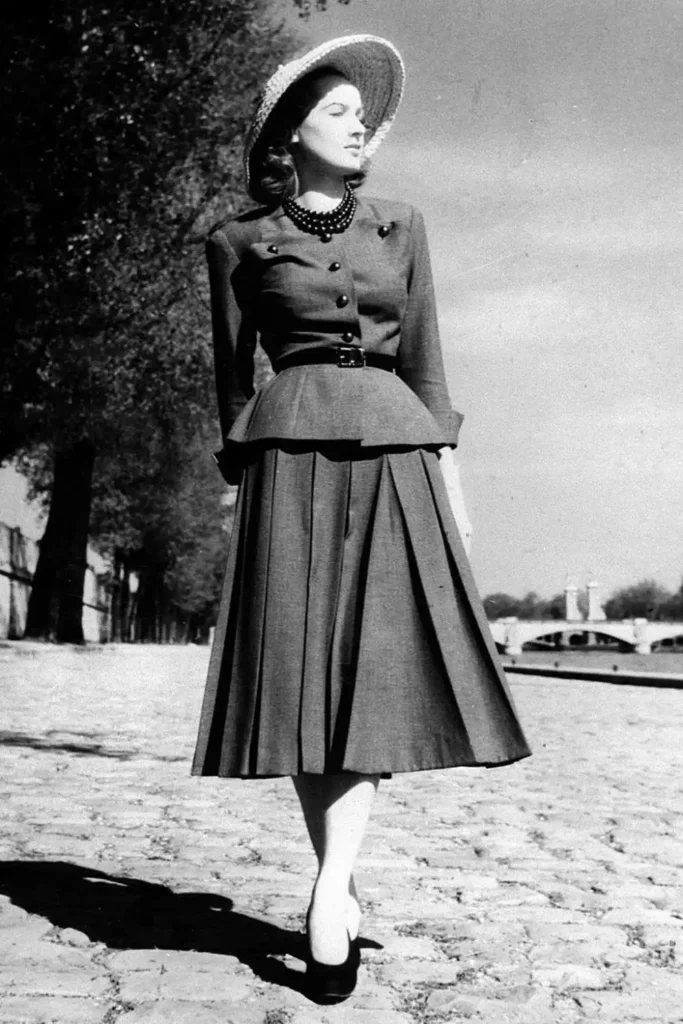
Victory Rolls and Red Lipstick
Victory rolls became one of the era’s most recognizable hairstyles. Hair was pinned away from the face, making the style practical for work while still appearing elegant. Soft waves and neatly shaped updos were also popular.
Makeup emphasized defined brows, subtle eyes, and bold red lips. Lipstick became a symbol of confidence and glamour, reinforcing the polished character of 40s Fashion Trends during a decade marked by rapid change.
Christian Dior and the New Look of the Late 1940s
The end of the decade introduced a major shift. After years of practical dressing, fashion returned to volume, softness, and luxury. This transition was closely associated with Christian Dior, whose work quickly changed womenswear.
How Dior Reintroduced Feminine Silhouettes
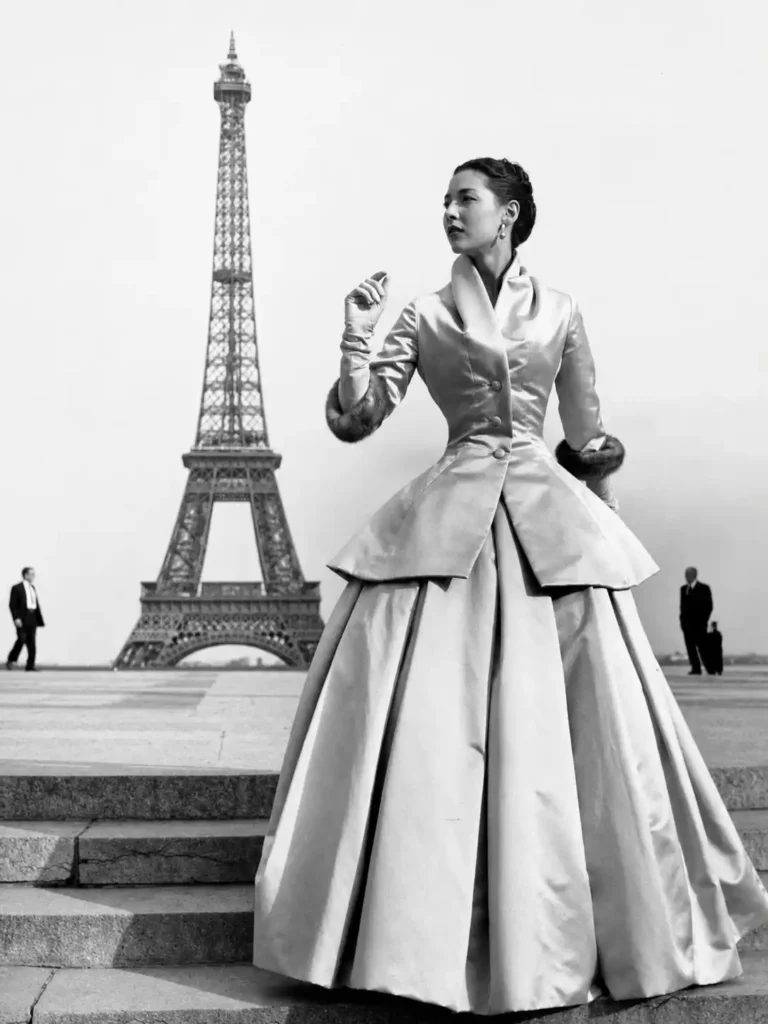
Christian Dior’s 1947 collection presented rounded shoulders, fitted bodices, narrow waists, and full skirts. The silhouette contrasted sharply with wartime utility clothing and signaled a renewed interest in romance, craftsmanship, and visual abundance.
The generous use of fabric attracted criticism from those who remembered wartime shortages. Still, the impact was immediate. Dior’s work reshaped 40s Fashion Trends and influenced fashion houses, department stores, and consumers.
The Bar Suit and Postwar Fashion
The Bar Suit became one of the defining designs of the New Look. Its sculpted jacket emphasized the waist, while the full skirt introduced movement and volume. The proportions appeared intentionally different from the practical silhouettes of the war years.
The design influenced fashion internationally and showed how clothing could reflect cultural recovery. It moved style away from austerity and toward optimism, luxury, and theatrical presentation, setting the foundation for many 1950s silhouettes.
The Lasting Influence of 1940s Fashion
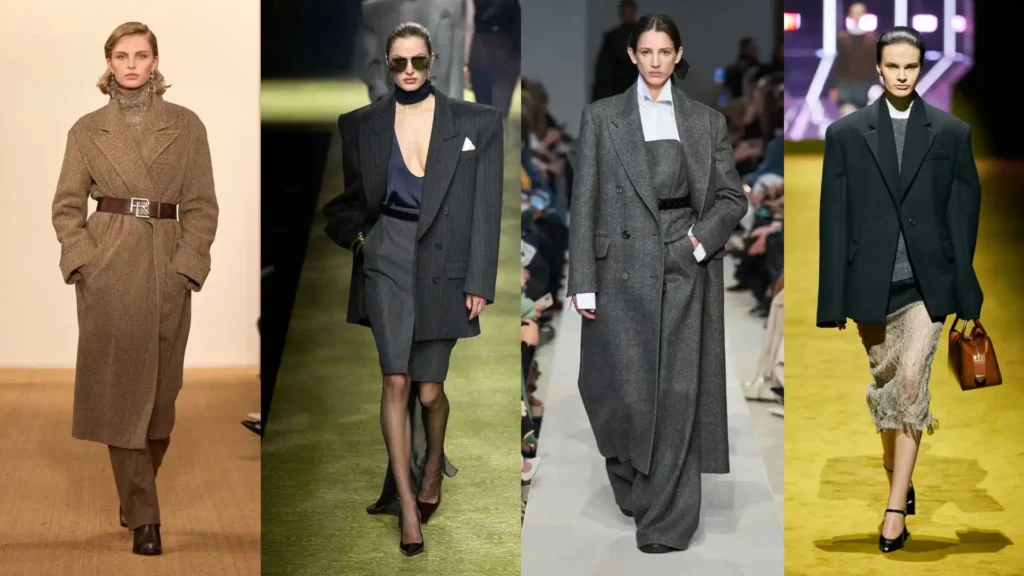
The decade continues to inspire designers because it combined structure, practicality, and glamour. Padded shoulders, belted waists, wide trousers, tailored coats, red lipstick, and full skirts regularly return in contemporary collections and editorial styling.
This mix of elegance and restraint gives the period unusual range, which is why its references continue to appear across runway collections, fashion photography, film, and personal style.
How Designers Reinterpret the Era
Modern designers often reference the 1940s through proportion rather than direct reproduction. A sharply tailored shoulder, fitted jacket, or full midi skirt can evoke the period without appearing like a costume. Updated fabrics and lighter construction make these ideas suitable for current wardrobes.
The era also remains relevant because durability, adaptability, and careful use of materials matter to modern consumers. In that sense, the practical side of 40s Fashion Trends aligns with today’s interest in intentional shopping and long lasting clothing.
Wearing 40s Fashion Trends Today
A modern wardrobe can reference the decade through one strong element. A tailored blazer, high waisted trouser, structured handbag, tea length dress, or classic red lip can introduce the aesthetic naturally. Pairing vintage inspired pieces with modern basics keeps the look balanced.
The lasting appeal of 40s Fashion Trends comes from their ability to communicate resilience and elegance at the same time. On current runways, these references are rarely copied exactly. Instead, designers reinterpret them through new fabrics, proportions, and styling, proving that the decade remains a valuable source of creative direction.