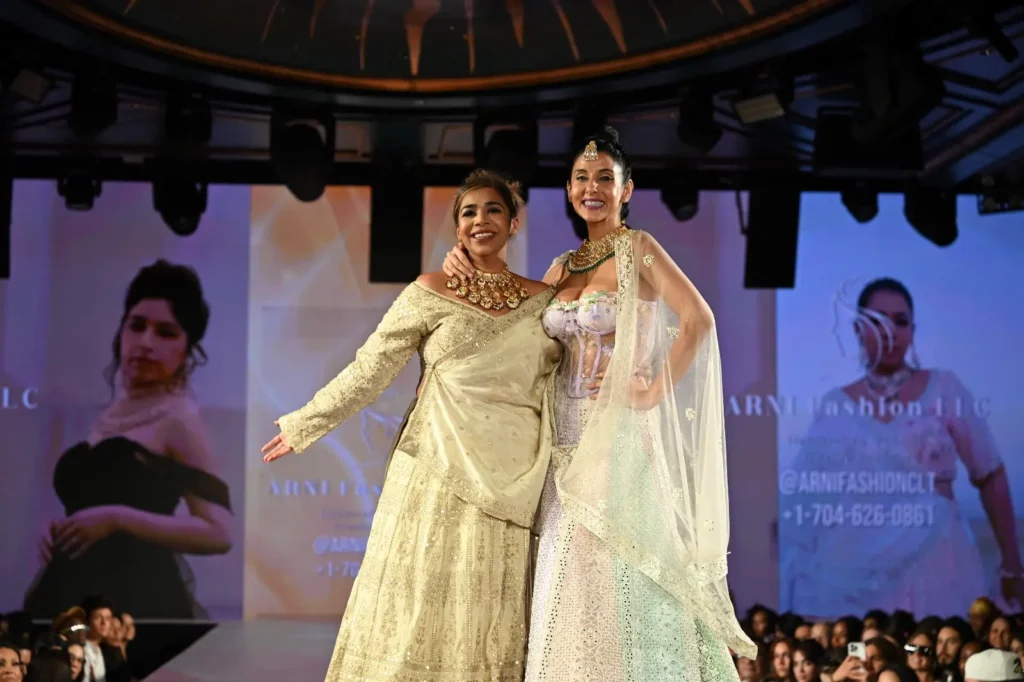
ARNI Fashion LLC brings the grandeur of Indian heritage into a contemporary luxury landscape through an intricate fusion of fashion, jewelry, and traditional craftsmanship. Founded by award-winning designer Nidhi Shah, the fashion and jewelry house has built its identity around handcrafted bridal, couture, and heritage jewelry collections that reinterpret centuries-old Indian artistry for a global audience.
On September 11, 2026, ARNI Fashion presented its vision at Runway 7 during New York Fashion Week, adding New York to a growing list of international showcases that includes Cannes, Dubai, and Rome. The presentation introduced The Maharani Bride, a collaboration between ARNI Fashion and Ruchi that celebrated the visual richness of Indian wedding traditions through elaborate bridalwear, statement jewelry, and contemporary runway styling.
The Maharani Bride: A Celebration of Royal Indian Bridal Tradition
Inspired by the grandeur of Indian weddings, royal palaces, and generations of artisanal craftsmanship, The Maharani Bride reimagined the figure of the Maharani through a contemporary perspective. The collection presented bridal fashion as an expression of elegance, strength, and cultural pride, combining traditional silhouettes with elaborate surface detailing and carefully coordinated accessories.
Luxurious fabrics, intricate embroidery, regal silhouettes, and handcrafted heritage jewelry shaped the collection’s identity. Statement necklaces, ornate earrings, and traditional forehead ornaments complemented the garments, reinforcing the importance of jewelry within Indian bridal styling. Beyond its visual richness, the presentation explored the idea of heritage as something that continues to evolve, with each ensemble offering a different interpretation of ceremonial dressing while remaining connected to the collection’s central concept.
A Runway Defined by Craftsmanship and Regal Presence
The presentation opened with an intricately worked lehenga and layered statement jewelry, establishing the collection’s emphasis on elaborate craftsmanship and ceremonial elegance. The richly detailed ensemble introduced the visual language that would continue throughout the runway, where embroidery, structured silhouettes, and carefully selected jewelry worked together to create a sense of royal occasion. The second look, worn by Deuandra T. Brown, introduced a more commanding presence, with the model’s expressive runway presentation adding movement and confidence to the collection. The third appearance offered a softer interpretation of bridal elegance, featuring a graceful silhouette and delicate embellishments that contrasted with the stronger energy of the preceding design.
Together, these opening looks established the collection’s range without losing its visual identity. Sculpted blouses, ornate skirts, layered necklaces, and decorative detailing created a sequence in which each garment had its own character. Rather than relying solely on elaborate ornamentation, the presentation allowed the relationship between clothing, jewelry, and the models’ movements to define the experience, balancing traditional Indian bridal aesthetics with the expressive possibilities of a contemporary runway.
Expanding the Bridal Narrative Beyond Traditional Silhouettes
The fourth look introduced a shift in the presentation through a menswear ensemble that extended the collection’s ceremonial aesthetic beyond the bride. Featuring a structured silhouette, layered jewelry, and ornate detailing, the design offered a formal interpretation of Indian occasion dressing while remaining connected to the regal character established by the opening looks. Its appearance added variety to the runway and demonstrated how the visual identity of The Maharani Bride could be expressed through both womenswear and menswear.
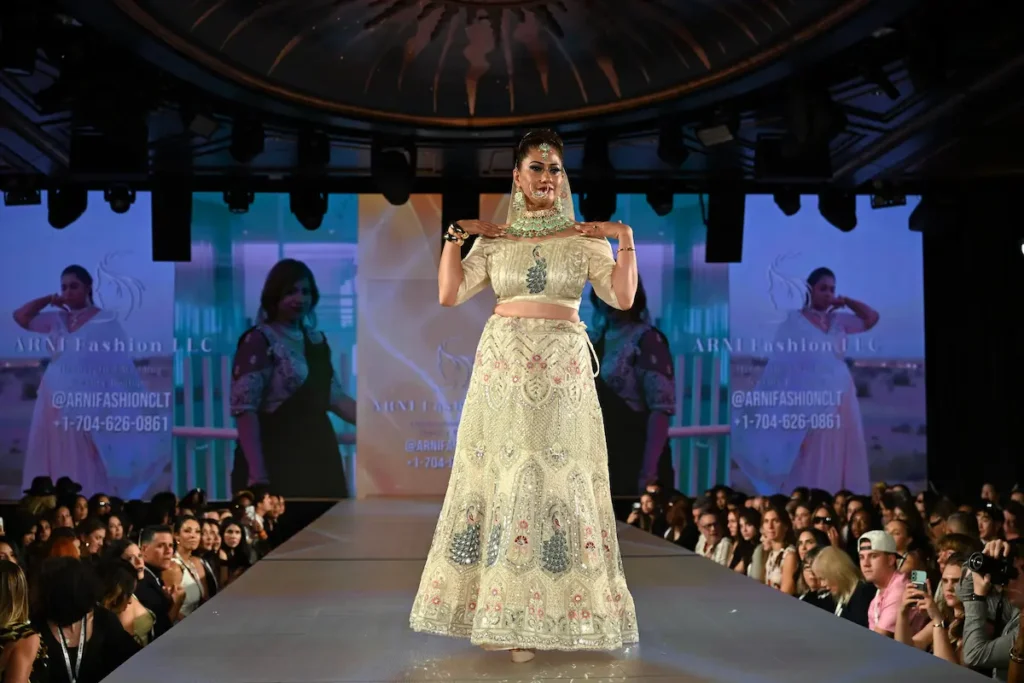
The fifth and sixth looks returned to bridal fashion through two interpretations of grandeur. One emphasized a fitted, embellished bodice paired with a full skirt and veil-like styling, creating a silhouette associated with the ceremony and richness of traditional wedding attire. The following ensemble introduced a softer expression of the same aesthetic, with fluid fabric, reflective embellishments, and traditional jewelry contributing to an elegant finish. Together, these designs reinforced the collection’s interest in balancing decorative craftsmanship with varied silhouettes, allowing each appearance to contribute to the broader narrative of Indian bridal heritage.
Rich Reds and Delicate Mint: Two Expressions of Bridal Elegance
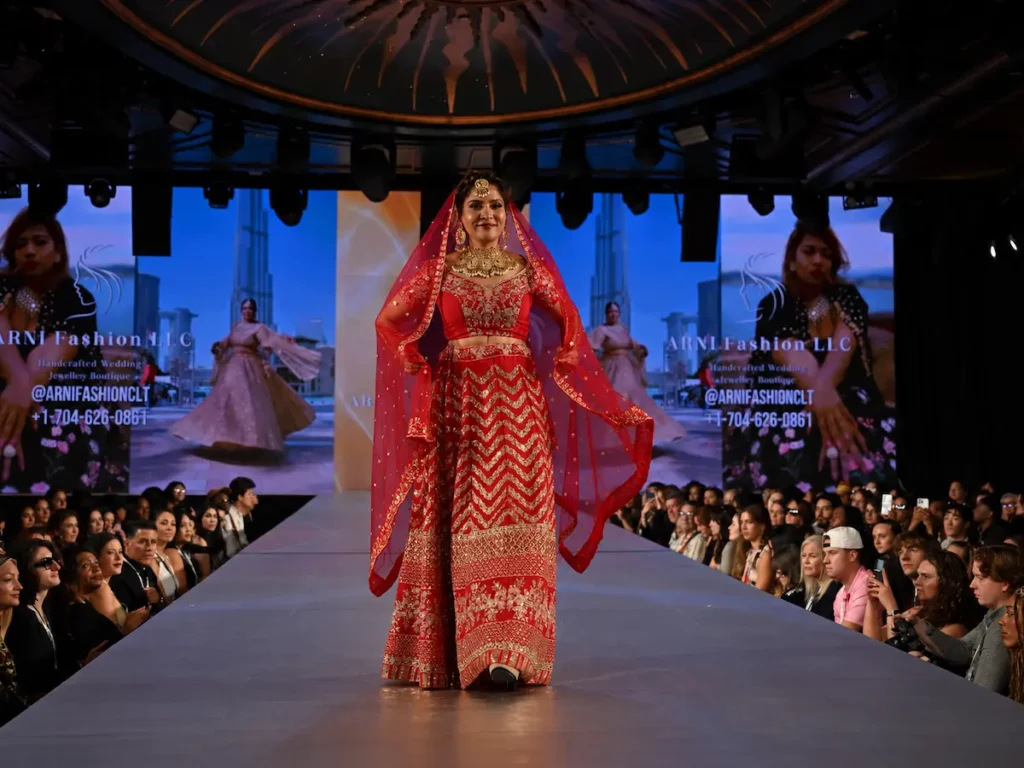
The seventh look introduced one of the collection’s most recognizable bridal color combinations through a striking red lehenga adorned with elaborate gold embroidery. A fitted, short-sleeved blouse featured intricate floral detailing, while the voluminous skirt displayed cascading chevron patterns and densely embroidered borders. A sheer red dupatta, finished with delicate gold accents, draped over the model’s head and shoulders, framing her face and adding a ceremonial quality to the silhouette. An ornate gold choker, statement earrings, and a traditional maang tikka completed the styling. Standing confidently with one hand resting on her hip, the model emphasized the richness of the embroidery and the careful coordination between the garment and its jewelry.
The following appearance introduced a softer interpretation of bridalwear, moving from the vibrant red of the previous ensemble to a delicate mint-green palette. The eighth look featured a short-sleeved embroidered blouse and a flowing lehenga skirt decorated with intricate pink and gold floral motifs. Smaller embellishments were distributed across the fabric, becoming increasingly elaborate toward the hem, where ornate patterns created a richly detailed border. A sheer matching dupatta fell over the model’s head and extended behind her, complemented by a jeweled headpiece, statement earrings, and a necklace with colorful accents. As she extended both arms toward the audience, the model allowed the silhouette and its decorative elements to become fully visible, creating an elegant contrast with the more intense bridal look that preceded it.
Jewel Tones, Elaborate Embroidery, and Golden Elegance
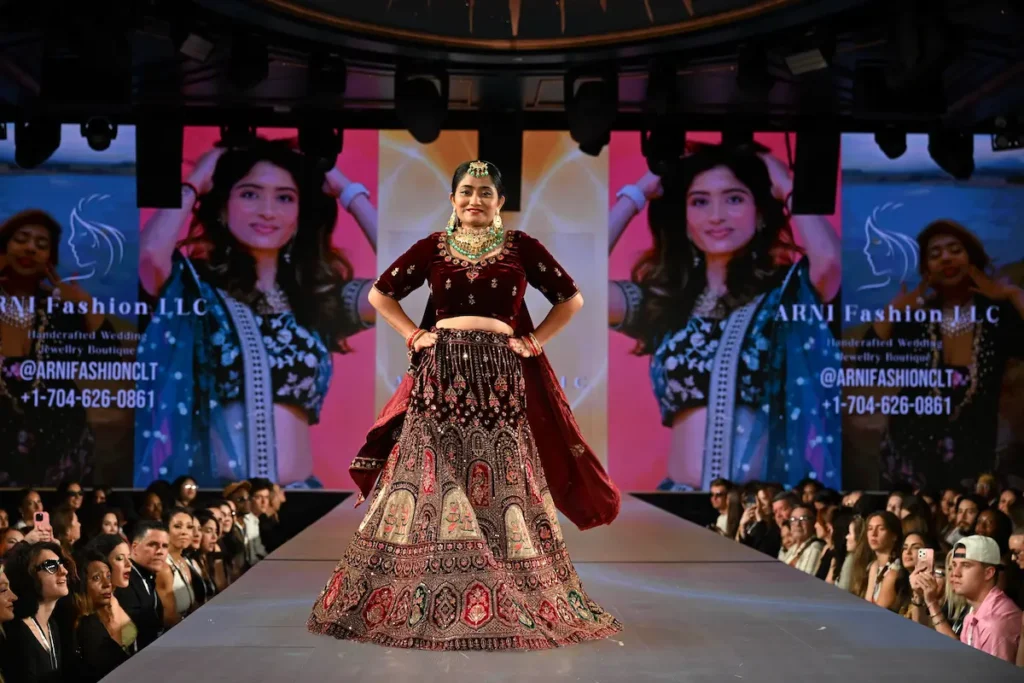
The ninth look returned to a richer color palette through a deep burgundy lehenga adorned with intricate embroidery. A short-sleeved, velvet-like blouse featured delicate gold motifs, while the voluminous skirt displayed elaborate architectural patterns, floral details, and decorative borders in gold, red, and muted green. A matching burgundy dupatta flowed along the sides of the silhouette, adding movement without concealing the detailed craftsmanship of the skirt. The jewelry introduced a particularly striking contrast, with an ornate gold necklace featuring turquoise-colored accents, coordinated earrings, and a traditional maang tikka. With both hands resting on her waist, the model emphasized the ensemble’s structured proportions and commanding presence, reinforcing the royal aesthetic at the heart of The Maharani Bride.
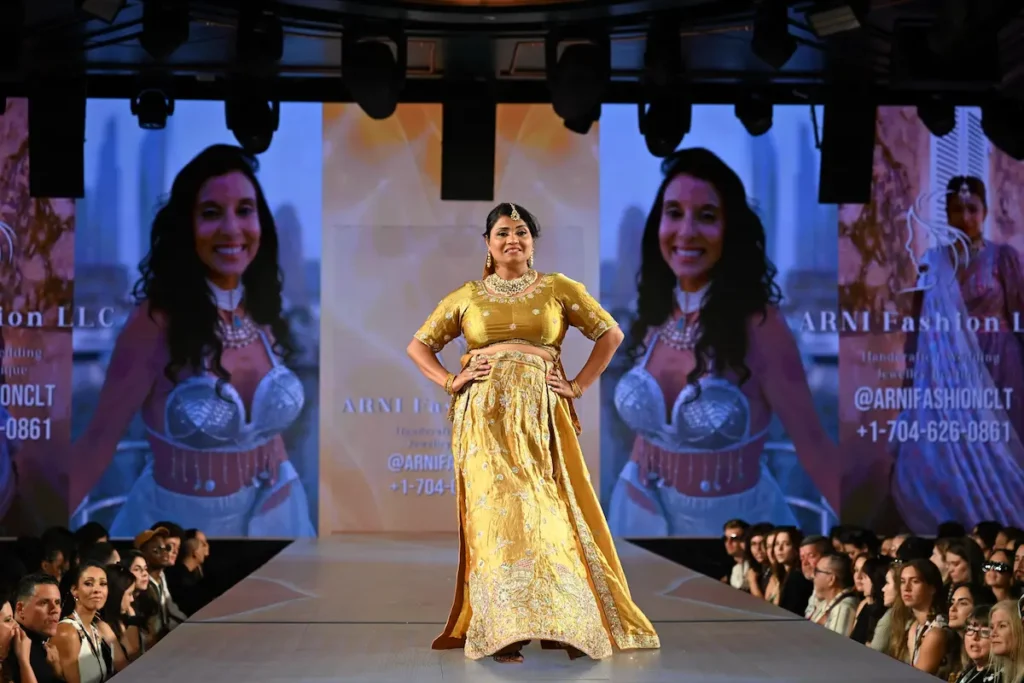
After the depth of the burgundy ensemble, the tenth appearance introduced a luminous golden palette that offered a warmer interpretation of bridal elegance. The model wore a traditional lehenga featuring a short-sleeved blouse with delicate embroidered accents and a flowing, floor-length skirt whose lustrous fabric reflected the runway lighting. Floral and ornamental motifs decorated the skirt, becoming more elaborate toward the lower portion, where pastel-colored embroidery added subtle contrast to the gold background. A matching draped fabric panel extended along one side of the ensemble, while an ornate necklace, coordinating earrings, and a delicate forehead ornament completed the styling. Standing with both hands on her waist and a warm smile, the model presented a softer expression of luxury, allowing the fabric, color, and carefully placed embroidery to define the look.
Ceremonial Menswear and a Contemporary Bridal Finale
The eleventh look returned to menswear through a refined ivory ensemble that contrasted with the richly colored bridal designs preceding it. The model wore a long, structured sherwani-style jacket with a high collar, subtle textured detailing, and decorative buttons down the front. Beneath it, loose dhoti-style trousers featured delicate gold trim along the edges, introducing traditional draping to the tailored silhouette. Multiple layers of ornate gold-toned necklaces, decorated with intricate patterns and colorful accents, became the focal point of the outfit. Coordinating ivory shoes completed the monochromatic styling, while the model’s composed expression and confident stance reinforced its ceremonial character. The ensemble demonstrated how the collection’s emphasis on heritage jewelry could transform restrained tailoring into a distinctive runway statement.
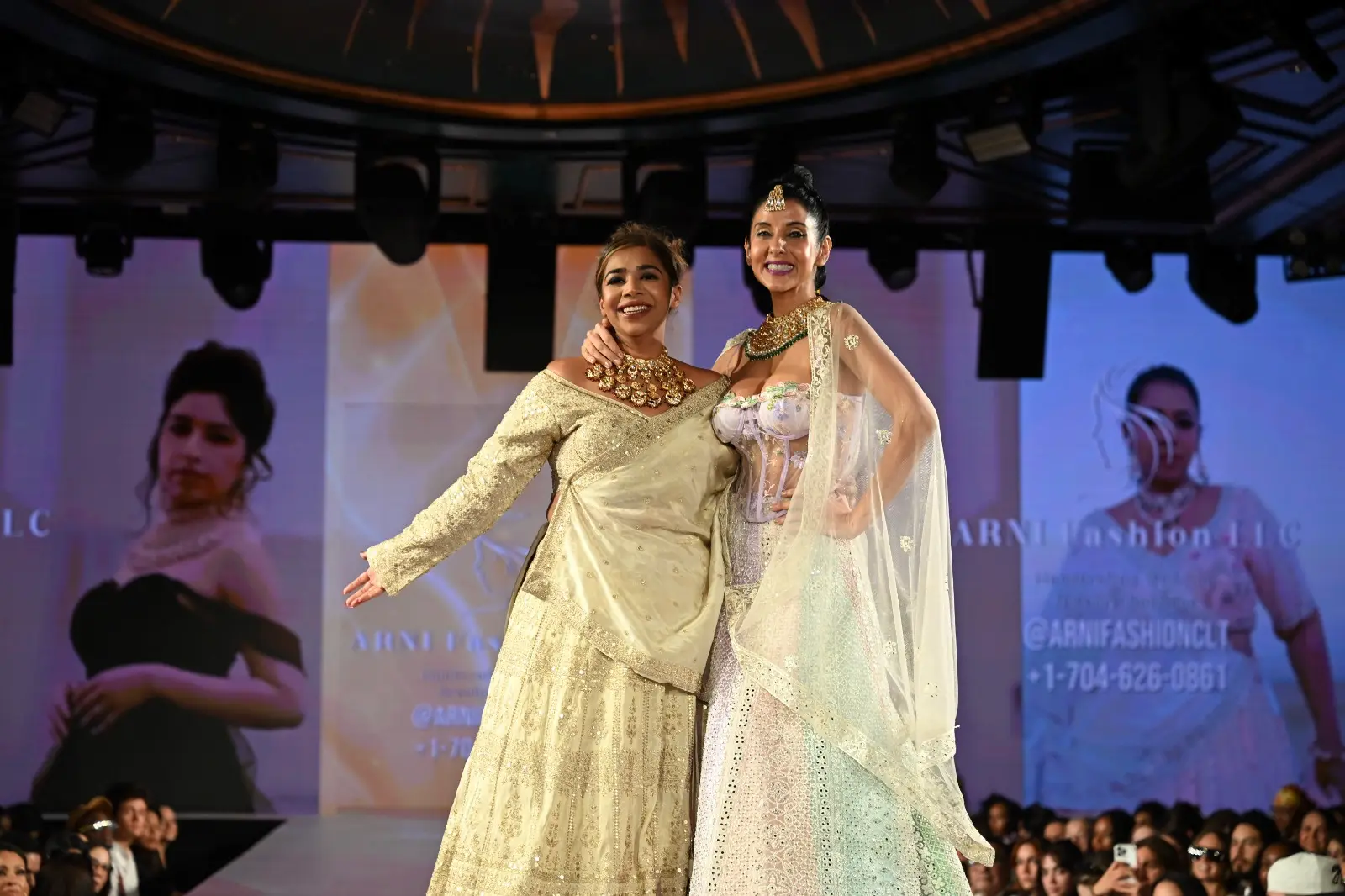
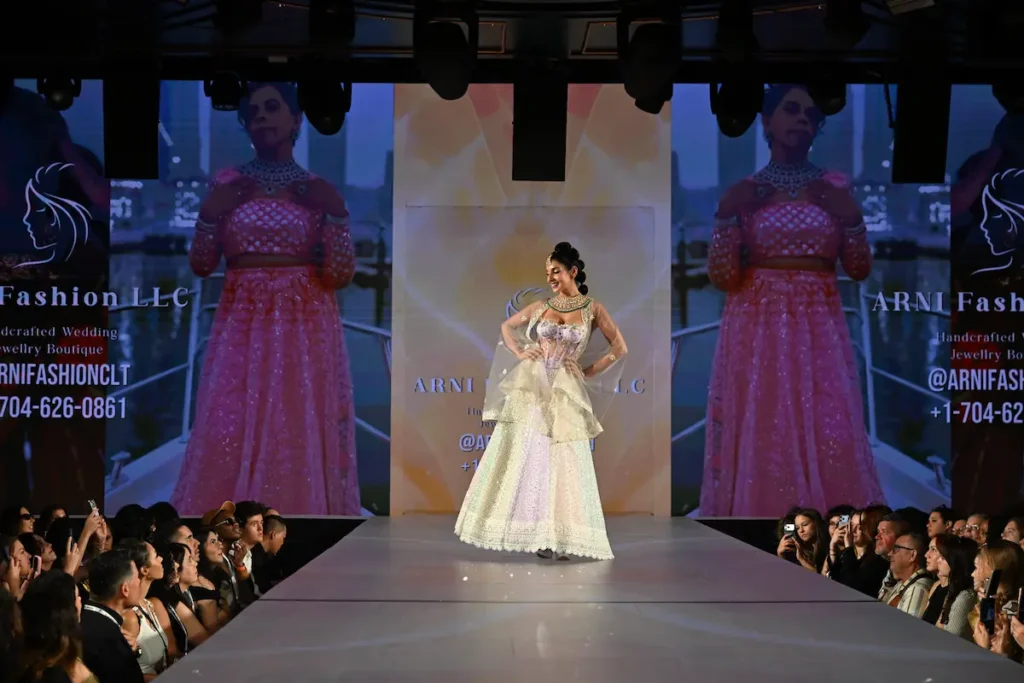
For the final look, The Maharani Bride embraced a softer, more contemporary interpretation of bridal elegance through an ensemble in ivory, blush pink, and lavender. A structured, floral-embellished bodice was paired with a voluminous floor-length skirt featuring delicate pastel panels and intricate lace detailing along the hem. Sheer sleeves and layered fabric around the waist added lightness and dimension to the silhouette, while an ornate statement necklace maintained the collection’s emphasis on jewelry. The contrast between the softly colored fabrics and the carefully structured bodice gave the design a refined appearance, offering a graceful conclusion to a presentation defined by rich colors and elaborate craftsmanship.
One of the most distinctive elements of the final appearance was the model’s hairstyle. Her dark hair was arranged into an elaborate, sculptural updo, with carefully shaped sections gathered into rounded forms that extended along the back of her head. The intricate styling complemented the garment’s construction and ornate jewelry, demonstrating how beauty details could become an essential part of the overall runway presentation. With a warm smile and both hands resting on her waist, the model closed the collection with a confident presence, allowing the final ensemble to express elegance through its silhouette, accessories, and carefully considered styling.
A Celebration of Indian Heritage on the NYFW Runway
Across twelve looks, ARNI Fashion x Ruchi’s The Maharani Bride explored the relationship between traditional Indian bridalwear, contemporary fashion, and the artistry of handcrafted jewelry. The collection moved between richly embroidered red and burgundy lehengas, softer mint and pastel ensembles, luminous gold fabrics, and ceremonial menswear, creating a presentation that reflected the variety of silhouettes and decorative traditions associated with Indian occasion dressing.
What connected these different interpretations was the attention given to craftsmanship and styling. Elaborate embroidery, statement necklaces, traditional headpieces, sheer dupattas, and carefully considered beauty details contributed to a cohesive visual identity, while the models’ confident presentations allowed each garment to reveal its individual character. From the opening bridal ensemble to the final pastel look and its sculptural hairstyle, the runway highlighted how heritage-inspired design could remain expressive and relevant within a contemporary fashion setting.
Presenting The Maharani Bride at Runway 7 during New York Fashion Week gave ARNI Fashion x Ruchi an international platform to celebrate Indian bridal traditions and the craftsmanship that continues to shape them. Through its combination of ceremonial elegance, intricate detailing, and contemporary styling, the collection offered a vision of bridal fashion in which cultural heritage was not simply preserved, but expressed through new silhouettes and interpretations.
At the heart of The Maharani Bride was a celebration of tradition, artistry, and the enduring elegance of Indian bridal fashion.