Some fashion presentations are built around a single visual language. This one embraced the opposite.
Across the show, eight labels moved through radically different ideas of dressing, from playful denim and sparkling streetwear to fluid sophistication, theatrical layering, material experimentation, and statement eveningwear. One entrance could feel sweet and lighthearted, while the next arrived covered in feathers, sequins, oversized proportions, or sharply tailored black.
That constant change gave the show its momentum. Rather than asking every brand to fit within one aesthetic, each was given room to establish its own point of view. From Lovely Lyriq’s candy-inspired world to SAVVI’s deeply personal finale, the evening became less about uniformity and more about the many ways clothing can communicate identity.
Lovely Lyriq: Sweetness With Personality
Lovely Lyriq opened a world built around childhood, individuality, and play. Against oversized candy graphics and the brand’s “Stay You Stay Sweet” message, denim appeared across skirts, dresses, cropped hoodies, overalls, and coordinated separates, often finished with lollipop motifs, embroidered lettering, patches, and colorful graphic details.
What made the clothes convincing was not simply the theme, but how naturally they worked on the young models. Sneakers, boots, relaxed denim, hoodies, skirts, and easy layering gave them freedom to walk comfortably without asking them to perform a miniature version of adult glamour. The styling still had enough presence for Fashion Week while remaining believable for children.
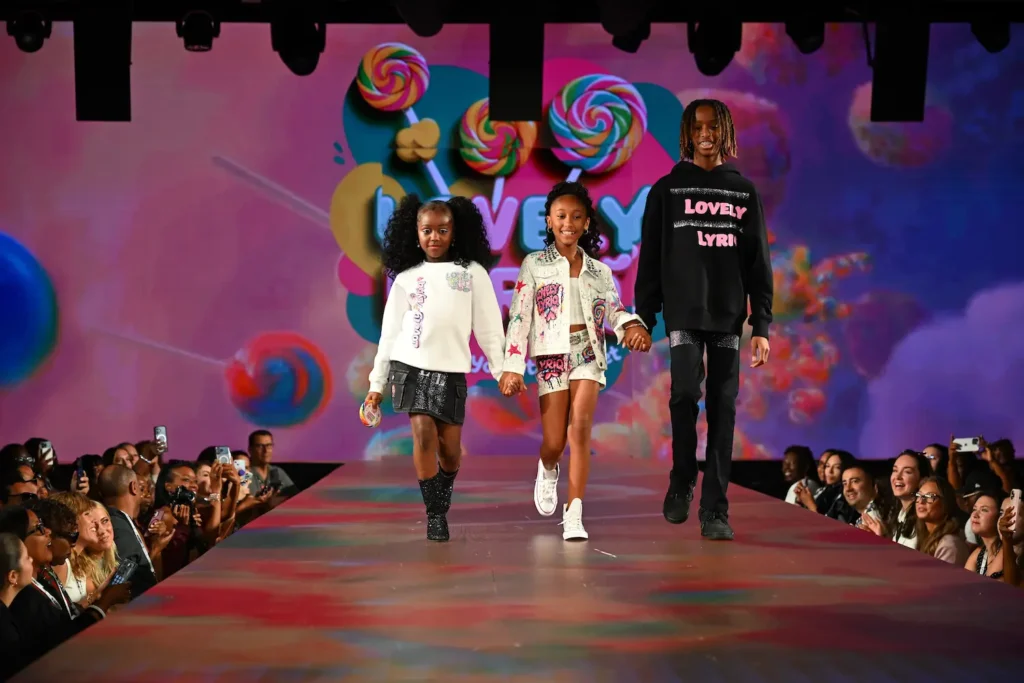
The lollipops carried by several models extended the candy concept beyond the backdrop and became part of the experience rather than an unnecessary prop. Near the end, three young models appeared together, creating one of the sweetest moments of the show. They looked confident, comfortable, and completely at ease.
Lovely Lyriq understood something important about childrenswear: impact does not require leaving childhood behind. Its charm came from celebrating it.
Chaotic Glitz: Everyday Dressing, Turned Up
From sweetness, the mood moved toward shine.
Chaotic Glitz began with recognizable wardrobe staples such as denim jackets, skirts, T-shirts, cropped shapes, and relaxed separates, then transformed them through pearl-like details, rhinestones, sequins, metallic lettering, glittered graphics, and reflective trims.
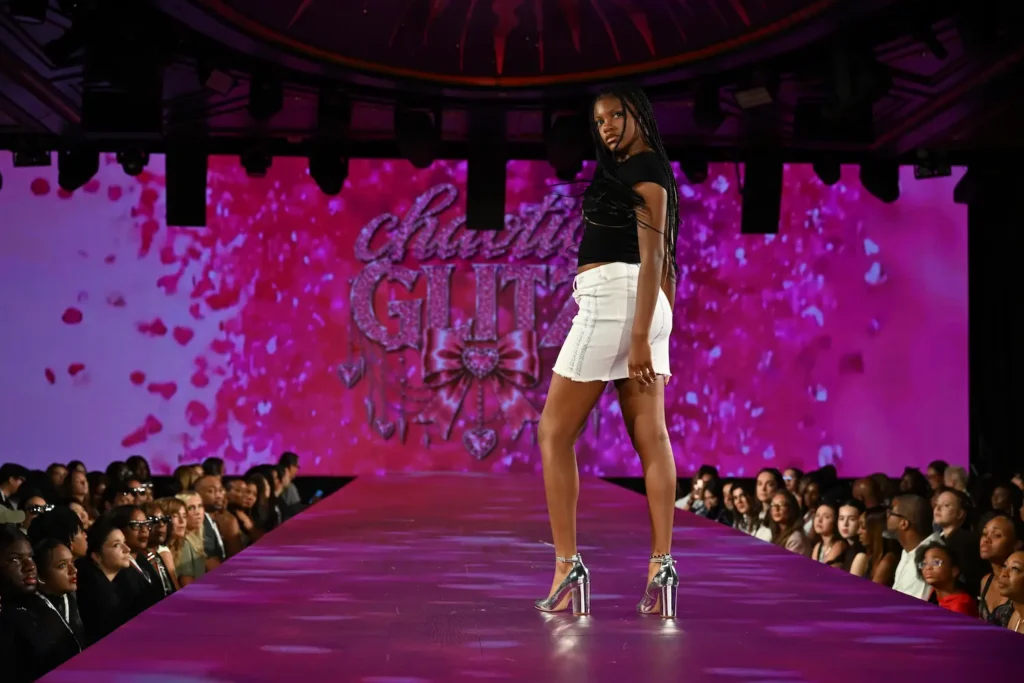
A white tee could become the centerpiece of an outfit through scattered pearls and shimmering typography. Denim took on an entirely different attitude once covered with crystal-like accents or metallic finishes. The familiar remained visible underneath, which kept the clothes approachable even when the surface treatment became more elaborate.
Importantly, the brand did not apply sparkle at the same intensity everywhere. Some outfits depended on one bright focal point, while others embraced a much stronger dose of shine. Metallic trousers, decorated denim, sequins, and graphic treatments created variation within a concept that could easily have become repetitive.
Chaotic Glitz found its strength in that balance. The pieces remained easy to imagine off the catwalk, but nothing looked ordinary once the lights hit them.
Soleil Leta: Elegance Through Changing Proportions
Soleil Leta changed the pace again, moving into a more refined territory where proportion became one of the strongest tools.
Clean dresses, fluid separates, draped pieces, metallic finishes, and tailored shapes created a wardrobe that appeared geared toward older teens and adults without becoming overly formal. Instead of relying on a single recognizable outline, the label shifted between close-fitting forms, elongated lines, pleated separates, and softer volumes.
That variety gave the sequence its character.
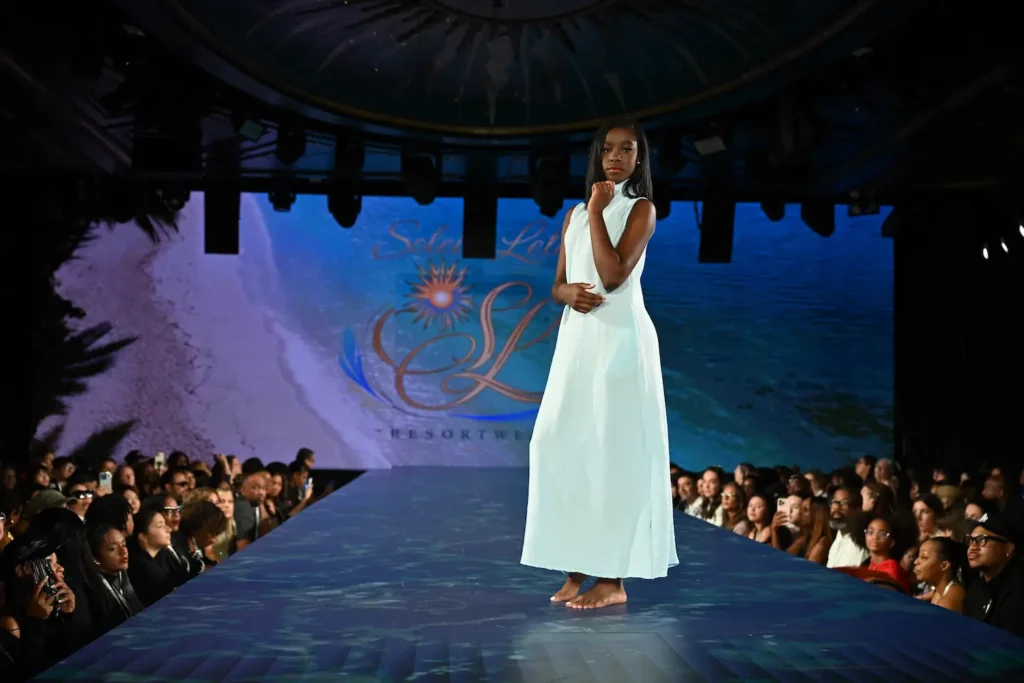
Short dresses brought a sharper energy, while floor-length pieces slowed everything down and introduced a more graceful sense of scale. Pleats created lightness, looser cuts softened the body, and satin-like surfaces reflected the lighting without needing excessive decoration.
There was a noticeable restraint to the styling. Even the more elegant pieces retained enough ease to keep them from feeling rigid or overly ceremonial.
Soleil Leta’s strength came from how differently it could interpret refinement from one entrance to the next. Rather than making elegance feel fixed, the clothes showed it as something capable of shifting with length, fabric, proportion, and occasion.
So Fluffy Creations: More Is Part of the Language
Then came So Fluffy Creations, and restraint was no longer the objective.
Plaid, sequins, florals, fringe, tulle, faux-fur trims, oversized hats, graphic motifs, embellished panels, and statement accessories collided across outfits that seemed to reveal another detail every few seconds.
The excess was intentional.
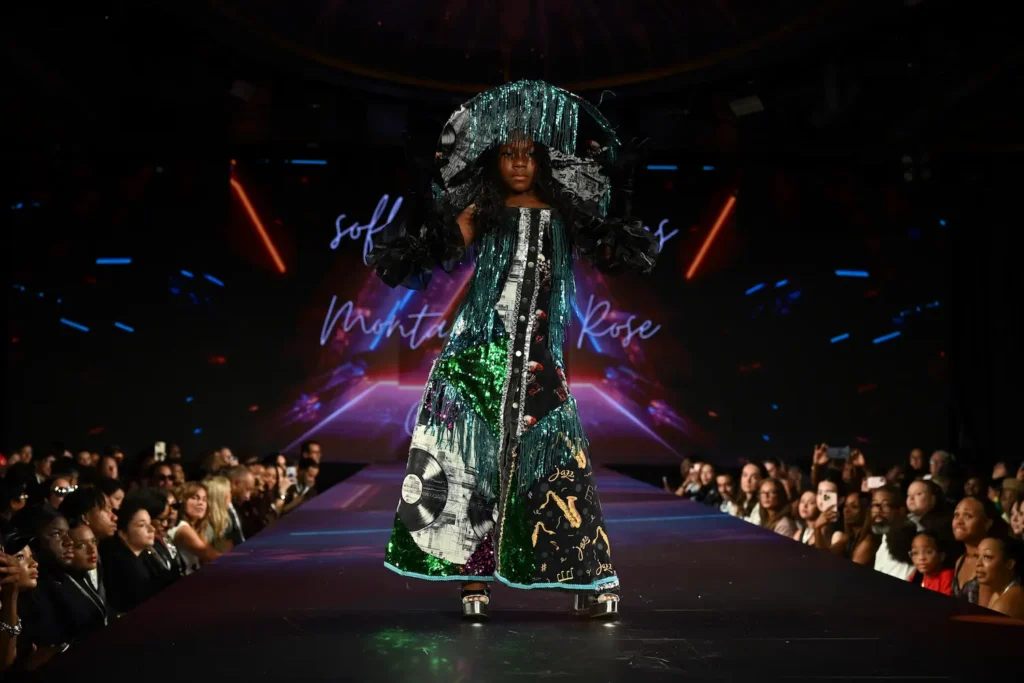
Coats opened to expose contrasting sections. Fringe responded to each step. Tulle expanded around shoulders. Large hats altered the proportions of entire outfits. Music-inspired imagery, roses, records, mixed prints, and metallic surfaces turned several pieces into something close to wearable collage.
The casting added another dimension. On younger models, the styling took on an imaginative, almost storybook character. On adults, the same vocabulary became more eccentric and fashion-forward. Oversized bags, expressive outerwear, sculptural dresses, and headpieces completed the transformation.
So Fluffy Creations was not interested in disappearing quietly into a wardrobe. These were clothes designed for people who see getting dressed as an opportunity to create a character, a mood, or a complete fashion moment.
Tashi Couture: Letting the Materials Speak
If So Fluffy Creations used abundance to build character, Tashi Couture shifted the focus toward what the fabrics themselves could do.
Sequins, satin, tulle, feathers, fringe, faux fur, sheer layers, structured textiles, and reflective finishes appeared throughout the lineup, often meeting within the same garment. Under the lights, each behaved differently. Sequins flashed, fringe swayed, feathers softened harder edges, and translucent fabrics floated around the body.
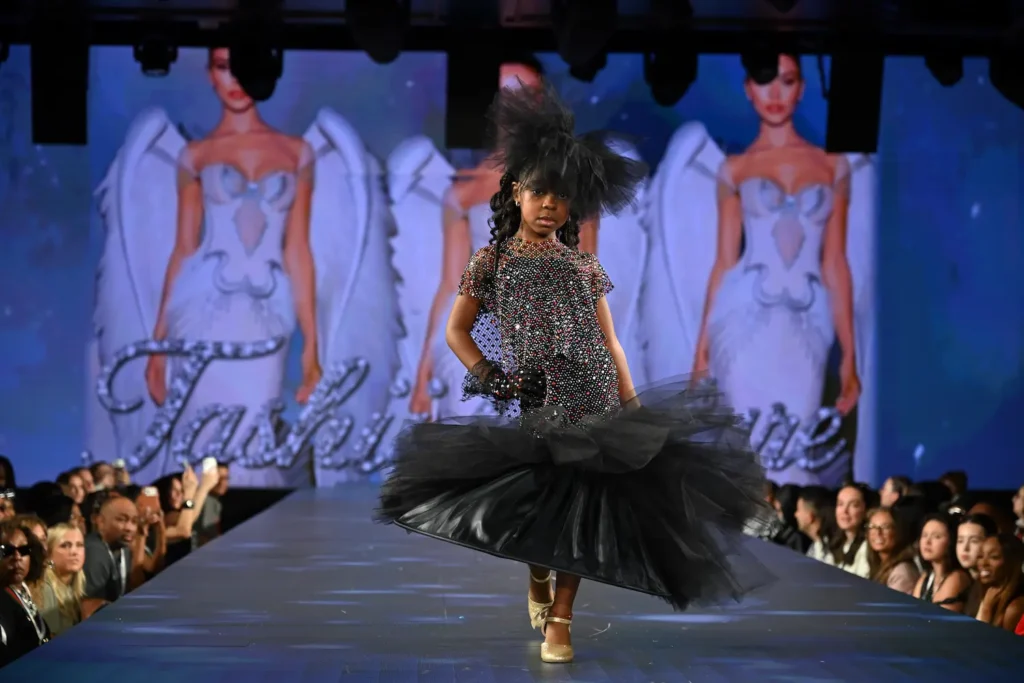
A black dress scattered with multicolored shine opened into a wide tulle skirt. A deep purple gown paired sequins with satin sleeves and delicate feather accents. Other pieces introduced cascading fringe, oversized headpieces, ruffles, and iridescent surfaces.
Color added another dimension. Purple, red, emerald, turquoise, black, and metallic tones changed the character of those materials from one entrance to the next. A green sequined gown paired with a shaggy two-tone coat felt glamorous but playful, while a pale iridescent design appeared to shift depending on the angle. The red fringed gown became especially effective once it began moving, with every tier responding to the model’s stride.
Tashi Couture was at its best when the fabrics became an active part of the design. Reflection, weight, softness, transparency, and motion shaped the experience just as much as cut.
B. Fly Beauty: The Range of Black
After so much material and color experimentation, B. Fly Beauty created impact through control.
Black dominated almost the entire sequence, yet the repeated color never translated into repeated ideas. Instead, it made differences in cut, finish, transparency, and styling more visible.
A fitted sequined gown offered sleek glamour. Sheer fabrics and draping created something softer. Tailored jackets, embellished trousers, capes, mesh, asymmetrical necklines, gloves, veils, fascinators, and crystal accents pushed other entrances toward a more theatrical expression.
Without constant color changes competing for attention, the eye became more attentive to everything else.
Black appeared romantic in one moment, sharp in another, then formal, sensual, severe, or opulent depending on how it was handled.
And then the red arrived.
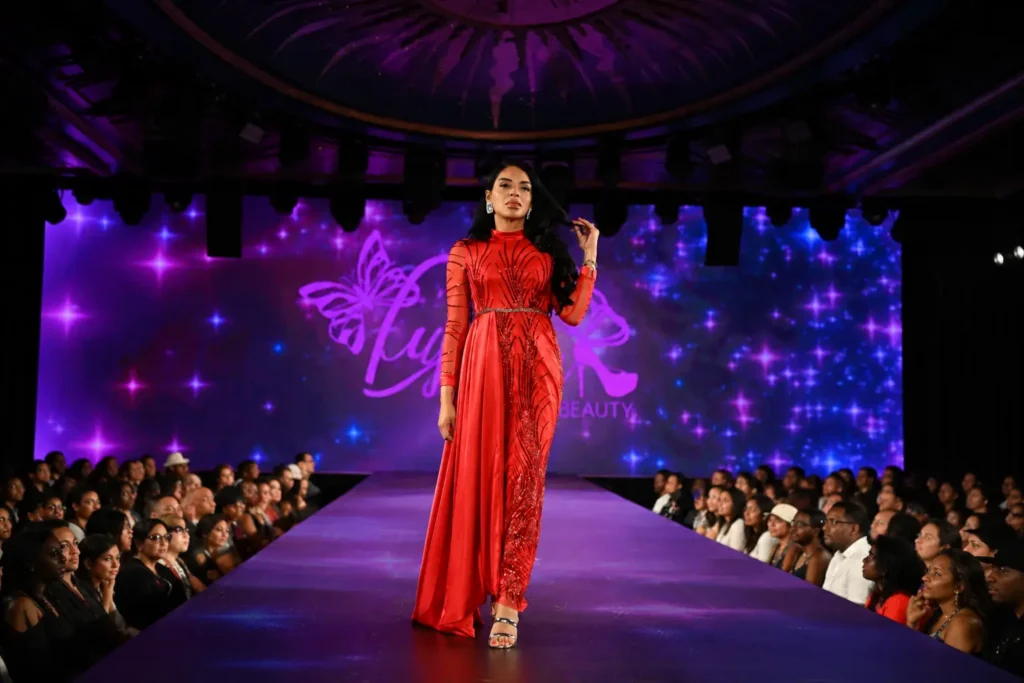
After an extended sequence of black, the saturated gown immediately altered the atmosphere. Its fitted bodice and flowing skirt carried even more impact because the palette had been so disciplined beforehand. The interruption did not weaken the story; it sharpened it.
B. Fly Beauty showed that range does not necessarily come from using more colors. Sometimes it comes from understanding how far one color can be pushed, and knowing exactly when to break the rule.
Laya Ale: Youth Through a Preppy Lens
Laya Ale returned the show to a younger mood, this time through a cleaner and more preppy vocabulary.
Skirts quickly became a recurring point of reference. Pleated minis, plaid, leather-like finishes, soft neutrals, and crisp whites created continuity while the styling moved between academic, playful, and slightly edgier interpretations.
A cable-knit top paired with a pleated skirt introduced a subtle school-inspired direction. A white puff-sleeve blouse and matching skirt made that idea more refined. The pink plaid set pushed further into youthful charm through its cropped vest, bow detail, tights, and coordinated mini.
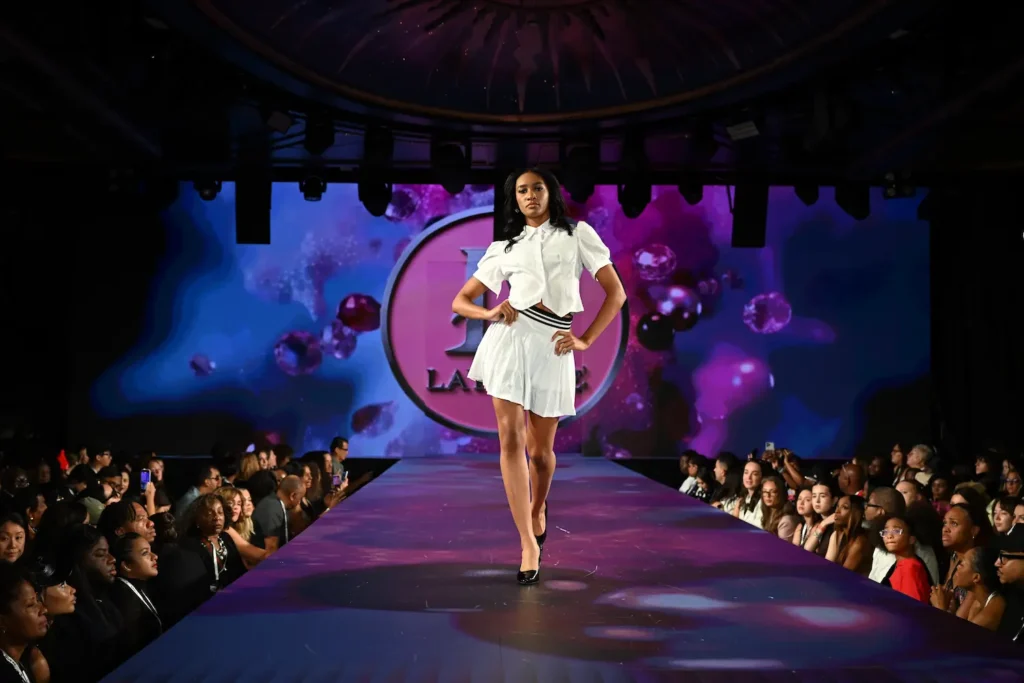
Other combinations loosened the formula. A neutral cropped top with a brown skirt felt more casual, while white paired with a darker leather-like mini brought additional edge.
Knee-high socks, boots, pointed shoes, and fitted layers reinforced the preppy references without turning the clothes into costume.
The finale captured that spirit particularly well. An earlier black-and-white outfit returned beside a new brown ensemble, and the two models walked together. Suddenly the garments felt less like isolated statements and more like clothes imagined within a social world.
That suited Laya Ale. Its strongest quality was the sense that these pieces could leave the catwalk and still feel relevant to the audience they appeared designed to reach.
SAVVI: The Signature Behind the Show
SAVVI carried a different emotional weight.
The label bears the name of the woman behind the brands presented throughout the show, giving this final chapter the feeling of a personal signature rather than simply another aesthetic shift.
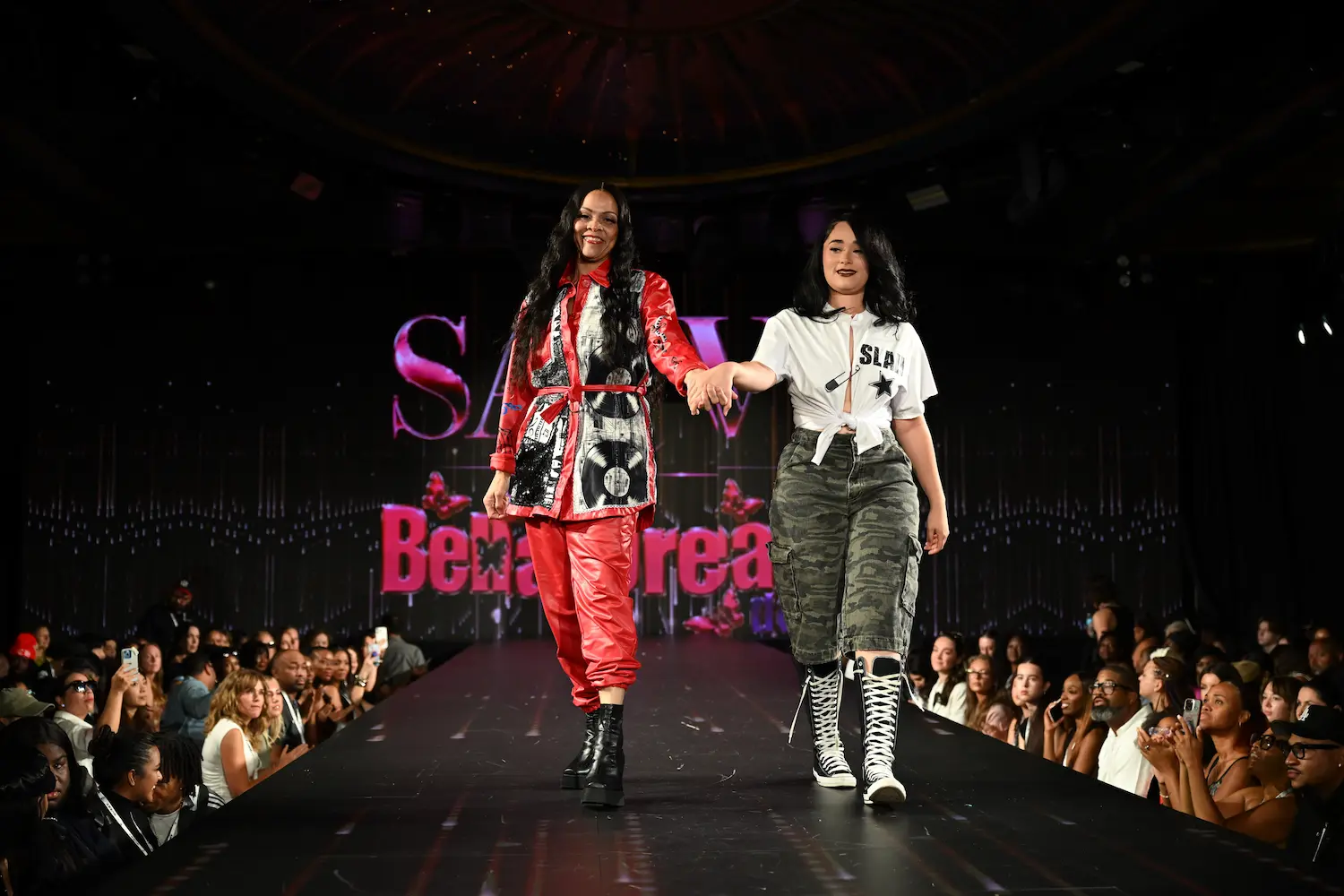
Its wardrobe was rooted in street-inspired youth dressing: denim, graphic T-shirts, cropped shapes, pleated skirts, relaxed trousers, plaid, camouflage, customized pieces, leather-like surfaces, and statement footwear.
Rather than settling into one category, SAVVI moved easily between preppy references, casual dressing, and stronger streetwear influences.
Visible branding tied those directions together.
SAVVI lettering, portrait imagery, graphic treatments, customized denim, and repeated logos became active parts of the clothes instead of quiet signatures hidden away from view. Denim provided another common thread through oversized jeans, jackets, distressed finishes, personalized details, and relaxed proportions.
Children, teenagers, and young adults appeared across the segment, allowing the same attitude to change depending on who was wearing it.
Then the focus returned to the creator.
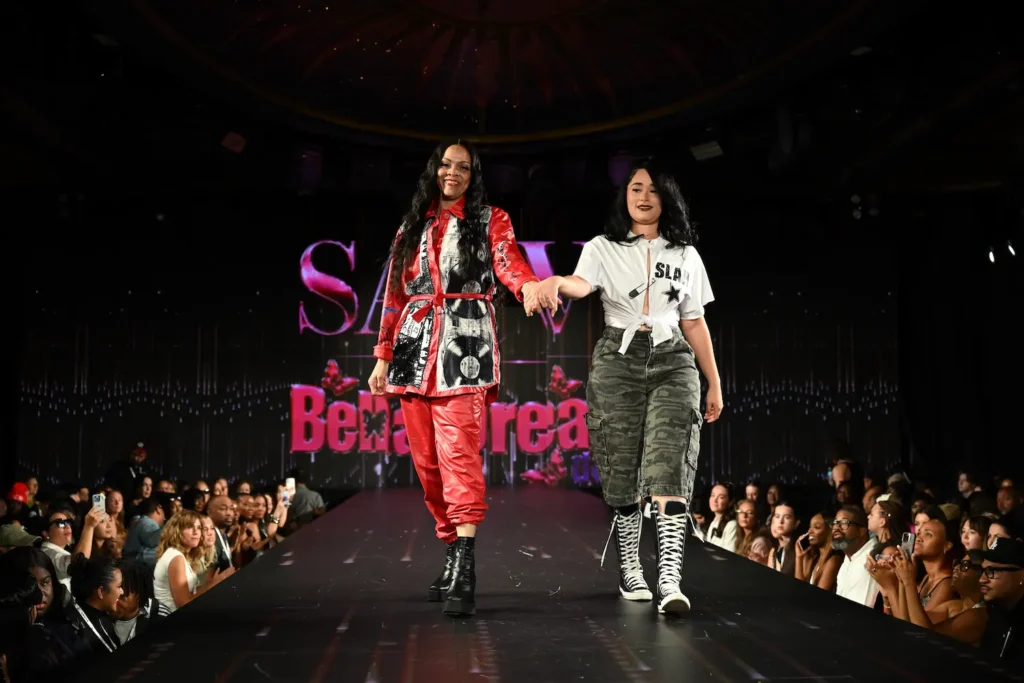
As models gathered again, the designer stepped onto the catwalk in a striking red outfit. After a show that had moved through several names, aesthetics, age groups, and fashion identities, her appearance connected everything back to the woman behind them.
It did not feel like a routine final bow.
It felt like a signature at the bottom of the page.
One Runway, Many Personalities
The strength of the full show came from contrast rather than consistency.
Lovely Lyriq protected the joy of childhood. Chaotic Glitz transformed everyday staples through shine. Soleil Leta introduced elegance by constantly changing proportion. So Fluffy Creations embraced visual excess, while Tashi Couture allowed materials themselves to shape the experience.
B. Fly Beauty revealed how expansive a disciplined palette could become. Laya Ale translated preppy references for a younger audience. SAVVI closed the circle through denim, graphics, streetwear, and the personal presence of the designer behind the larger story.
None of these labels needed to imitate the one before it.
That was precisely what made the show work.
Across eight distinct identities, fashion shifted from playful to glamorous, restrained to maximalist, polished to experimental. Each change brought a different energy to the catwalk, yet the transitions never required those worlds to blend into one another.
What ultimately connected them was not a shared aesthetic, but the freedom each brand had to remain recognizably its own.