For Puerto Rican designer Ray Aponte, New York Fashion Week represented the culmination of a journey that began with The Emerging Puerto Rico 2025. After winning the competition, which supports the development of emerging fashion talent, Aponte earned the opportunity to present his work on an international stage. In September 2026, that opportunity became a reality when he made his debut at Runway 7 NYFW at Sony Hall, introducing a collection that reflected his approach to craftsmanship, contemporary silhouettes, and expressive design.
The presentation unfolded through a palette of ivory, powder blue, lavender, silver, and midnight blue. Intricate embellishments appeared alongside sheer lace, fluid fabrics, and relaxed tailoring, creating a collection in which delicate textures were just as important as the garments’ construction. The runway performances added another dimension, with models using measured walks and carefully timed gestures to reveal details that might otherwise have gone unnoticed.
An Elegant Beginning: Modern Silhouettes and Delicate Craftsmanship
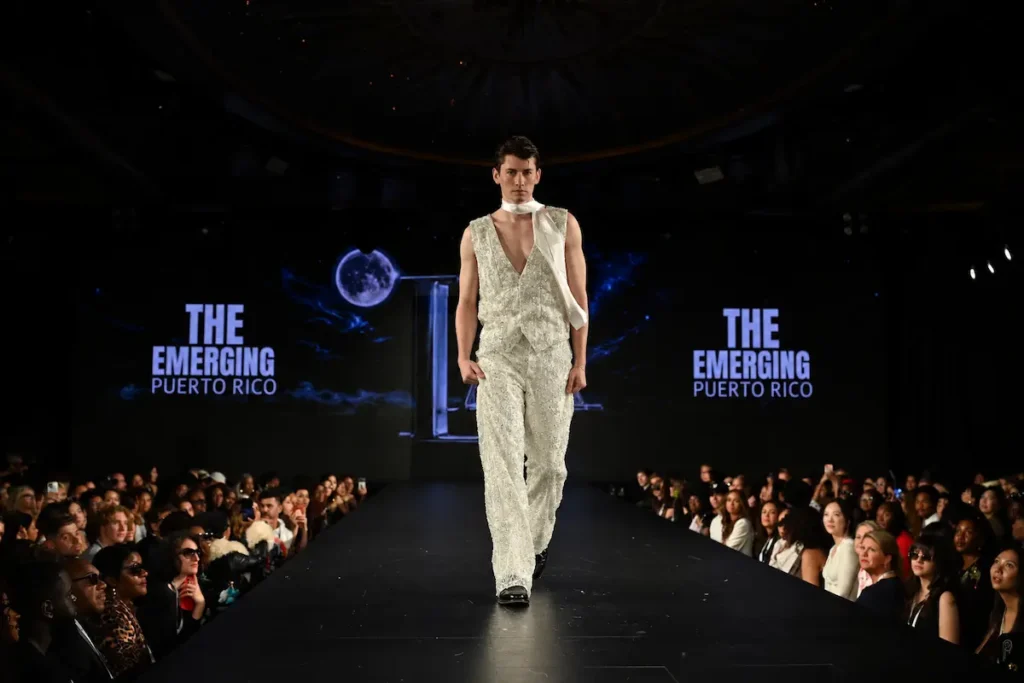
Aponte opened the show with an understated interpretation of contemporary menswear. An ivory sleeveless vest, covered in subtle shimmering details, featured a deep V-neckline and was paired with matching wide-leg trousers. The relaxed silhouette felt fresh and effortless, but it was the styling that gave the ensemble its particular appeal. A narrow white scarf wrapped around the model’s neck followed the vertical lines of the neckline, complementing its shape without competing with the garment’s textured surface.
That sense of balance continued in the second appearance, a powder-blue strapless jumpsuit that combined a structured bodice with generously cut trousers. Defined seams and carefully placed folds gave the design its shape, while white fabric draped across the shoulders introduced a softer element. The back revealed an equally thoughtful construction: the fabric was gathered into a knot, allowing long panels to fall over the blue silhouette. The model walked slowly and elegantly, maintaining a controlled pace that gave the audience time to appreciate both the tailoring and the movement of the fabric.
The third ensemble returned to ivory, this time introducing transparency through a sleeveless top covered in delicate silver embellishments. Its overlapping front formed a deep V-neckline, while the back featured a softly draped opening that revealed another side of the design. Textured cropped trousers, black socks, polished shoes, and a simple pendant necklace completed the outfit. The model’s restrained presentation suited the look particularly well. Without excessive gestures, he allowed the contrast between the intricate, sheer upper piece and the heavier trousers to become the focus.
A Darker Palette with a Contemporary Edge
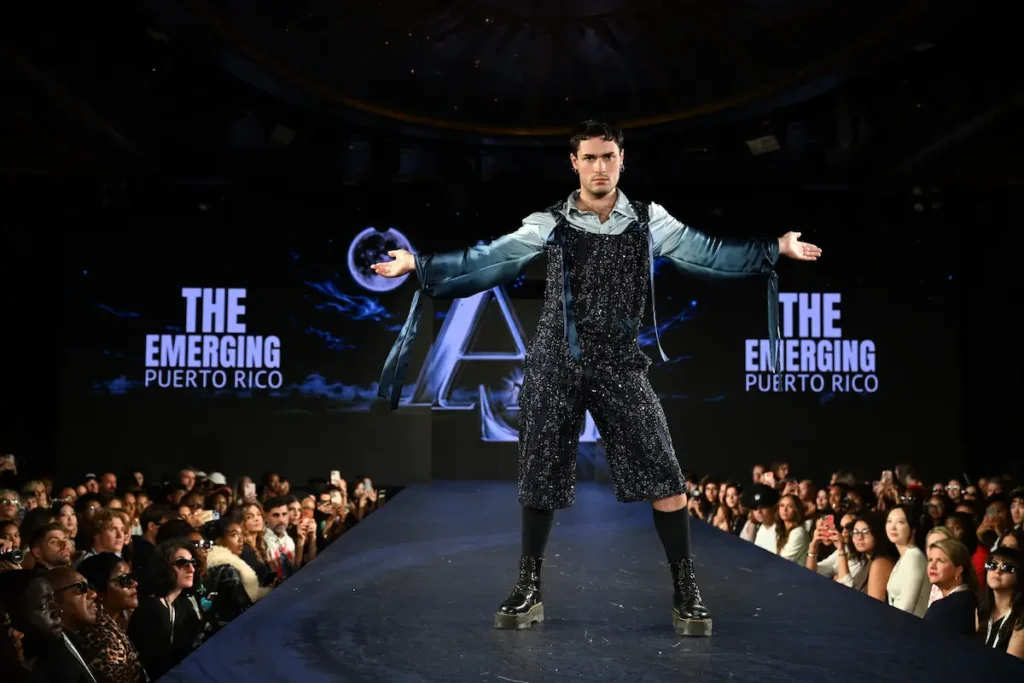
The fourth look marked a noticeable shift in mood. A shimmering midnight-blue garment with an overall-inspired construction was layered over a silky shirt that transitioned from pale silver-blue near the shoulders to deeper blue tones along the sleeves. The outer piece featured a square neckline and wide, cropped legs, its reflective embellishments catching the light across the runway. Long fabric ties extended from the sleeves, while black platform boots introduced a tougher contrast to the otherwise fluid styling. From behind, additional detailing, including a cross-like arrangement, gave the ensemble another point of interest.
After that darker statement, Aponte returned to softer colors with a relaxed blue shirt tied at the waist over a white inner layer. Its simplicity allowed the trousers to take center stage. Covered in repeating fan-shaped motifs in silver, lavender, and pale blue, they introduced one of the collection’s most recognizable decorative patterns. The shimmering design contrasted with the shirt’s smooth texture, while the wide-leg cut maintained the relaxed proportions established earlier in the show. Rather than treating embellishment as something reserved for eveningwear, Aponte incorporated it into an ensemble that felt contemporary and approachable.
The following look explored a different kind of movement through an ivory wrap-style top and textured light-gray trousers. The fabric crossed diagonally over the torso, creating soft folds around the waist, while long extensions fell from the sleeves and one side of the garment. The model extended his arms to reveal the length of these panels, turning the simple gesture into an opportunity to display the construction. As he walked away, the fabric continued to trail behind him, giving the otherwise minimal outfit an expressive quality.
Lace, Embellishment, and the Art of Movement
The collection then shifted toward a more romantic interpretation of Aponte’s aesthetic. A short midnight-blue dress featured a fitted bodice, a softly rounded skirt, and a surface covered in sparkling embellishments. Its defining feature, however, was the contrast created by the sheer ivory lace sleeves. Extending outward into wide, flowing shapes, they softened the structure of the dark dress, while a matching lace bow at the neckline tied the elements together. The model raised her arms to display the fabric, allowing the silhouette to expand and revealing the delicacy of the lace from different angles.
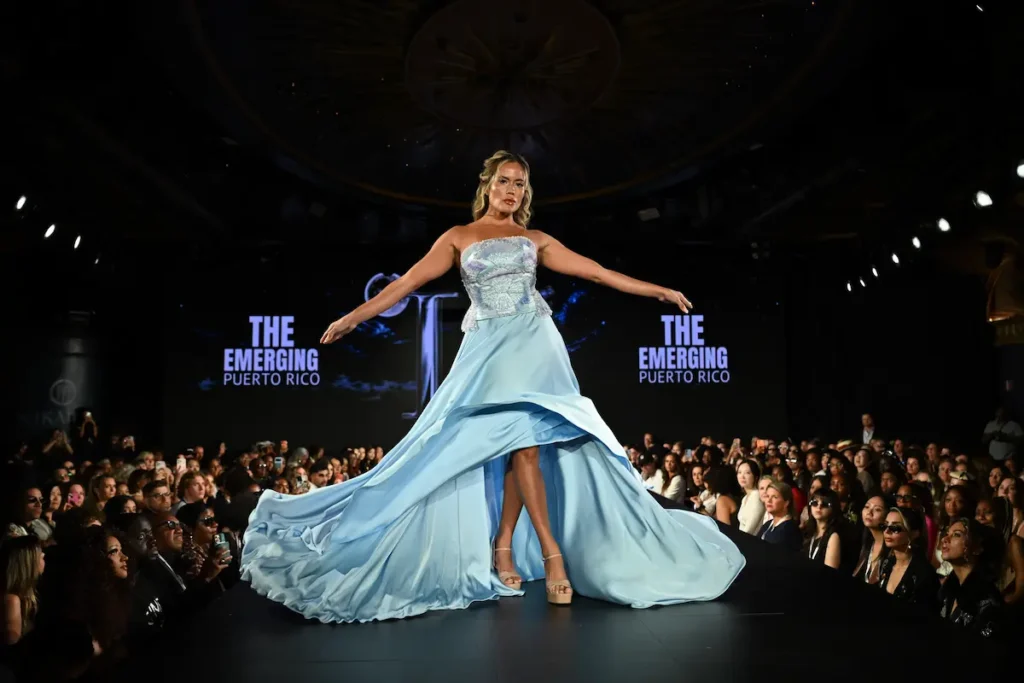
A powder-blue evening gown followed, introducing a fuller silhouette while returning to the silver and lavender fan motifs previously seen on the trousers. The strapless bodice was richly embellished, with its decorative pattern standing out against a voluminous floor-length skirt. The design was presented by Vanessa Medvedovsky, Mrs. Hispanoamérica Internacional 2026, whose elegant runway presence added another dimension to the look. As she moved down the runway, Medvedovsky lifted and extended the fabric, allowing the skirt to open into a wider shape and reveal its impressive volume and fluidity. Her controlled movements highlighted the relationship between the intricate bodice and the flowing silhouette, creating one of the presentation’s most memorable moments.
The next appearance offered another interpretation of the same decorative language. Silver and lavender embellishments extended vertically across a fitted silhouette, while sheer ivory fabric flowed from the shoulders and arms. The combination created a contrast between the detailed central garment and the softer material surrounding it. As the model extended her arms, the lightweight panels spread outward, allowing the audience to appreciate the intricate pattern beneath. By repeating these motifs across different garments, Aponte gave the collection a sense of continuity without making the silhouettes feel identical.
Reimagining Menswear Through Structure and Movement
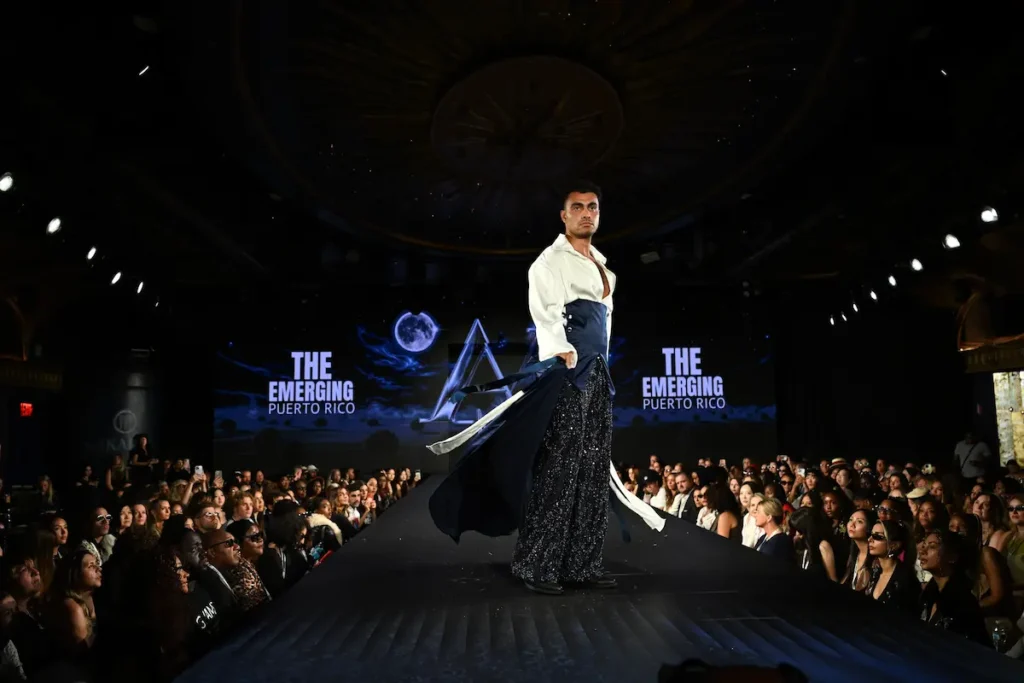
One of the collection’s most distinctive interpretations of menswear followed, combining traditional shirting with corset-inspired tailoring. A crisp white shirt with an open neckline and relaxed sleeves was paired with a structured navy-blue corset, whose defined seams and pointed lower edge emphasized the waist. Below, wide-leg trousers covered in shimmering dark embellishments reflected the runway lighting, adding texture and depth to the ensemble. Long white fabric panels along the sides introduced another layer of movement, contrasting with the darker garments.
The design became even more interesting from behind, where a long navy-blue train extended from the corset and flowed toward the floor. This unexpected detail transformed the silhouette, combining the sharp construction of the fitted waist with the fluidity more commonly associated with formal eveningwear. The model’s confident presentation, including a pose with one hand resting on his hip, highlighted the outfit’s unusual proportions. Through this combination of shirting, embellishment, corsetry, and an extended train, Aponte demonstrated how familiar elements of menswear could be reinterpreted through a more expressive approach to fashion.
The following appearance returned to the soft blue and lavender palette, revisiting the fan-shaped embellishments that had appeared throughout the collection. This time, the silver and lavender motifs covered a structured strapless bodice extending below the hips, paired with pale-blue trousers and long fabric panels falling from off-the-shoulder sleeves. The decorative pattern continued across the back, while the flowing material softened the fitted silhouette. As the model walked away, the lightweight panels moved around her, creating a graceful contrast between the intricate surface of the bodice and the relaxed construction of the surrounding garments.
An Ivory Finale That Captured the Collection’s Identity
For the final look, Aponte returned to the ivory tones that had introduced his collection, closing the presentation with an ensemble defined by transparency and movement. Wide-leg white trousers were paired with a sheer lace top that left much of the torso exposed. Long extensions of delicate fabric spread outward from the upper garment, forming a cape-like silhouette that gave the look an impressive sense of scale. At the end of his walk, the model raised one arm and opened the lace across the runway, displaying its intricate texture against the dark surroundings. The gesture created a memorable final image, with the simplicity of the trousers allowing the elaborate lacework to remain the focus.
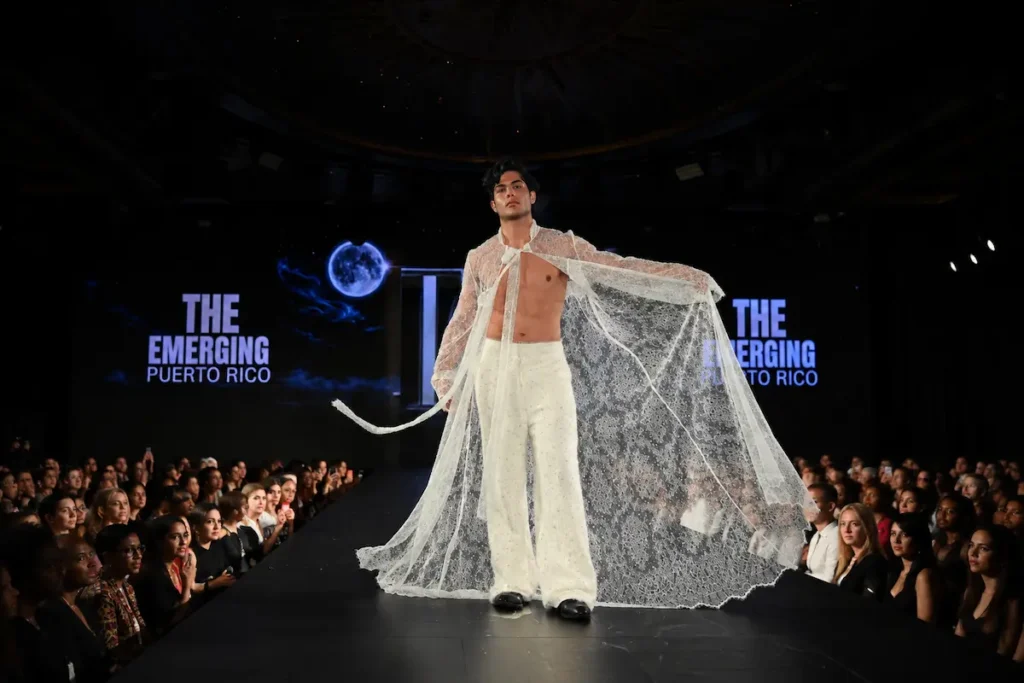
The choice of a light, flowing ensemble for the finale also created a visual connection with the opening looks. Throughout the presentation, Aponte had explored how transparent fabrics, detailed embellishments, and relaxed tailoring could coexist, and the final appearance captured those elements in a single silhouette. From the carefully styled menswear pieces to the flowing evening gowns, the collection maintained a recognizable identity while allowing each design to express a different interpretation of its recurring elements.
Ray Aponte’s Final Walk: A Dream Realized
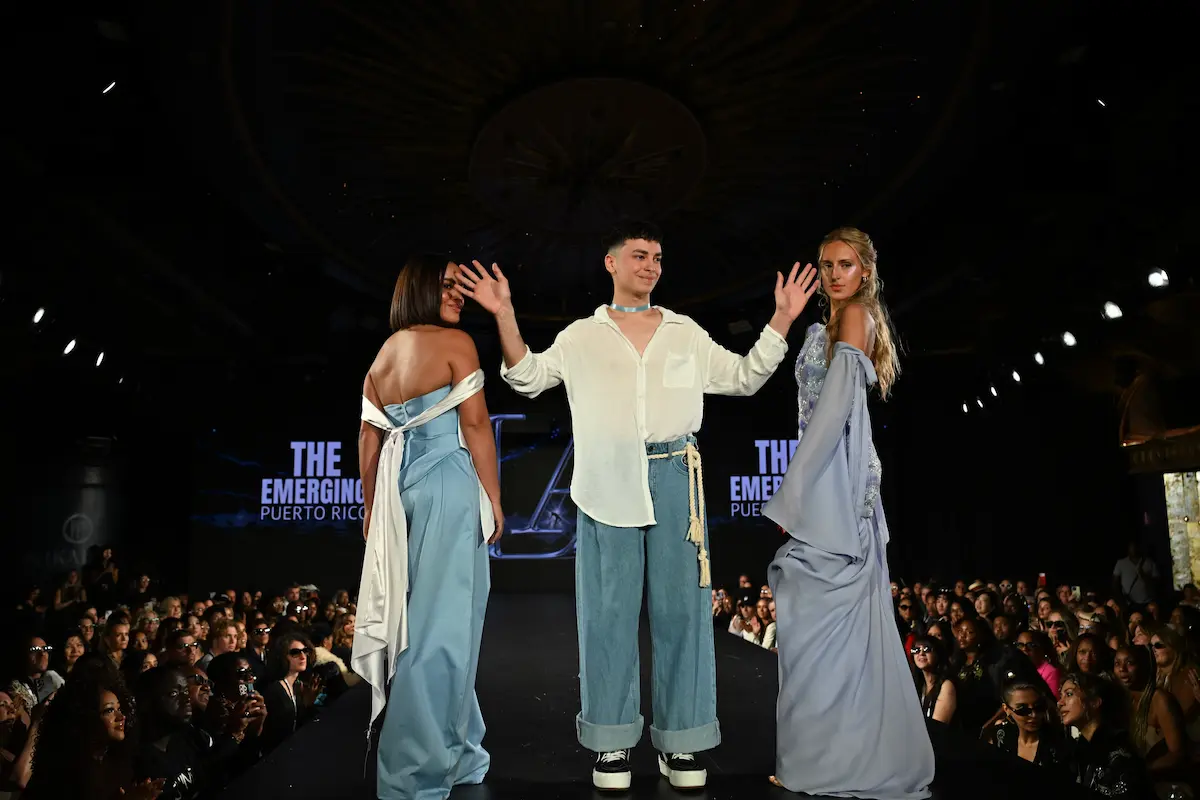
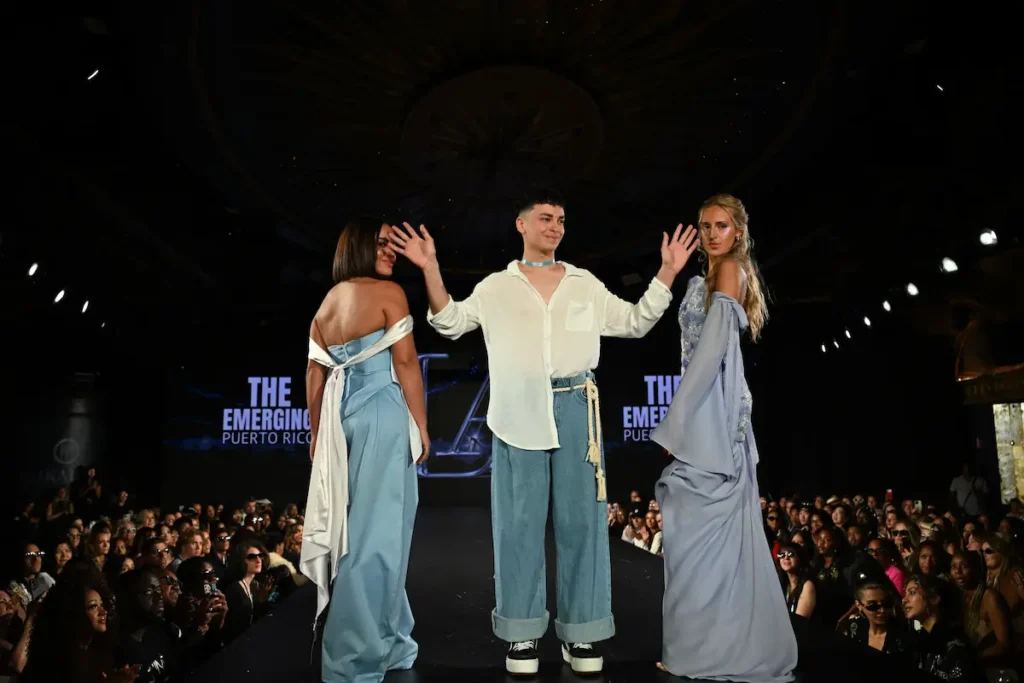
When the last model had completed his walk, Ray Aponte stepped onto the runway alongside two of his models to greet the audience. Dressed in a relaxed white shirt and wide-leg jeans, the Puerto Rican designer raised both hands with a smile, acknowledging the crowd gathered at Sony Hall. He did not rush through the moment. Instead, he paused at the center of the runway, taking a few seconds to appreciate the occasion before saying goodbye.
There was a genuine sense of excitement in his final appearance. Having earned his place at New York Fashion Week through The Emerging Puerto Rico 2025, Aponte was now standing before an international audience after presenting the work that had carried him there. The smile, the pause, and the emotion of his farewell gave the show a personal conclusion that extended beyond the designs themselves.
His debut also highlighted the importance of opportunities that allow emerging designers to move from local recognition to international exposure. Across the collection, Aponte demonstrated a clear interest in delicate craftsmanship, expressive silhouettes, and the relationship between clothing and movement. The recurring embellishments connected the garments visually, while the contrast between sheer fabrics and structured pieces gave each appearance its own identity.
For Ray Aponte, the final walk was more than a designer’s farewell. It was the moment he could stand on a New York runway, look out at the audience, and celebrate a dream he had turned into reality.