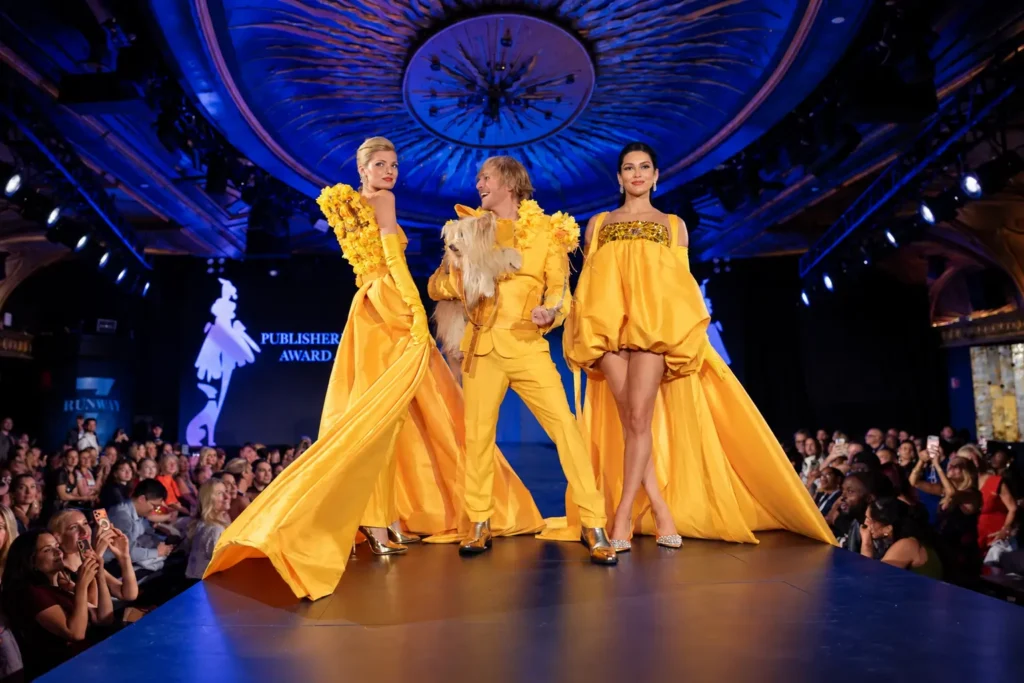
ELYSIAN Impact brought fashion, rescue animals and philanthropy together at Sony Hall to open Runway 7’s September 2026 NYFW season.
Opening Night at Sony Hall
Runway 7 opened its September 2026 New York Fashion Week season on September 8 with ELYSIAN Impact’s fourth annual CatWalk FurBaby, transforming Sony Hall into a meeting point for fashion, philanthropy and animal advocacy.
Created by Karen Floyd, founder and publisher of ELYSIAN, the event returned with 10 rescue organizations and 10 designer teams, each contributing to a competition that placed the visibility of fashion behind a broader purpose. The 2026 edition also featured a $25,000 award pool across the People’s Choice, Judges’ and Publisher’s categories.
But before the clothes or the animals appeared, Floyd made the room part of the show.
Her opening remarks quickly became an exchange with the audience. She called out different states and encouraged guests to respond when they heard their own, sending cheers across Sony Hall. The interaction felt less like a formal welcome and more like an introduction to the community she was describing: one built around hearing different stories, recognizing individual experiences and giving those voices a platform.
You might be interested in reading: Fashion Awards Winners Honored at the Inaugural Runway 7 Fashion Awards
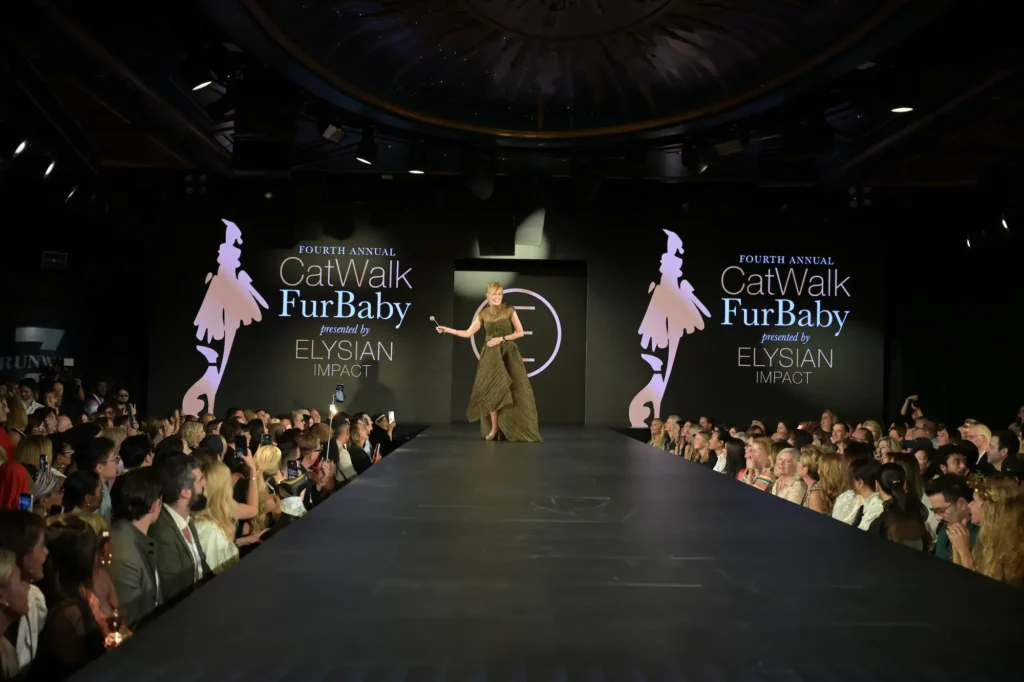
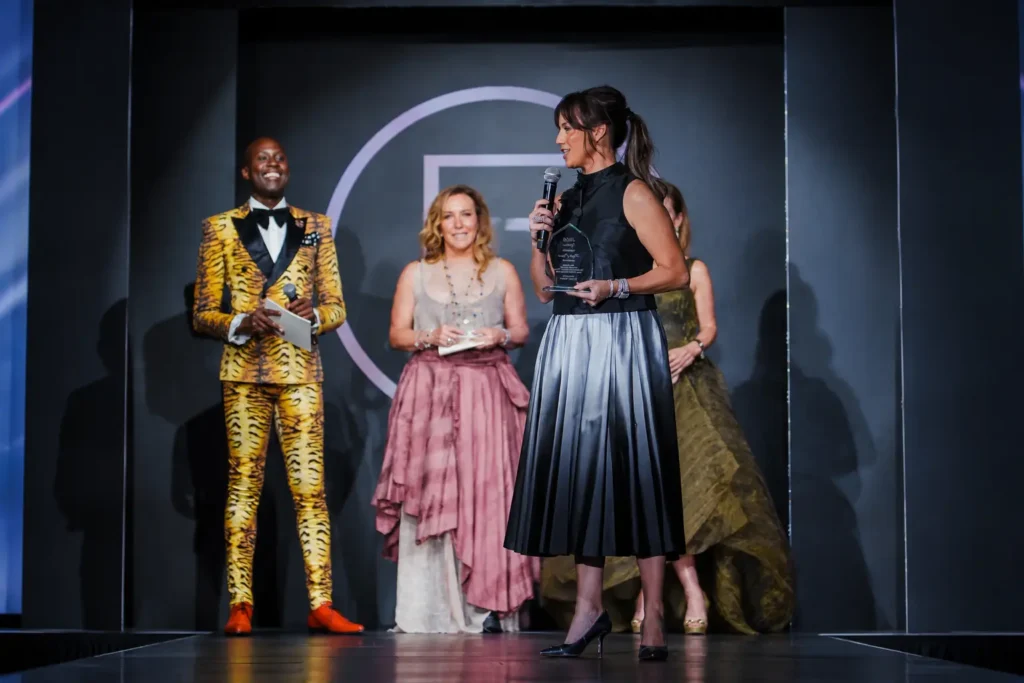
Floyd also acknowledged members of the ELYSIAN community before Charlii Sebunya stepped in as master of ceremonies and guided the audience toward the fashion presentation. Sebunya’s role would continue throughout the evening as the show moved from designer collections to rescue animals and, eventually, its closing awards.
The participating teams connected Victor de Souza with NYC Second Chance Rescue; Any Old Iron with Stand Up For Pits Foundation; Hot Girl Quilting with Foster Adopt Rescue Transport; D’Marsh Couture with Wings of Rescue; Marc Bouwer with Operation Kindness Humane Society; Magpies & Peacocks with PetSet; L’Agence and Cate Brown Studio with Companion Animal Alliance; Anne Fontaine with Big Dog Ranch Rescue; Bless by Bless with BARC-CT; and Halyna Shunevych with Spartanburg Humane Society.
Fashion Meets the FurBabies
The first entrance established a palette of gold and champagne.
A sheer embellished top met a floor-length openwork skirt, with floral appliqués, metallic ornamentation and transparent embroidery creating layers across the body. From the front, the detailing carried the eye vertically through the silhouette. From behind, an oversized sculptural rose became the dominant feature, giving the opening ensemble an entirely different perspective as the model turned.
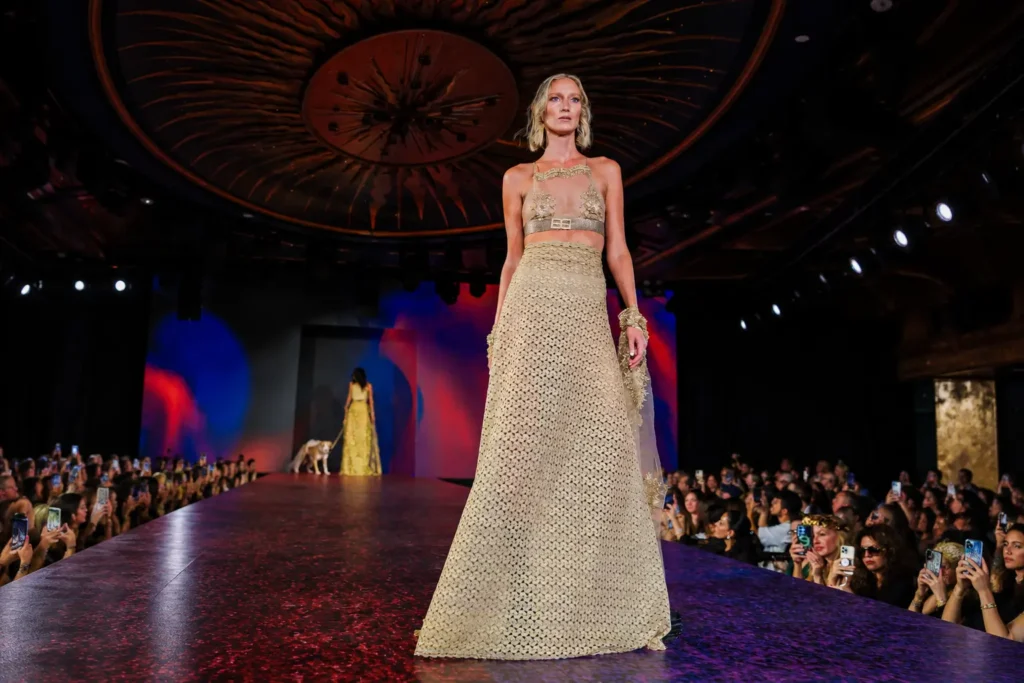
Gold continued into the next entrance through a structured cropped top and an ornate semi-sheer skirt with darker geometric detailing. This time, however, another element entered the composition.
The first canine companion appeared.
Dressed in soft champagne tulle, the dog was coordinated with the model rather than simply walking beside her. The airy layers around the animal echoed the palette and decorative quality of the clothing, immediately establishing how central canine styling would be to the show.
The gold then dissolved into white and silver.
Wide-leg white trousers appeared beneath a transparent embroidered coat, while a puppy rested in the model’s arms wearing its own sheer piece finished with delicate floral appliqués. The connection between the two was subtle but clear: transparency, light ornamentation and a restrained palette carried across both.
At the center of the runway, the puppy changed hands.
The following model continued forward with the same canine companion while wearing a sculptural white ensemble framed by layered ruffles around the shoulders and sweeping silver detailing. The handoff did more than connect the two entrances. It introduced a recurring element that would become increasingly important as the presentation progressed: models were not simply passing one another. They were interacting.
Color, Movement and Connection
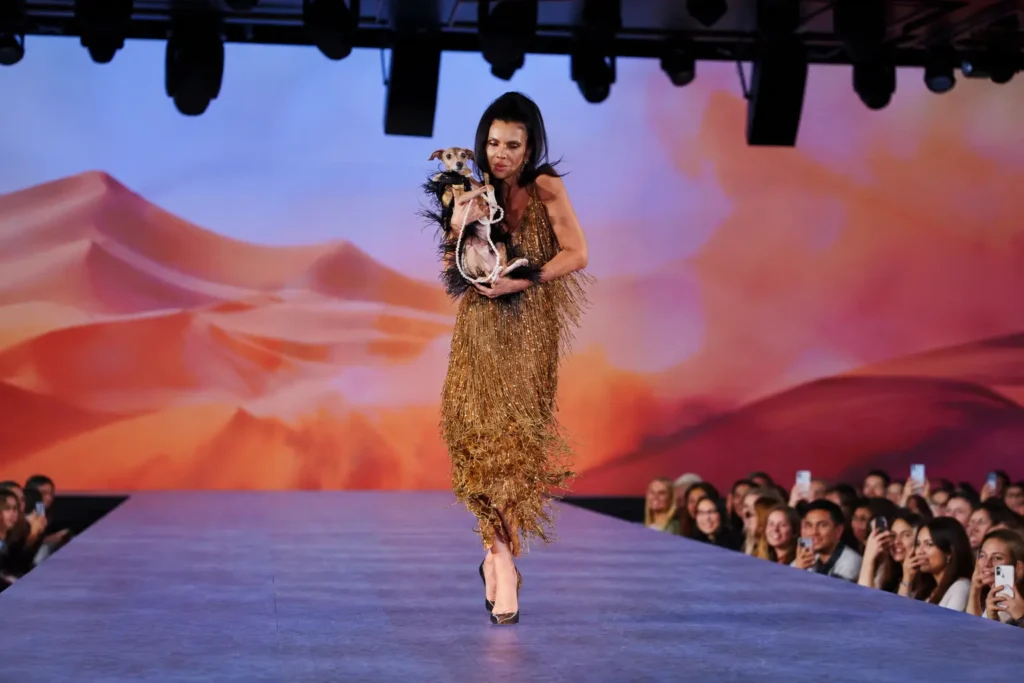
The mood changed almost immediately with the arrival of a gold fringe dress.
Instead of maintaining a conventional runway pace, the model incorporated dance-like movements into her entrance. The fringe responded to every turn and gesture, creating constant movement under the lights. In her arms, a small dog dressed in black feathered detailing with gold accents provided a dark contrast, while a strand of pearls became part of the styling.
The canine companion then moved into the arms of the following model, whose floor-length bronze sequin gown offered a more streamlined interpretation of metallic dressing. Where the previous entrance had relied on fringe and movement, this one used uninterrupted shimmer and a longer silhouette.
By that point, the exchanges had established their own rhythm.
The next change was more dramatic. Metallics disappeared and deep denim covered in oversized botanical motifs took over. Red, yellow and white flowers mixed with green leaves across a cutout silhouette with flared trousers, introducing a more graphic approach to color.
When the model reached her counterpart on the catwalk, another dog exchange began, but the moment did not end there.
After placing the canine companion into the next model’s arms, she stopped to adjust her fellow model’s coat. The two exchanged kisses on the cheek before moving apart.
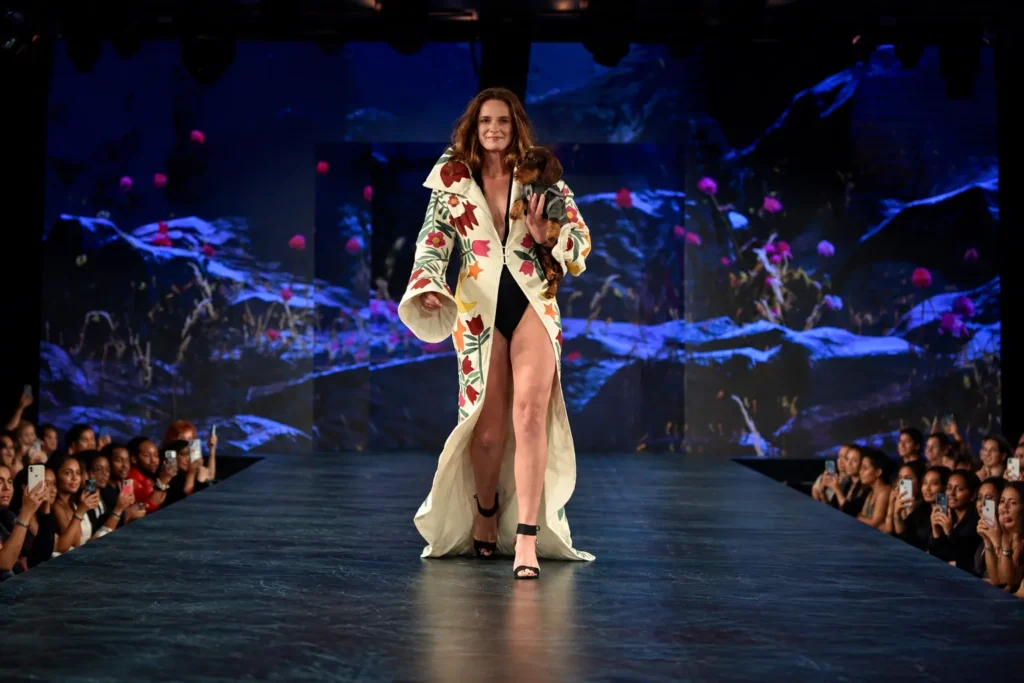
The second model continued down the runway with the dog nestled against her, wearing a long white coat transformed by colorful flowers, hearts, stars, leaves and celestial forms over a black bodysuit. The repeated motifs connected both ensembles, but it was the interaction between the models that made the transition feel spontaneous.
Then came one of the strongest color statements of the night.
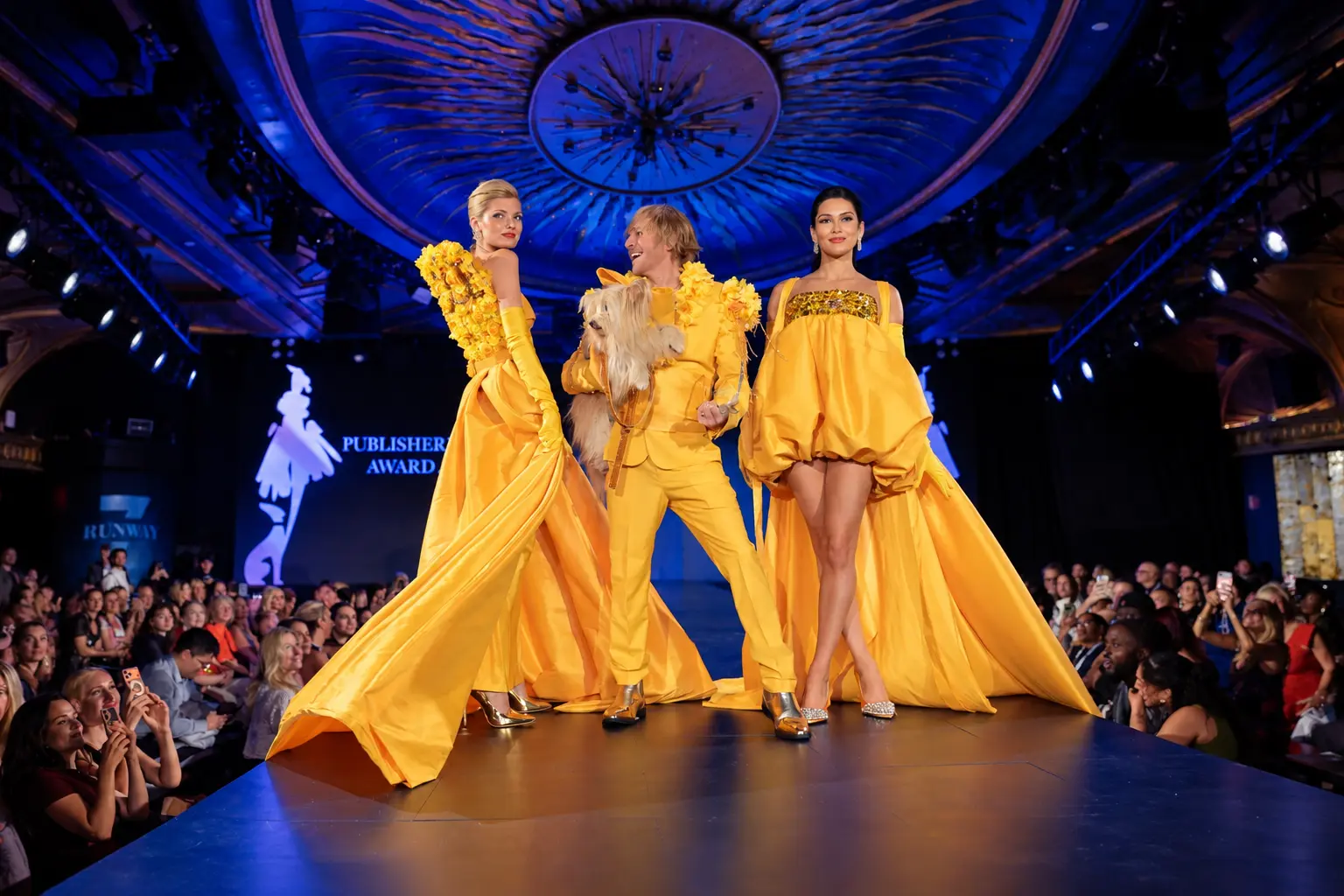
Yellow filled the runway.
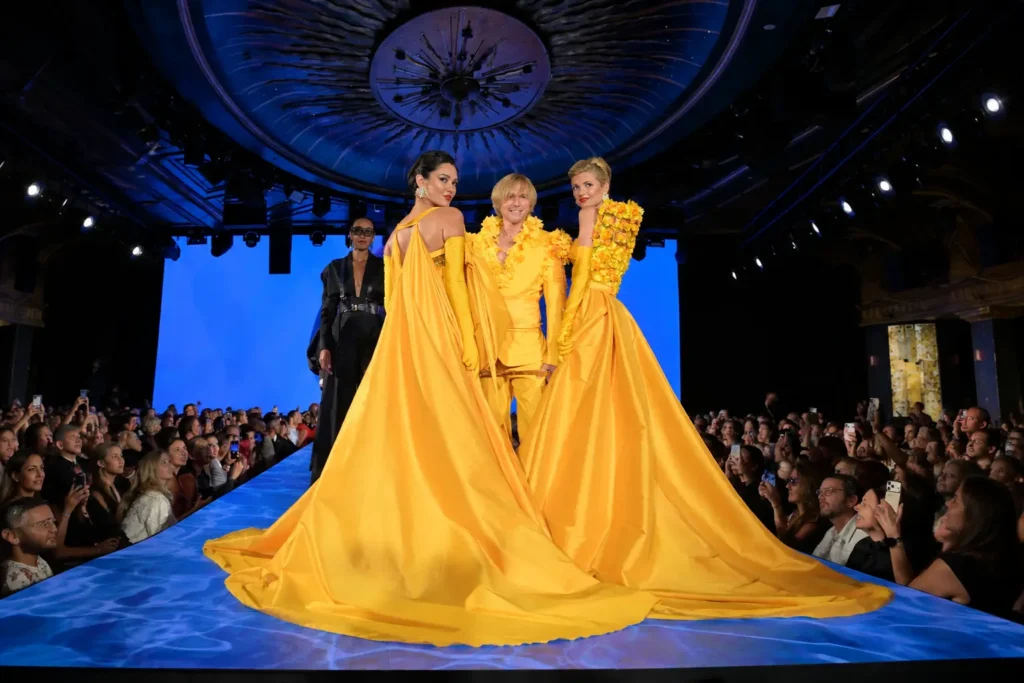
The first ensemble used volume through a short, rounded silhouette extending into a sweeping train. A jeweled upper section concentrated sparkle around the torso, while yellow opera gloves and crystal-covered heels completed the saturated styling.
A second yellow entrance changed the proportions entirely. Its elongated silhouette remained more controlled from the front before opening into a dramatic train, while the back revealed dense clusters of yellow and orange flowers mixed with reflective ornamentation.
After completing their individual walks, both models stayed near the entrance instead of disappearing backstage.
The reason became clear moments later.
A third figure emerged carrying a dog in his arms, dressed in a vivid yellow suit framed by floral clusters across the shoulders and upper body and finished with metallic gold shoes.
Once all three were assembled, they walked together.
What had initially appeared to be a series of individual entrances became a single composition, with three different silhouettes connected by the same intense yellow palette and the canine companion at the center of the final arrival.
Sculptural Silhouettes Take Over
The color disappeared almost as quickly as it had arrived.
Deep navy, black and electric blue introduced the next chapter through a sharply tailored wide-leg ensemble assembled from contrasting panels. Pronounced shoulders, a plunging neckline and a structured waist gave the clothing a strong architectural quality. A black eye mask and oversized hoop earrings added to the styling, while the canine companion walked alongside on a gold chain lead with blue accents that picked up the tones of the clothing.
The dog then changed hands again.
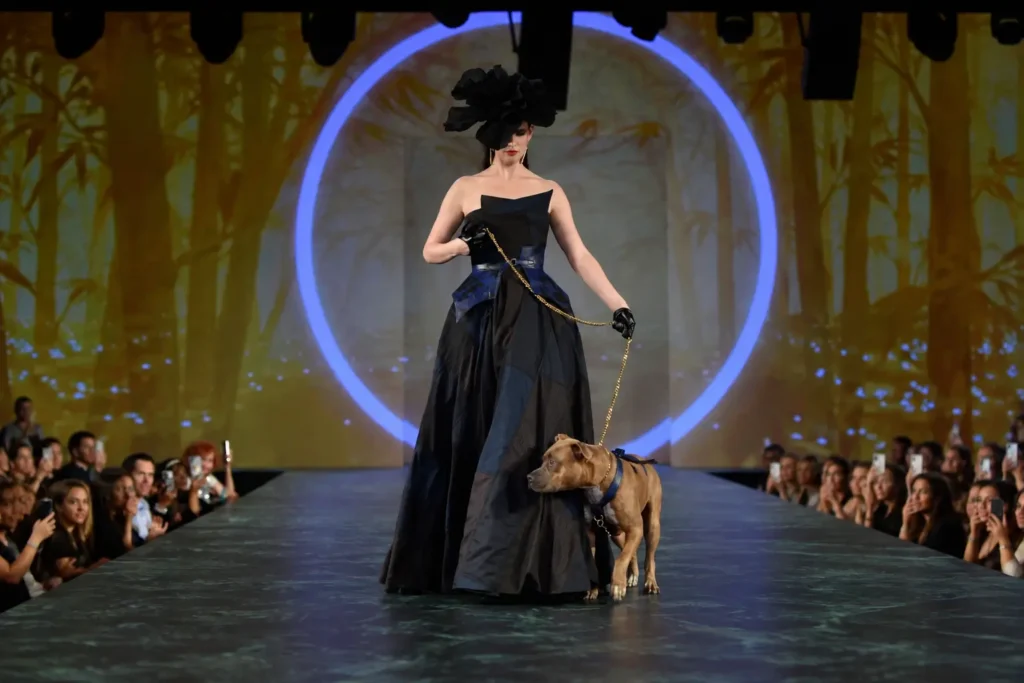
This time, the patchwork language expanded into a floor-length silhouette. An angular strapless bodice opened into a voluminous skirt assembled from irregular sections of navy, black and blue. Black gloves and an oversized sculptural floral headpiece pushed the ensemble further into theatrical territory, while the same dog continued alongside in its coordinating blue styling.
From there, the palette softened considerably.
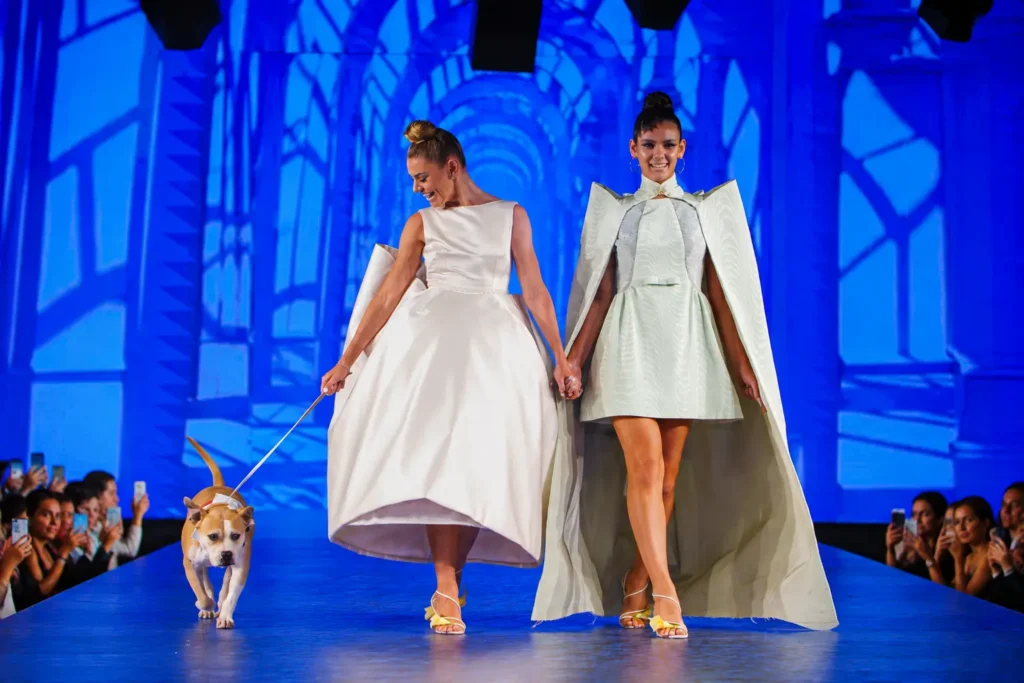
A pale mint mini dress arrived with pointed shoulders and elongated cape-like panels extending almost to the floor. A high neckline and sheer central detailing tempered the sharp construction, while an unconventional pale mint-toned lip carried the color into the beauty direction.
The next entrance stayed within the pale palette but approached volume differently. A clean ivory sleeveless bodice sat above a dramatically structured midi skirt, with exaggerated folds projecting outward from the sides and creating an almost architectural shape around the body. Small yellow floral details at the shoes provided a controlled interruption of color.
The two models first completed their walks independently.
Then they returned hand in hand.
With the dog alongside them, the moment gradually became less formal. At the end of the runway, both models lowered themselves toward their canine companion, briefly replacing the precision of posing with a more relaxed interaction.
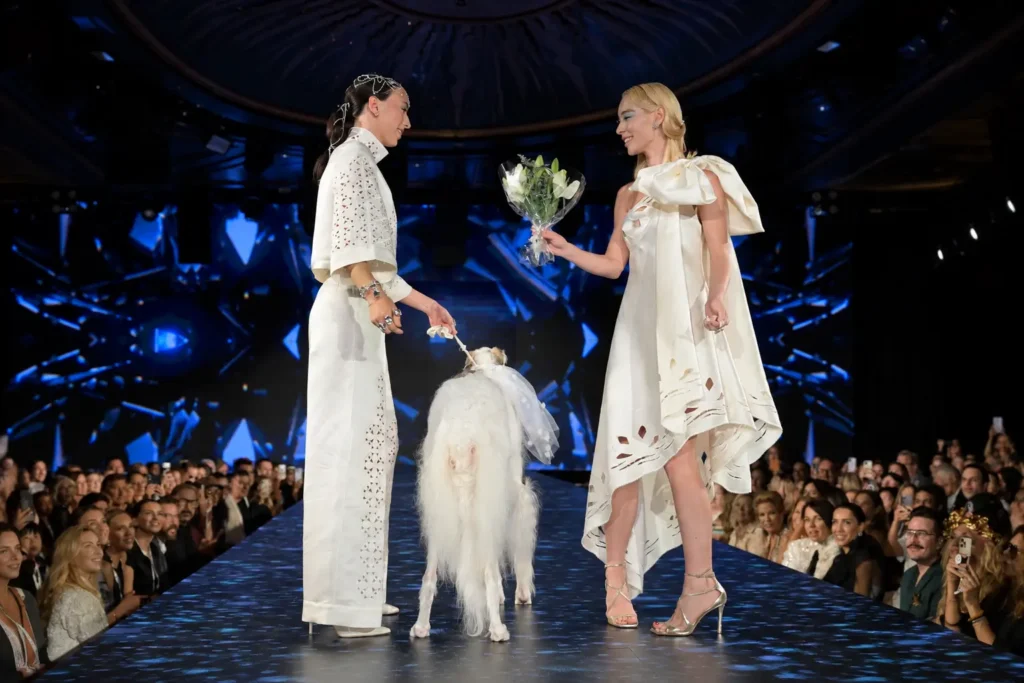
Ivory remained for the following sequence, but cutwork, asymmetry and accessories became the focus.
One ensemble paired a fitted bodice with geometric openings and an oversized bow sweeping dramatically across one shoulder. The asymmetrical skirt repeated the cutwork along its hem, alternating structured fabric with negative space. Silver strappy heels and a spherical crystal-covered bag introduced flashes of light, while vivid blue eye makeup created a sharp contrast against the neutral clothing.
Beside the model, the canine companion appeared with a sheer tulle detail accented by small white appliqués.
The next ensemble translated the same geometric language into tailoring. A cropped white jacket featured repeating perforated patterns and was worn open through the center, while wide-leg trousers extended the cutwork down the legs in larger formations.
Above it all sat one of the most distinctive accessories of the evening: a cascading crystal headpiece draped across the head and forehead. The vivid blue eye makeup returned, providing another connection between the two entrances.
Once their individual walks were complete, both models reappeared together with the dog.
Near the audience, one of them suddenly threw a bouquet into the crowd.
A woman caught it.
For a few seconds, the separation between catwalk and audience disappeared, recalling the same kind of participation Floyd had encouraged at the beginning of the evening.
Pattern, Embellishment and a Monochrome Finish
The next sequence moved into black and gold, this time allowing pattern to dominate.
A sharply tailored black suit was covered with gold decoration, from smaller scattered details to larger medallion-like and figurative motifs across the jacket and trousers. A black shirt and tie kept the base restrained, allowing the ornamentation to remain the focal point.
The dog walking beside the model received its own interpretation, wearing a black outfit punctuated with colorful embroidered details.
The following entrance retained the dark foundation but abandoned tailoring for transparency, embroidery and movement. Gold and multicolored motifs appeared across sheer black layers, with stars, flowers and animal-inspired forms distributed across the silhouette. Strands of dark beaded fringe fell from the upper body and moved with each step.
The same canine companion returned in its decorated black outfit, making the relationship between the two entrances immediately recognizable.The final individual sequence moved into black and white.
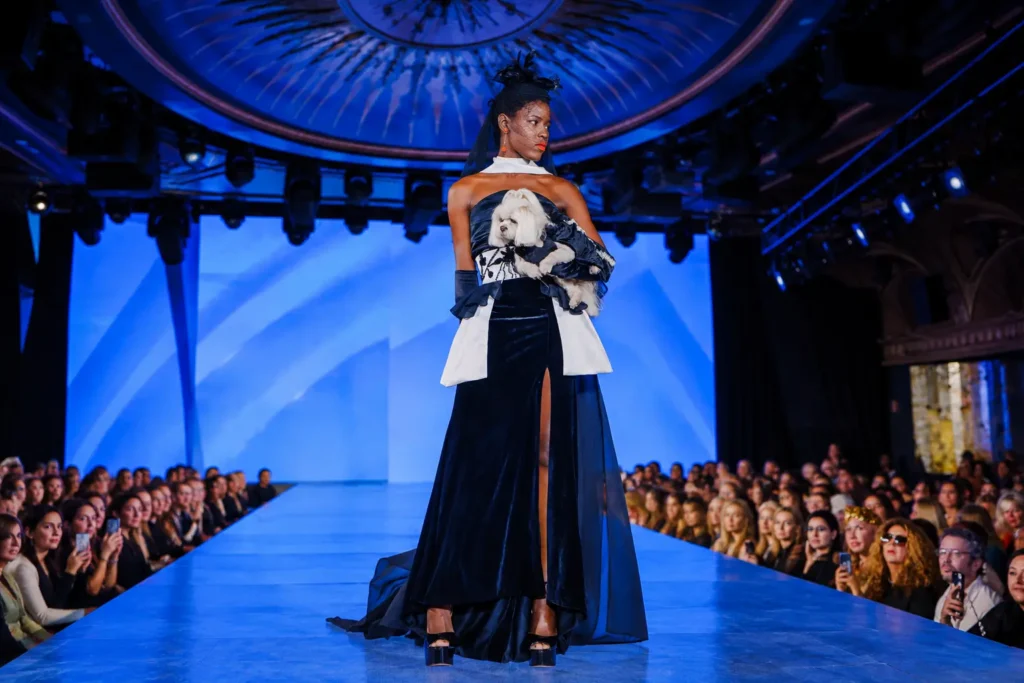
One model appeared in a strapless ensemble combining a ruched black bodice with a structured white waist section decorated in intricate black beading. Ivory panels contrasted against a central dark section below, while sheer detailing at the hips added volume.
Long black gloves, a white collar and a sculptural black headpiece covered with a fine veil framed the ensemble. Against the monochrome styling, red-orange lipstick and matching drop earrings stood out immediately.
Cradled in her arms was a small white dog dressed in black, complete with a prominent bow and layered detailing.
The following entrance maintained the same contrast through a white strapless bodice and a floor-length black sequin skirt. A dark wrap defined the waist while an elongated white drape extended from the upper body toward the floor. Long black gloves, platform heels and a pale sculptural headpiece completed the styling, with the same red-orange accents returning through the makeup and earrings.
The small white dog appeared again, dressed in black against its coat.
It felt like a natural ending.
But the evening had another runway waiting.
From Fashion Finale to Adoption Runway
The individual presentations were followed by a fast-paced collective finale, with the participating designers returning alongside their respective models and looks.
In quick succession, the runway revisited the visual range of the show: gold embroidery, metallic fringe, floral denim, saturated yellow, dark patchwork, architectural ivory, geometric cutwork, sequins and black-and-white eveningwear.
Then the fashion finale cleared.
Sebunya returned to the stage, and the emphasis shifted from the clothing to the animals themselves.
The next segment introduced animals looking for homes.
Dogs of different sizes and personalities began appearing before the audience, representing rescue organizations involved with the evening.
One of the first appearances immediately stood out.
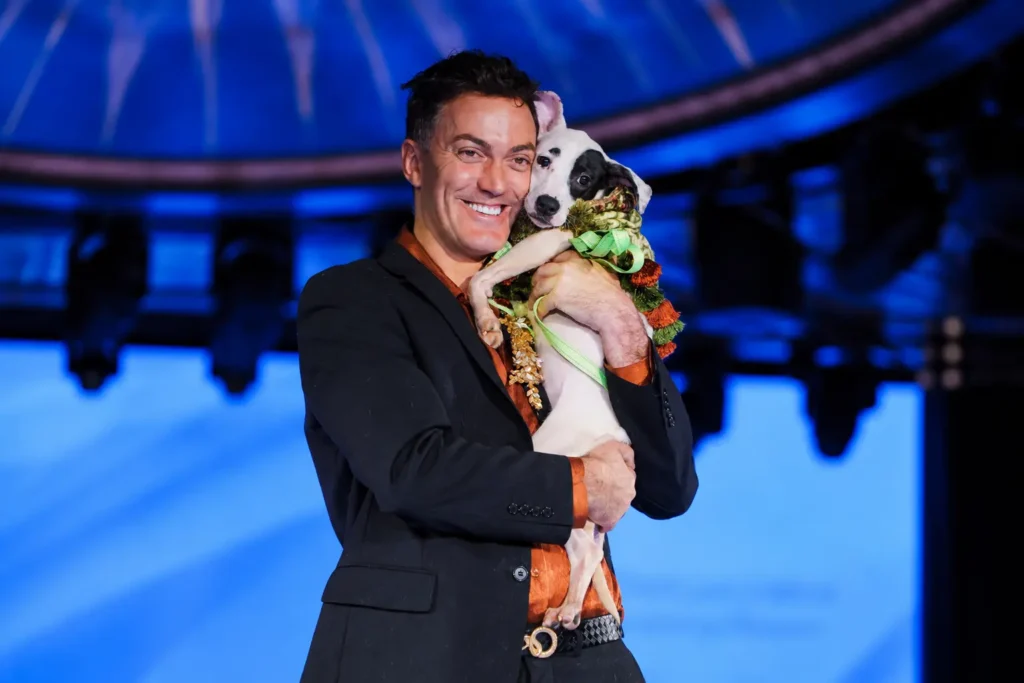
Matthew Dillon, fashion forecaster and television personality, entered carrying a young puppy in his arms. Dillon’s work includes fashion forecasting and television appearances, and he was later recognized by Runway 7 as its 2026 Best TV Fashion Commentator.
What initially appeared to be a sweet runway moment would take on another meaning after the show: the puppy was later adopted by Dillon himself.
The adoption segment continued, but one of its smallest participants generated one of the biggest reactions.
A tiny kitten, small enough to fit into a single hand, appeared among the animals being introduced. After a show filled with oversized bows, sequins, sculptural trains, embroidery and elaborate headpieces, the kitten needed none of it to capture the room.
For the first time that evening, fashion had almost completely disappeared from the story.
The animals had the runway to themselves.
The CatWalk FurBaby Awards
The final portion of the evening returned to the competition, recognizing the partnerships between designers and rescue organizations through three principal awards.
NYC Second Chance Rescue received the Judges’ Award for its collaboration with Victor de Souza and FurBaby Hercules.
Operation Kindness Humane Society received the Publisher’s Award, represented through its collaboration with Marc Bouwer and Eliza.
Big Dog Ranch Rescue received the People’s Choice Award through its partnership with Anne Fontaine and Liberty.
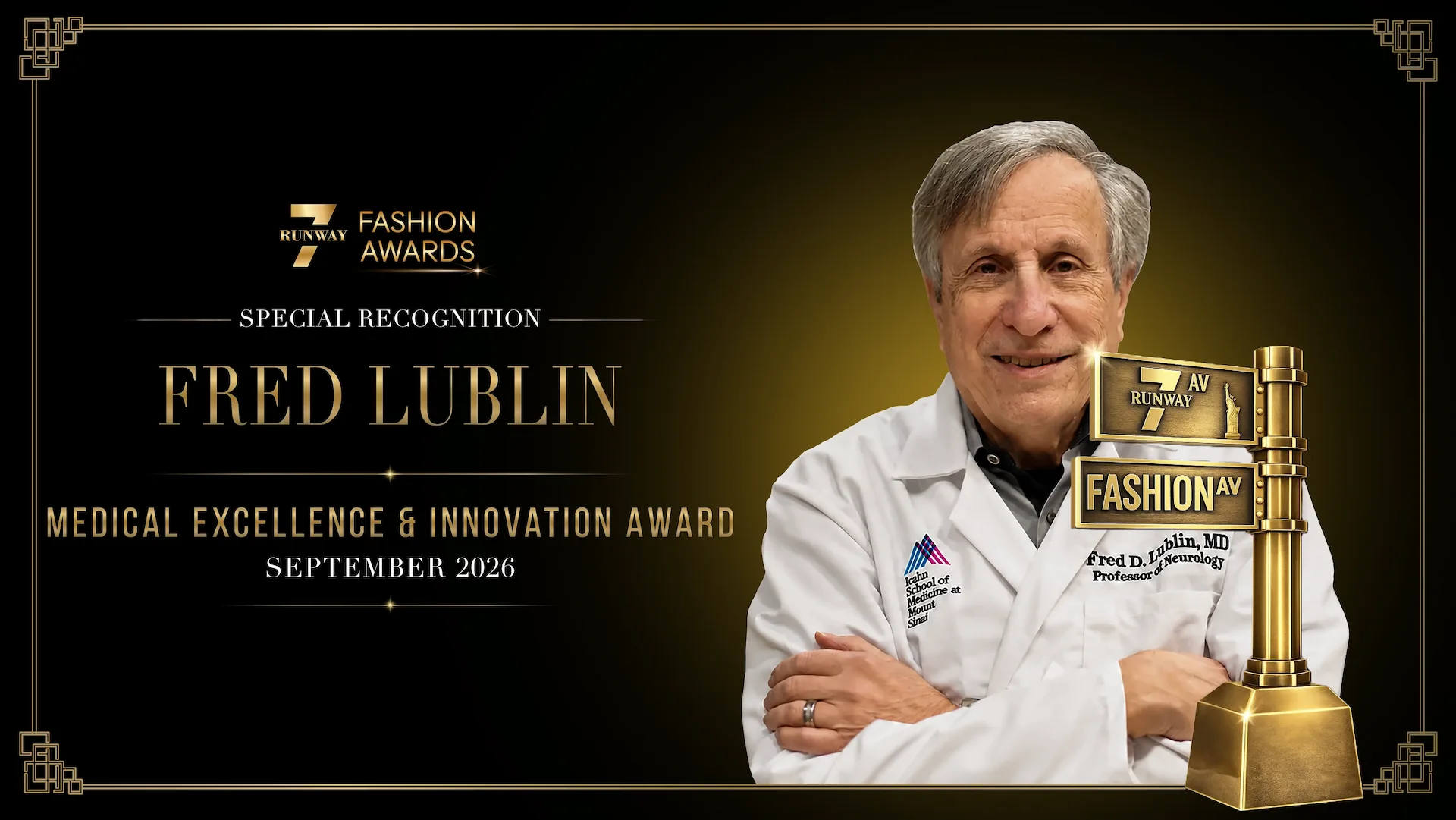
The night also honored Fern Mallis as the 2026 Lifetime Achievement Honoree, recognizing her influence on the development of New York Fashion Week.
The awards provided a fitting conclusion because the recognition did not separate fashion from the organizations behind the animals. The designer, rescue and FurBaby remained connected as a team, just as they had been throughout the evening.
A Runway With a Greater Purpose
By the end of the night, the runway had shifted from fashion presentation to something far more personal. The same animals that had appeared beside embroidery, sequins and sculptural silhouettes were now standing before the audience in search of homes.
That progression gave CatWalk FurBaby its weight. The clothes created the spectacle, but the adoption runway made the purpose tangible – especially when a puppy carried onto the catwalk by Matthew Dillon later left with him as part of his family.
For Runway 7’s opening night, fashion drew the attention. CatWalk FurBaby made sure that attention ultimately returned to the animals.