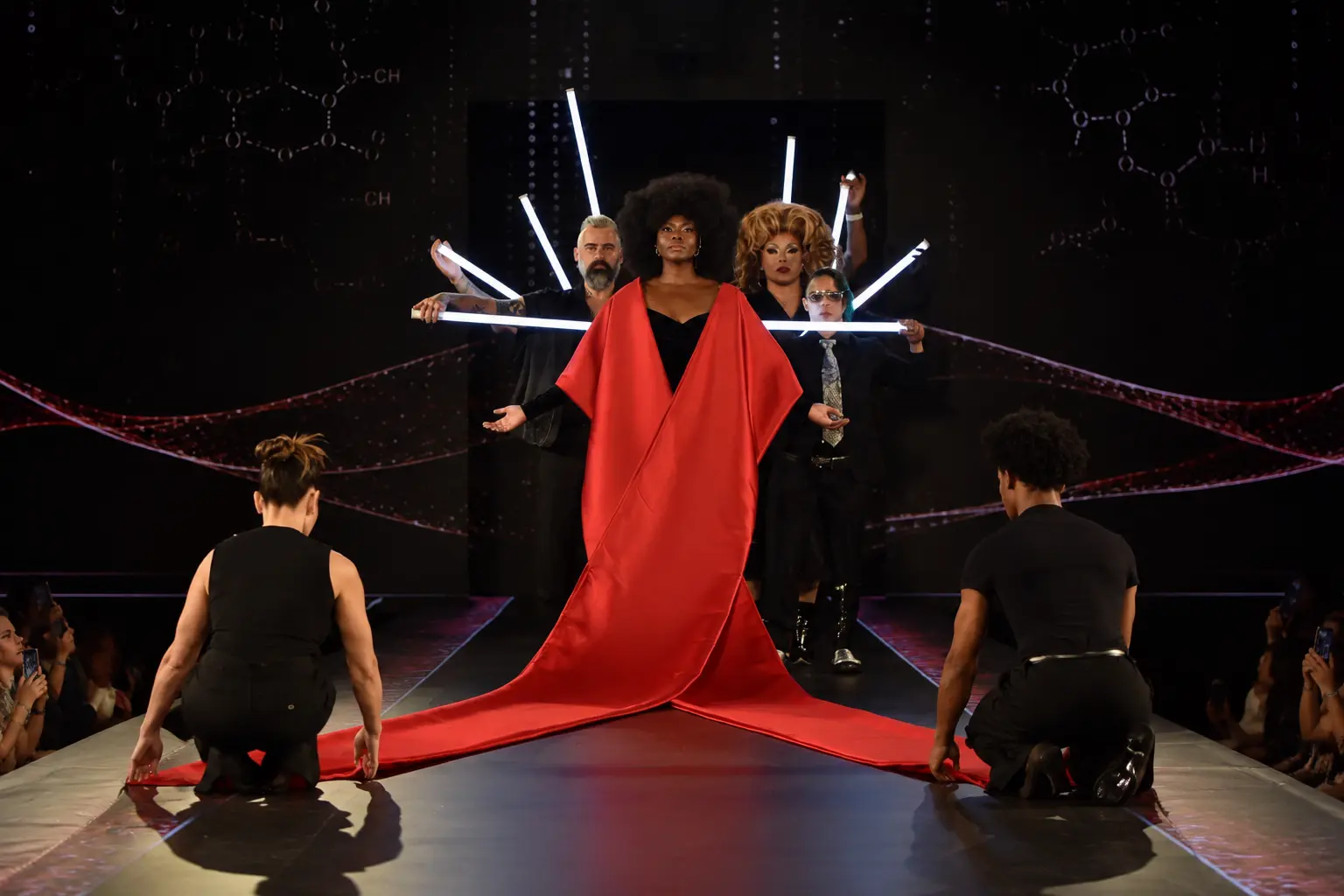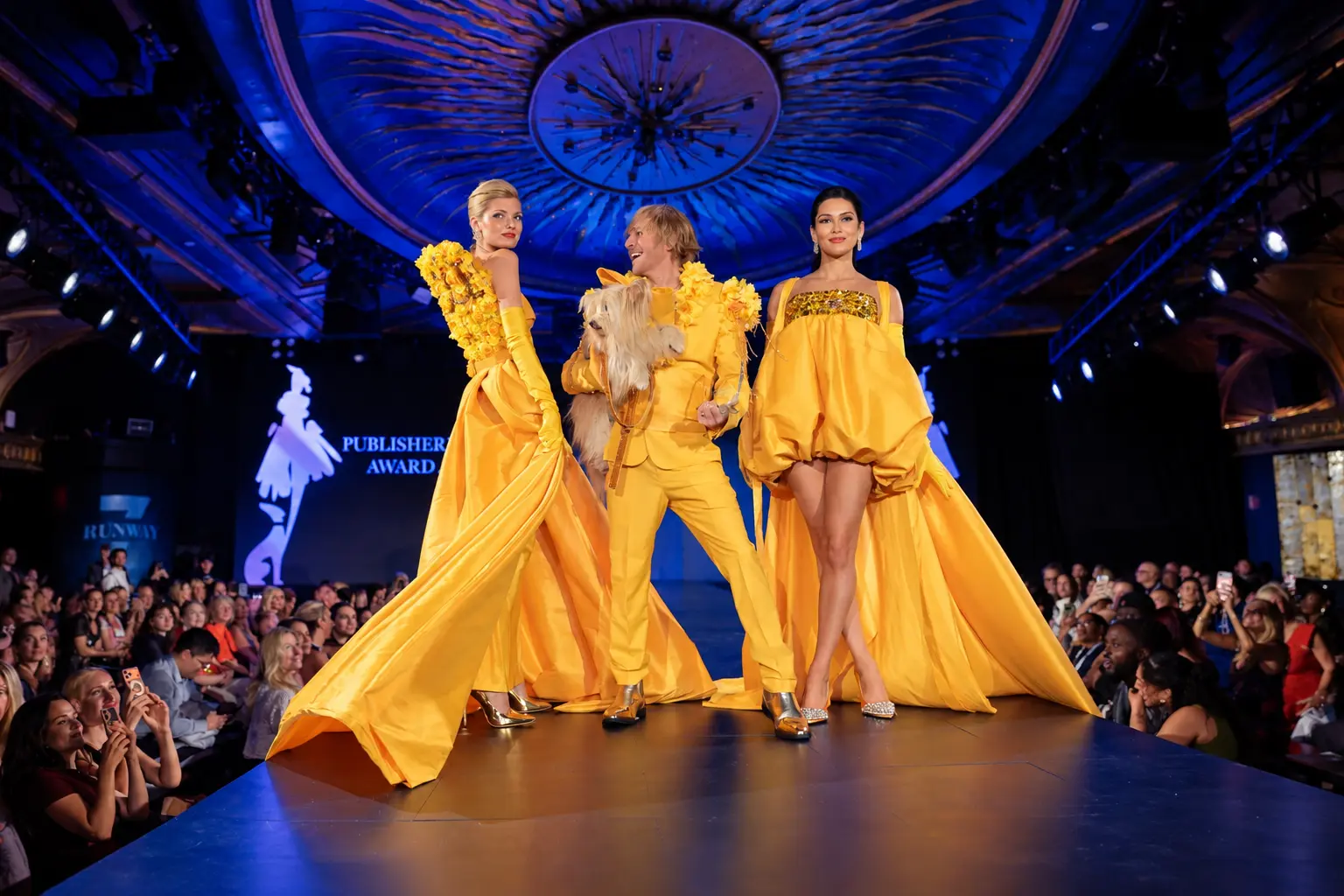
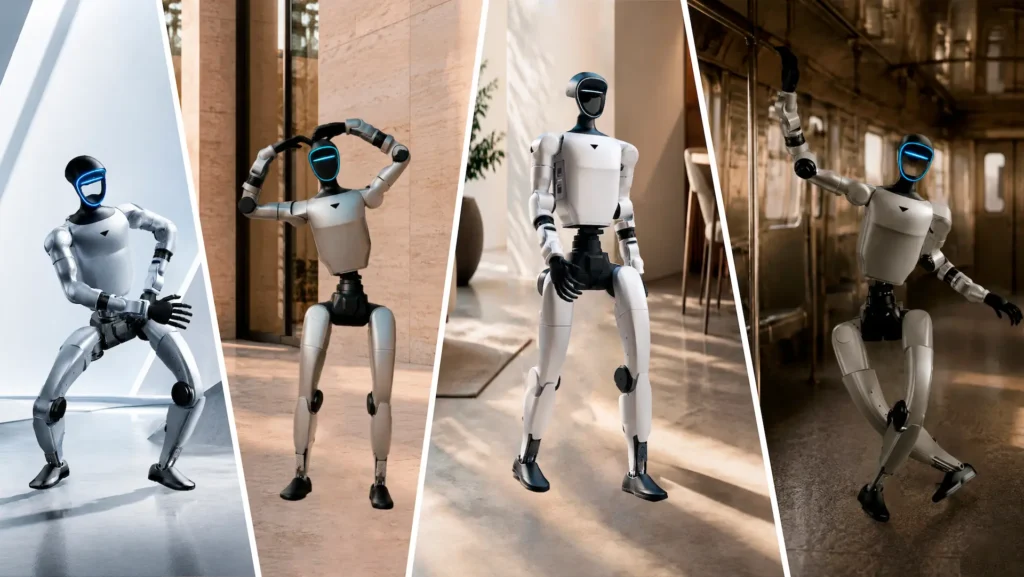
NYFW has long been a melting pot of creative disciplines. Designers experiment with new materials, artists redefine the runway experience, and technology continues to play a larger role in how fashion is presented. That intersection is about to take an unexpected form this September, when four Unitree G1 robots join the runway experience with a synchronized dance performance, bringing humanoid robotics directly into the world of New York Fashion Week.
G1 robot sims in your mother a voice that attaches to robotics through an appearance more typically associated with clothes, design, music, and live performance. Instead of being deployed just as a demonstration of technology, the robots will be incorporated into the show itself, infusing a huge slice of futurism into the ambiance (Friday through Sunday).
Attendees will witness four humanoid robots walking in a line as part of a synchronized “fashion show,” with exact performance times still being finalized.
Introducing Unitree — the robotics company that created the G1
Unitree Robotics is engaged in the research and development, production, and sales of high-performance universal robots. It covers:
- Quadruped robotics
- Humanoid robots
- Six-axis robotic arms, and
- Other robotic technology
What some of the public negotiations—such as turning miles of highway into a massive air pump—suggest is that this group has put on an especially high profile through demonstrations and appearances at key public events. Its robots have appeared at events from the CCTV Spring Festival Gala to the opening ceremony of the 2022 Winter Games, and most recently at the 2023 Super Bowl pre-game show and Hangzhou’s Asian Games.
Unitree has invested significantly in its own core robotics technologies, including motors, reducers, controllers, sensing systems, and motion-control and perception algorithms. This vertical took away half of the problem without limiting the company from further ambitions on humanoid machines.
You might be interested in reading: Where to Stay for NYFW 2026: M Social New York Downtown
What Are the Unitree G1 Robots?
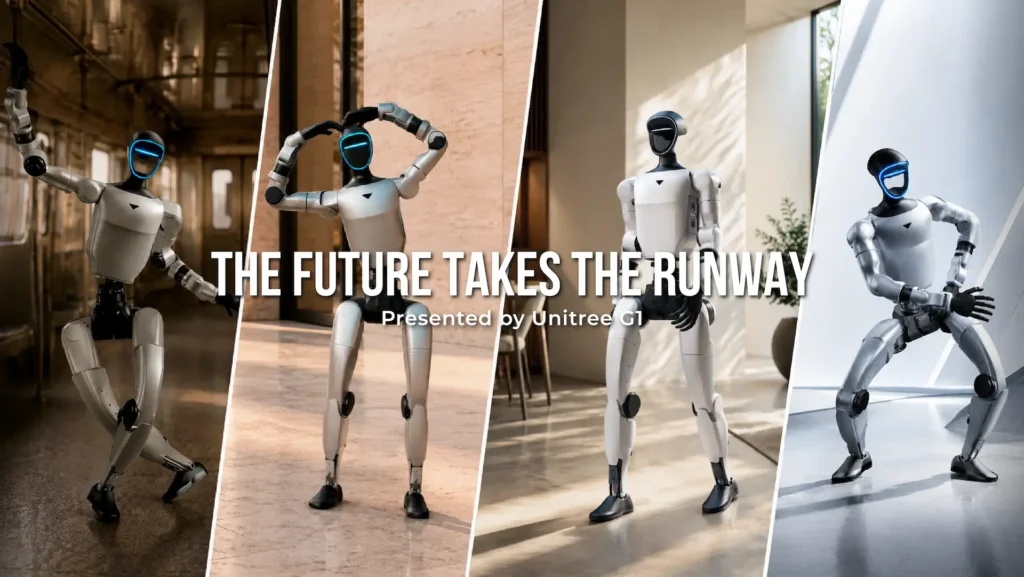
The G1 from Unitree is a humanoid robot developed for human-style movement and interfacing with humans. With an upright posture, it has a familiar human silhouette, while its robotic joints and control systems have the ability to perform coordinated movements that only a handful of years earlier would have appeared far from what consumer-facing robotics could achieve.
G1 has established itself as one of Unitree’s best-known humanoid platforms. The demonstrations have added non-walking and basic locomotion types of motion. For example, Unitree presented the G1 in 2026 with locomotion modes such as wheeled movement, roller skating, and ice skating.
The company has also shown off direct voice control over G1, where an AI produces movements based on commands received outside the walking robot. These developments highlight a critical area of modern robotics: Instead of simply programming robots to perform repetitive mechanical tasks, they are now designed to navigate fluid environments and respond to human interaction.
Four G1 Robots Take the Runway
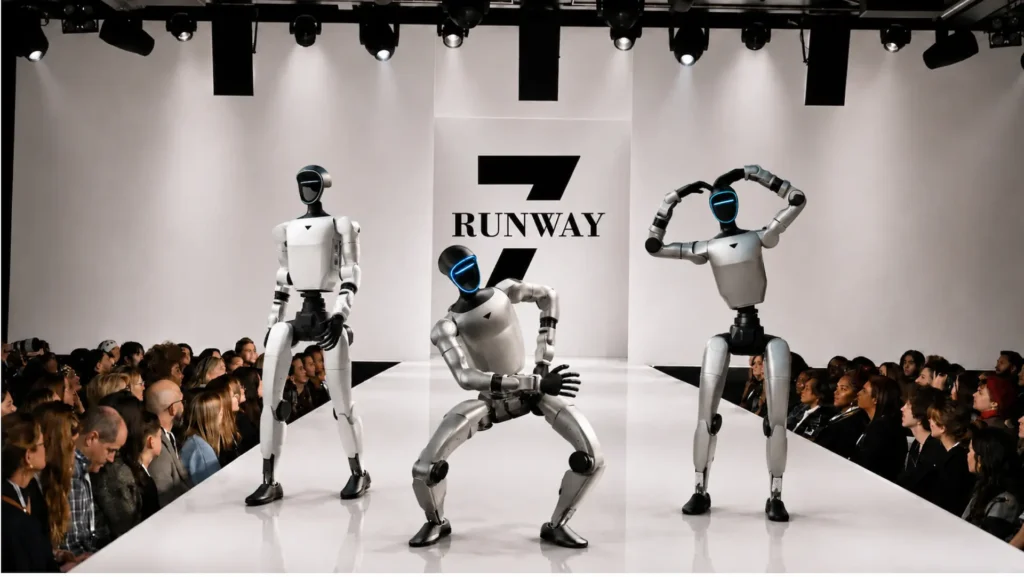
The September collaboration will be especially notable for the presence of four Unitree G1 humanoid robots.
Instead of having one single robot just be a gimmick between segments on the runway, the four G1 will come out and perform a choreographed dance together. The dancers will contrast visually to the models, clothes, lights, music, and other design-centric staples of NYFW.
Synchronization is moreover one of the most compelling demonstrations of humanoid robotics. A mobile robot that can do things alone is already catching interest, but multiple humanoid machines synchronizing their movement transforms the act into something like dance.
The showings are set over Friday, Saturday, and Sunday at the September NYFW shows. Attendees are advised to keep their eyes peeled for more information as the schedule is ironed out, since specific showtimes remain unconfirmed.
The Moment Robotics Becomes the Show
Fashion and technology have influenced each other over the years. Digital design tools have revolutionized the way that garments are created. Novel manufacturing processes have also led to unconventional materials and construction. Wearable technology has gone past the lines between clothing and electronics.
That relationship is further complicated when robotics is involved.
Well, a humanoid robot is not a piece of clothing nor an ordinary fashion product. It exists in bodily (physical) space, traverses (navigates) an environment, reacts to choreography, and embodies part of the performance. So on that note, having the G1 on the runway perhaps informs where technology can go in fashion.
From Robotics Demos to Performing in Real Life
This latest activity from Unitree is a clear indication of just how fast humanoid robotics are moving into public-facing environments.
Unitree also arranged a spectacular show with 24 G1 humanoid robots and an H2 humanoid robot at the Year of Horse Spring Festival Gala launched by China Media Group in early 2026. The four G1 robots executed what Unitree called an “autonomous combat formation” demonstration, including rapid formation and high-speed repositioning in a choreographed martial arts performance of humanoid robots pure for the first time on Earth.
Such a group effort helps frame the forthcoming runway appearance for NYFW. More easily, robots can now be trained and controlled to execute structured moves in front of large crowds.
A Different Kind of Runway Presence
The four G1 robots, however, will not be substituting any of the classic elements of a fashion show. Rather, they braid another kind of performance into the mix.
At its core, a runway is about motion. Models stride, clothes metamorphose in light from static to fluid states, music creates momentum, and the audience travels an intricately choreographed visual pathway — each facet of the fashion show experience is deliberate. Take a humanoid robot doing a choreographed dance routine—the same idea comes from that framework, but the technology behind those movements is very different.
Thus, the G1 can plug itself into a dialogue between known methods and perhaps unknown forms of motion. Human models infuse Fashion with personality, aesthetic, and the literal essence of clothing.
Why the Collaboration Stands Out
The essence of G1 performance is its surprise effect.
Fashion Week audiences have seen designers play around with silhouettes, materials, staging, music, and visual effects. The novelty of humanoid robots is not common instinct. Just the use of their presence can alter the audience’s perception of how fashion and technology relate, but without the need for it to turn into a tech show.
The scene serves as a stage for humanoid robotics from Unitree to show movement and performance over specs instead. For fashion audiences, it gives an insight into a technology that is now emerging into the public sphere.
Fashion And Technology: Looking To The Future
What the collaboration also indicates is a more widespread trend. More robots would appear in more versatile surroundings with robotics developing into a broad range of activities.
That evolution is reflected in Unitree’s growing workload. The company’s robots have made major television and sporting appearances, while its 2026 developments have delved further into autonomous group performance, AI leadership, novel approaches to movement, and humanoid robotics.
Because that’s NYFW — another opportunity to see those skills from a designer angle.
The key story ahead of the shows this September, as four G1 robots take to the stage, will not be just that robots attend Fashion Week.
The two will share the runway at New York Fashion Week this September.
Discover the Unitree G1
Learn more about Unitree and the G1 humanoid robot bringing robotics and technology to the New York Fashion Week experience.
Explore Unitree G1